Double Victory for Sri Lanka in Western Asia Juniors and Girls Chess Championships

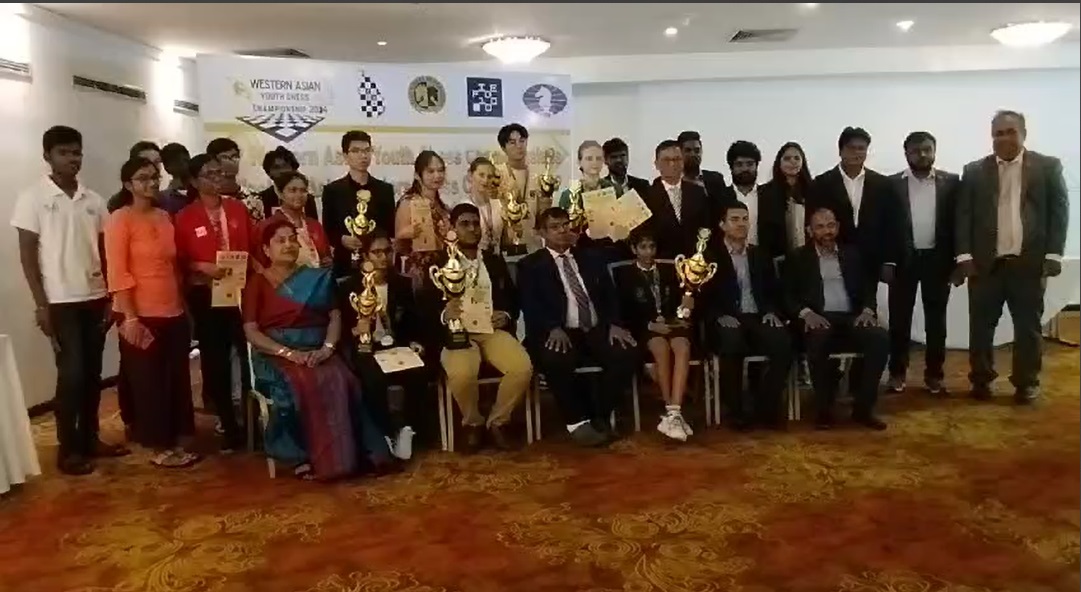
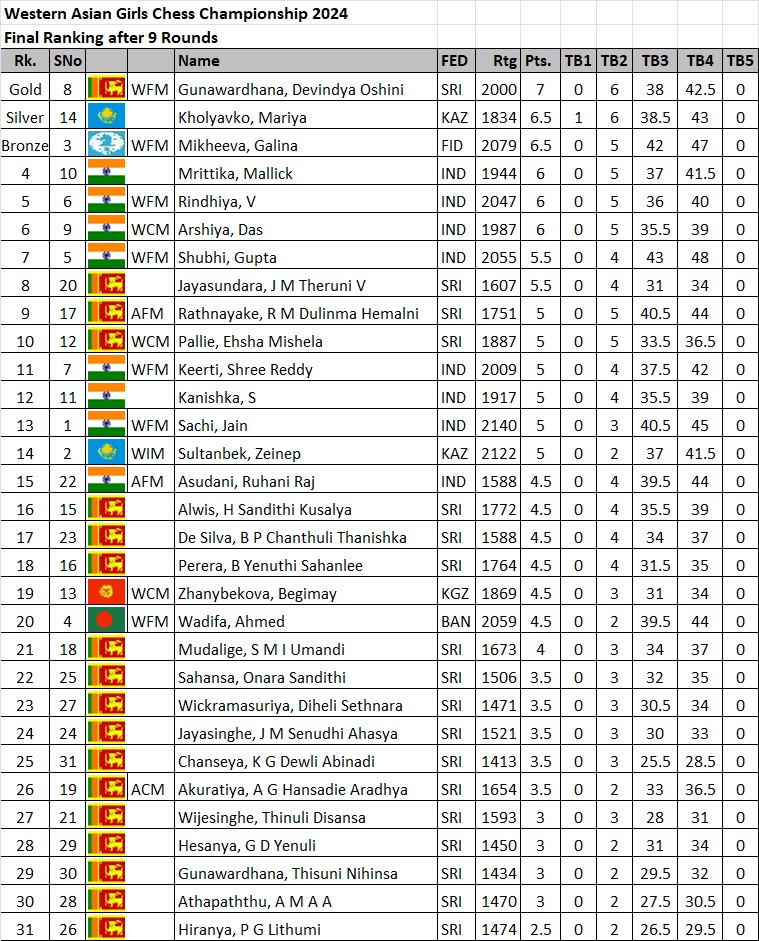
IM L.M.S.T. De Silva and WFM Devindya Oshini Gunawardhana won the Western Asia Juniors and Girls Chess Championships, respectively, for a double victory by Sri Lanka. A total of 24 boys and 31 girls participated from six countries, namely Bangladesh, India, Kazakhstan, Kyrgyzstan, Kuwait and host Sri Lanka.

The tournament was a 9-round Swiss System held from 15th to 23rd July 2024 and organized by the Chess Federation of Sri Lanka under the auspices of FIDE and the Asian Chess Federation supported by the Planning and Development Commission.

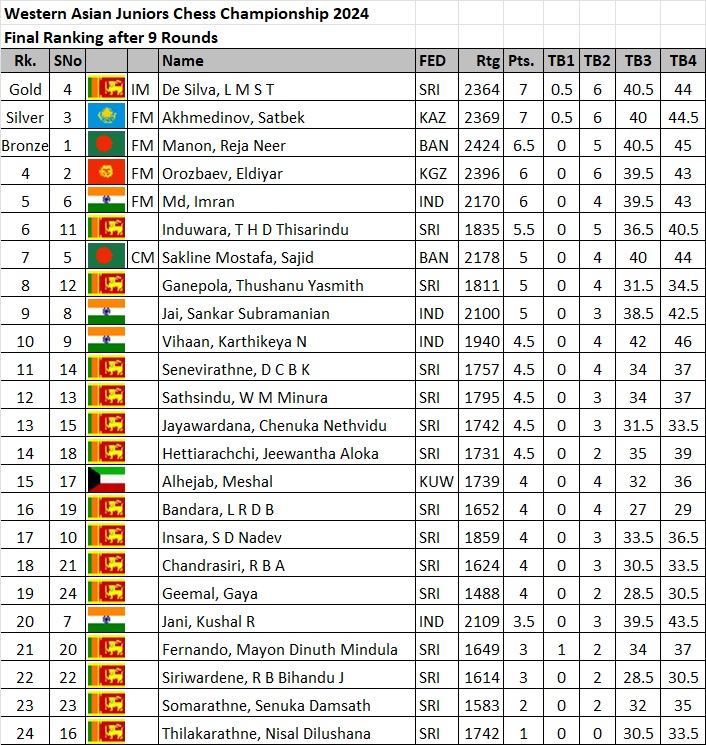
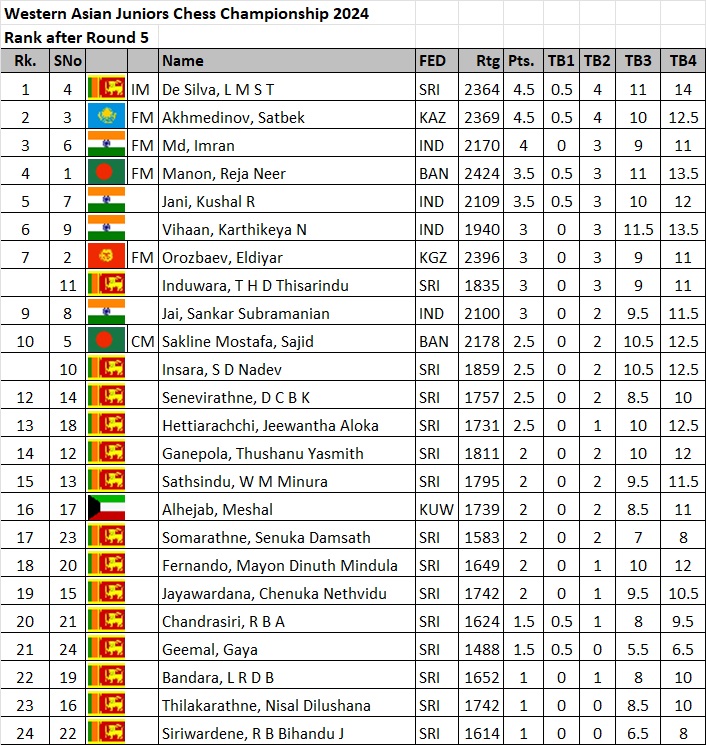
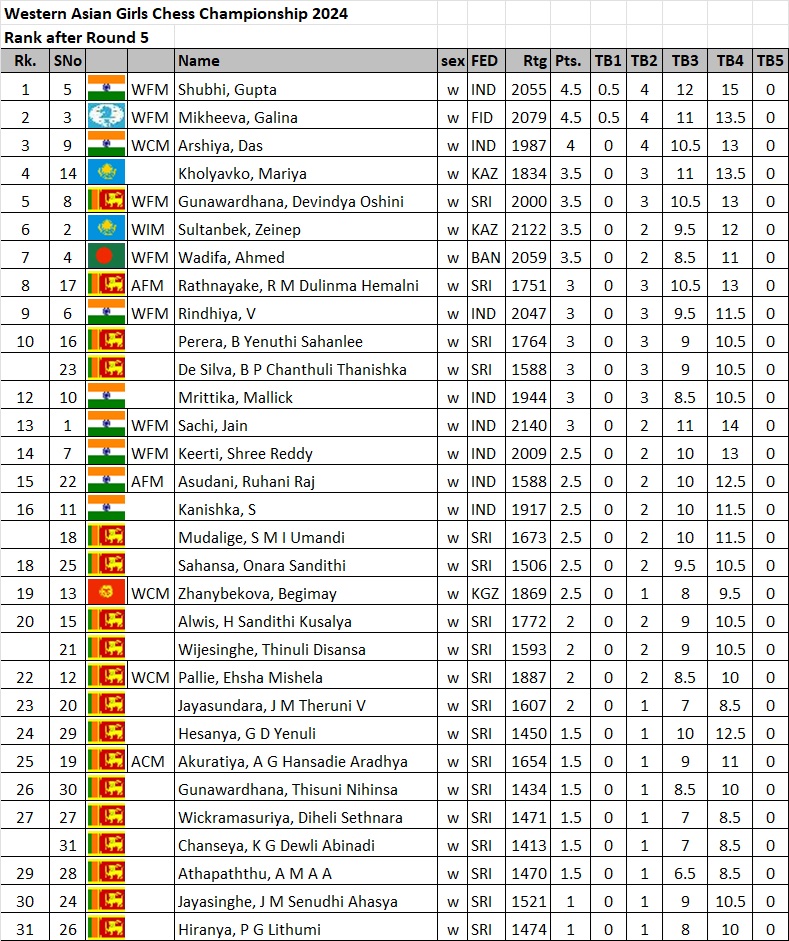
Visit chess-results.com for round by round results and to download games. Here are final standings.

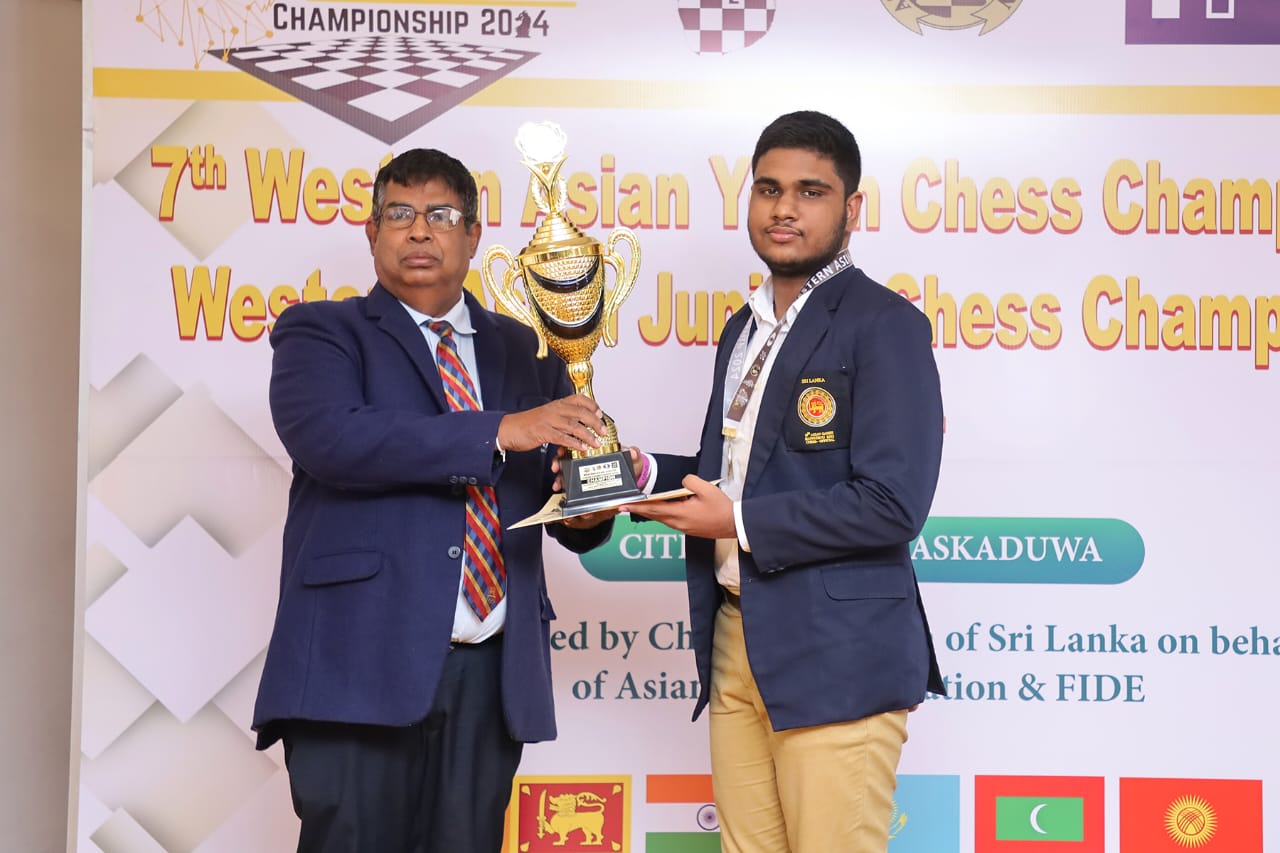
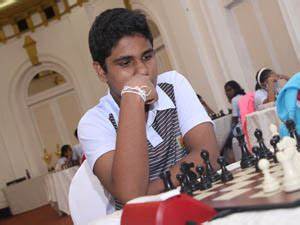
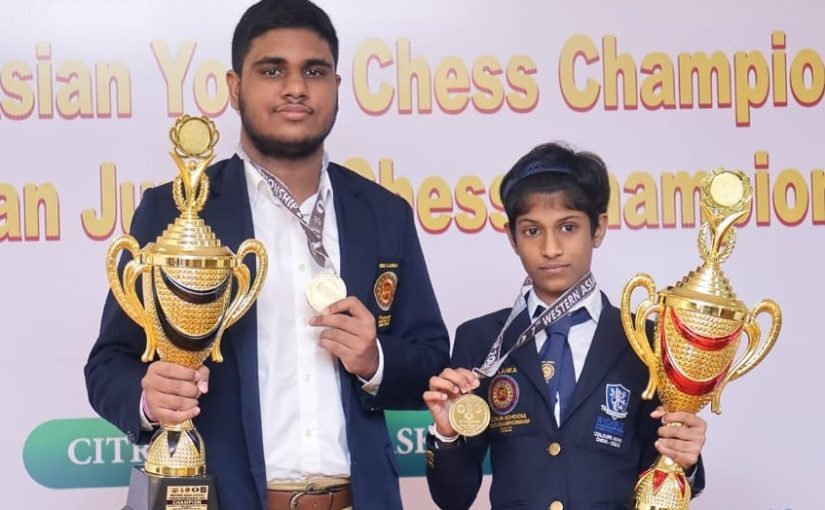
Chess Federation of Sri Lanka president Luxman Wijesuriya (left) awarding the Western Asia Junior champion’s trophy to IM L.M.S.T. De Silva of Sri Lanka.

De Silva achieved his first GM norm. The Chess Federation of Sri Lanka has given both De Silva and Oshini 100,000 Rupees each. The CFSL had earlier announced a special prize of one million Rupees to the first Sri Lankan grandmaster.

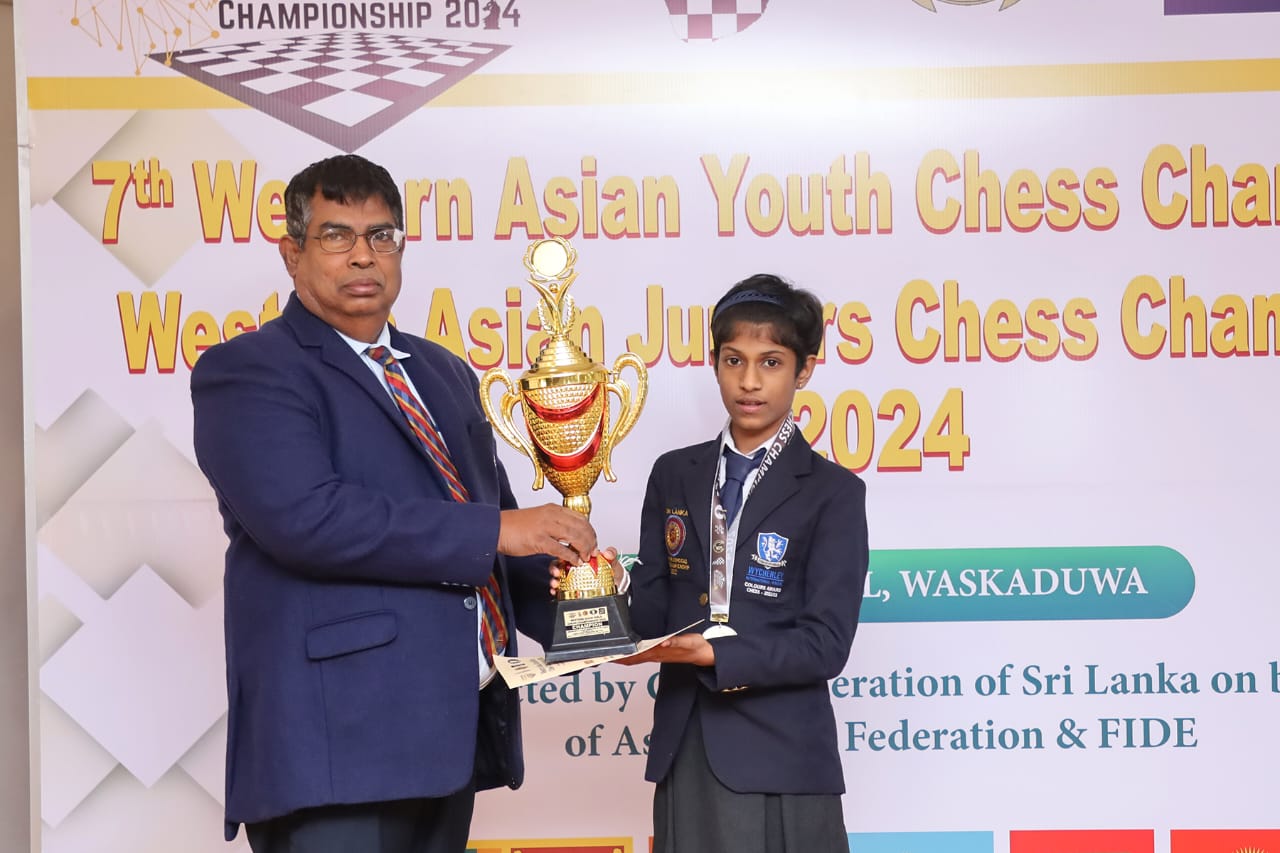
Chess Federation of Sri Lanka president Luxman Wijesuriya (left) awarding the Western Asia girls’ champion’s trophy WFM Oshini Devindya Gunawardena of Sri Lanka

Twelve-year-old WFM Oshini Devindya Gunawardena will be the next Womto an International Master in Sri Lanka, She is the youngest girl to achieve this title.

Oshini achieved a Woman Grandmaster norm for her gold medal finish with 7 points out of 9 rounds.

She got off to a good start, beating compatriot Jayasinge and Indian Ruhani Raj Asudani in the first two rounds. Oshini lost to WFM Galina Mikheeva of Russia in the third round. She recovered with two draws against Mariya Kholyavko of Kazakhstan and WFM Ahmed Wadifa of Bangladesh in the 5th and 6th rounds. Then Oshini won the last three rounds against Rathnayake of Sri Lanka, fifth seed WFM Gupta Shubha of India and top seed WFM Jain Sachi of India in the 9th and final round.

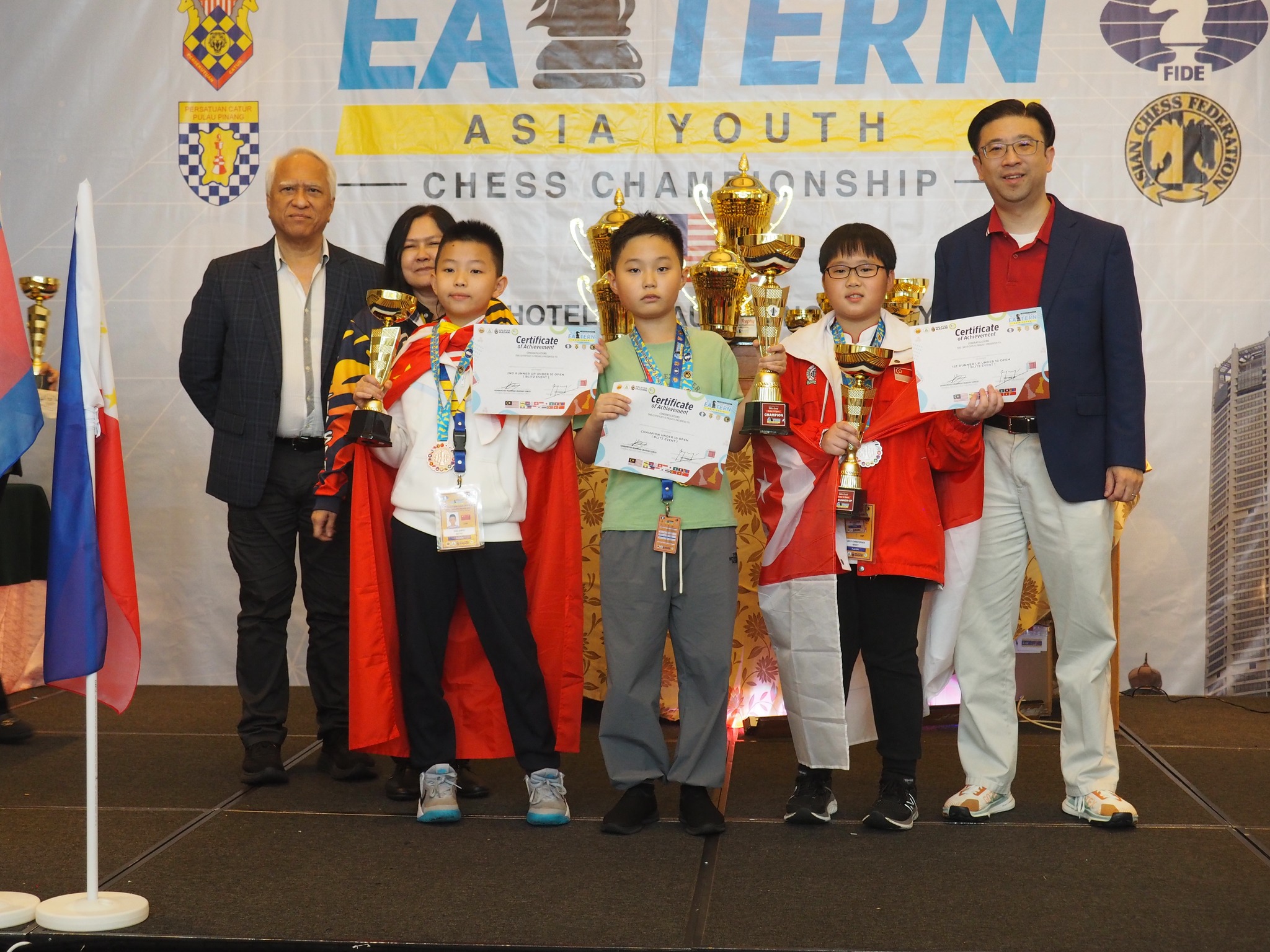
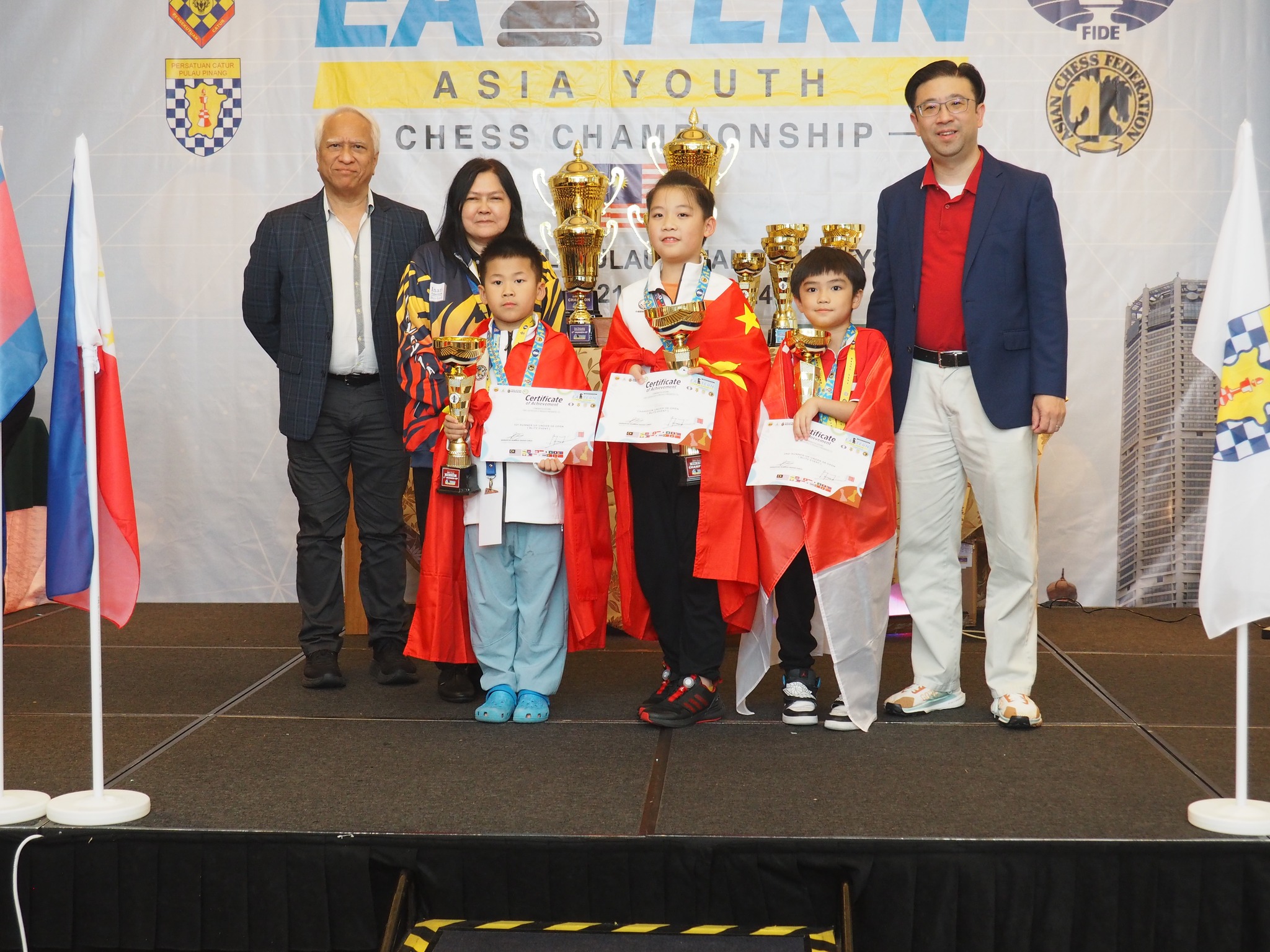
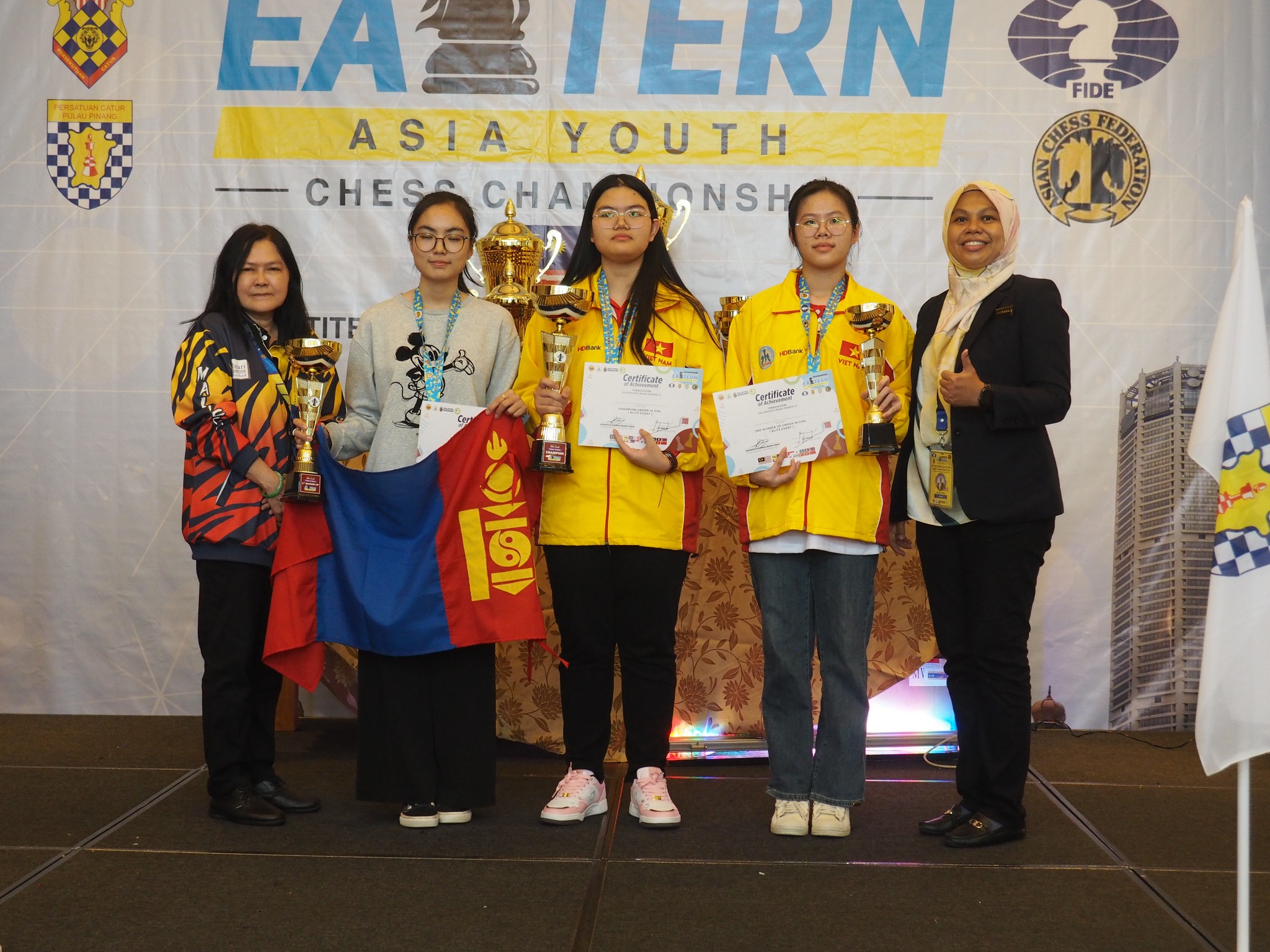
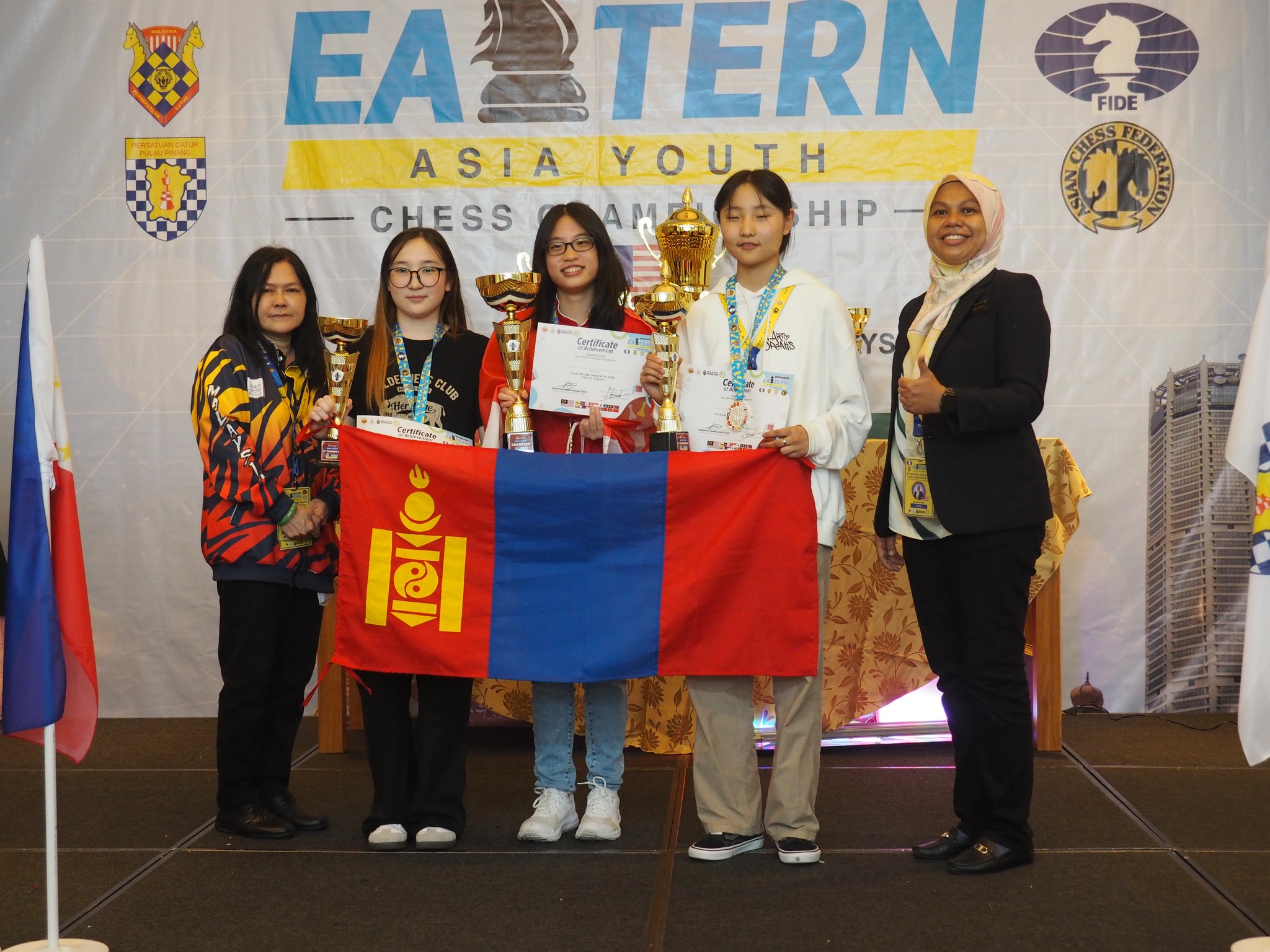
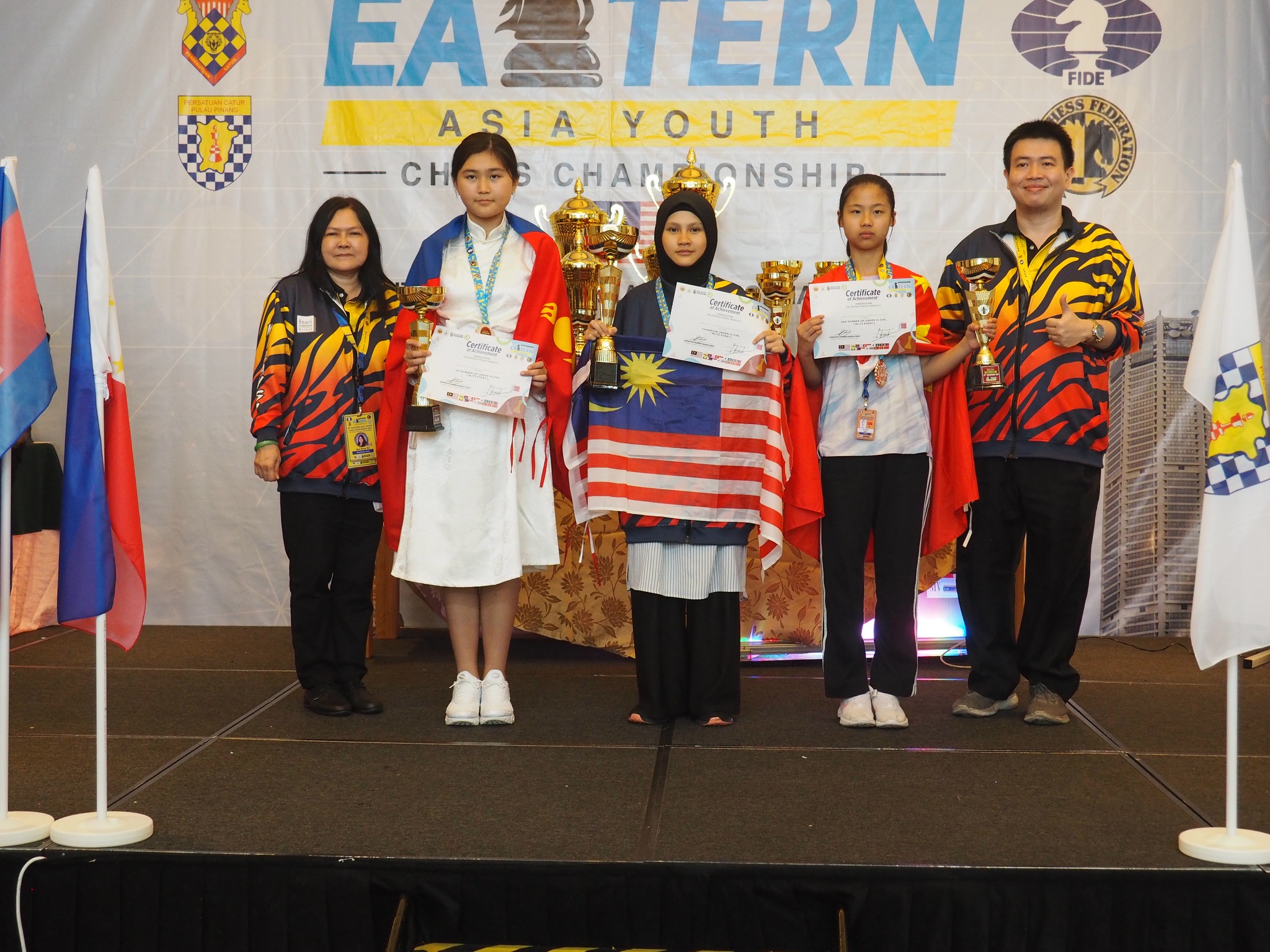
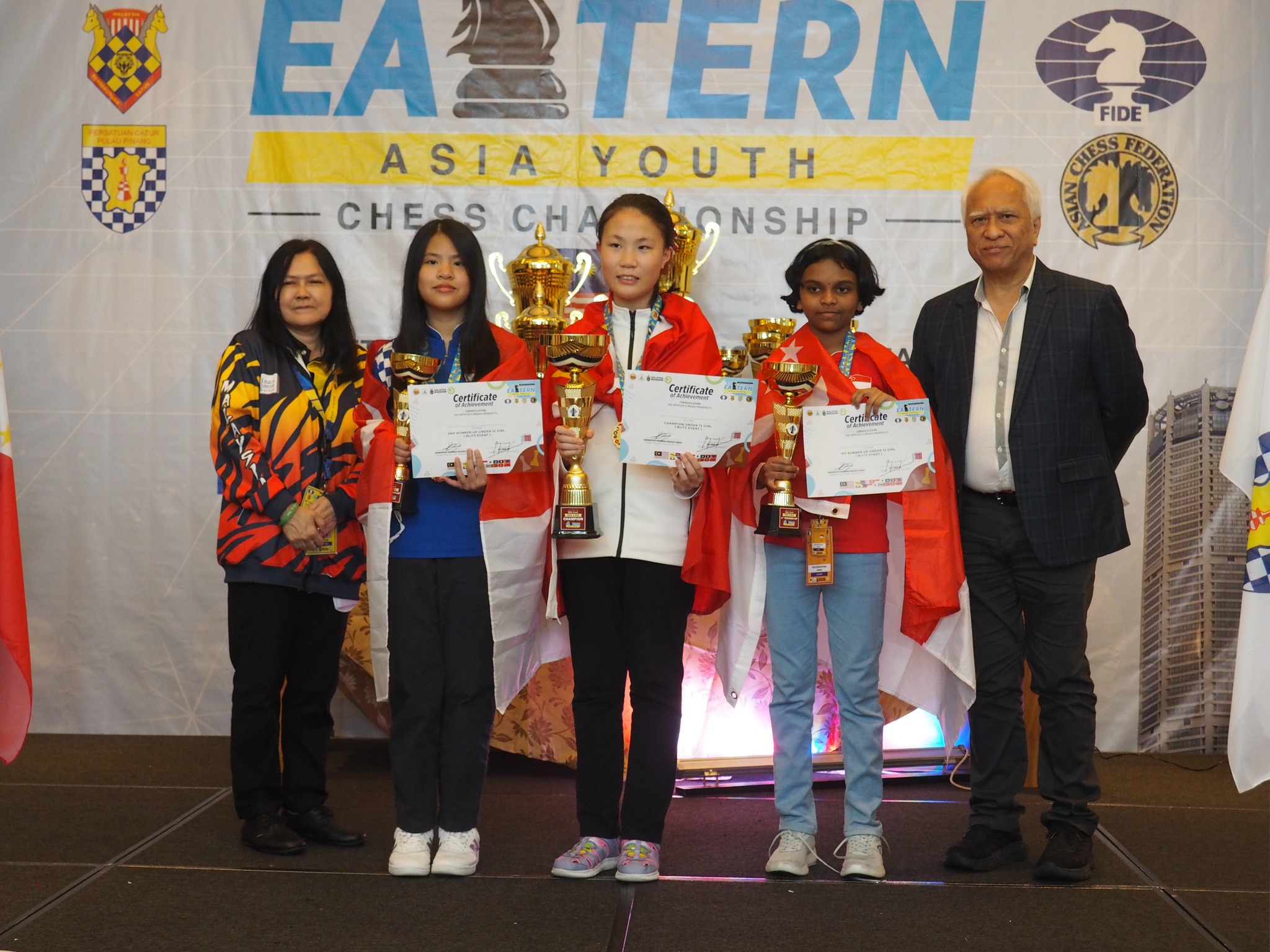
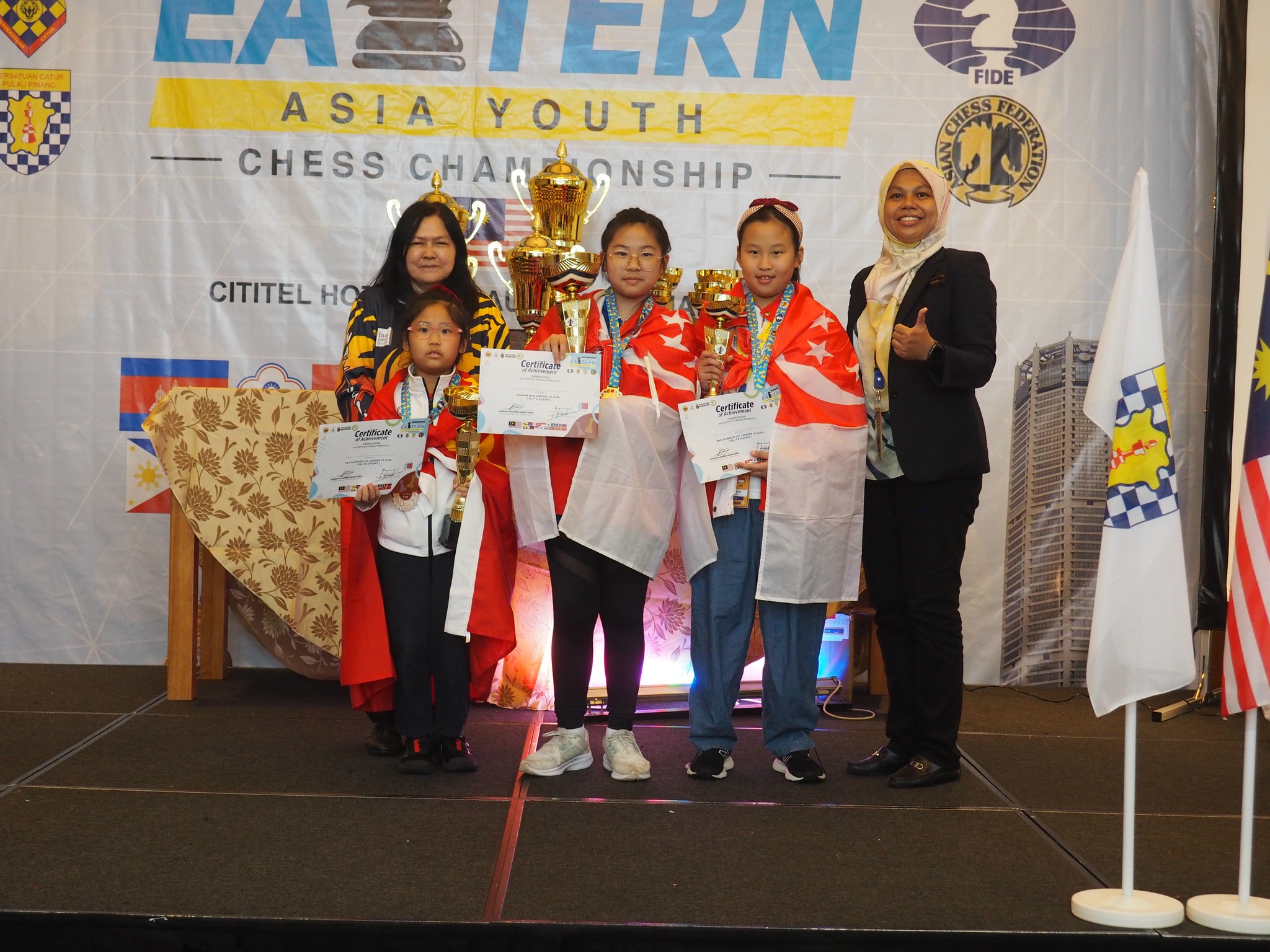
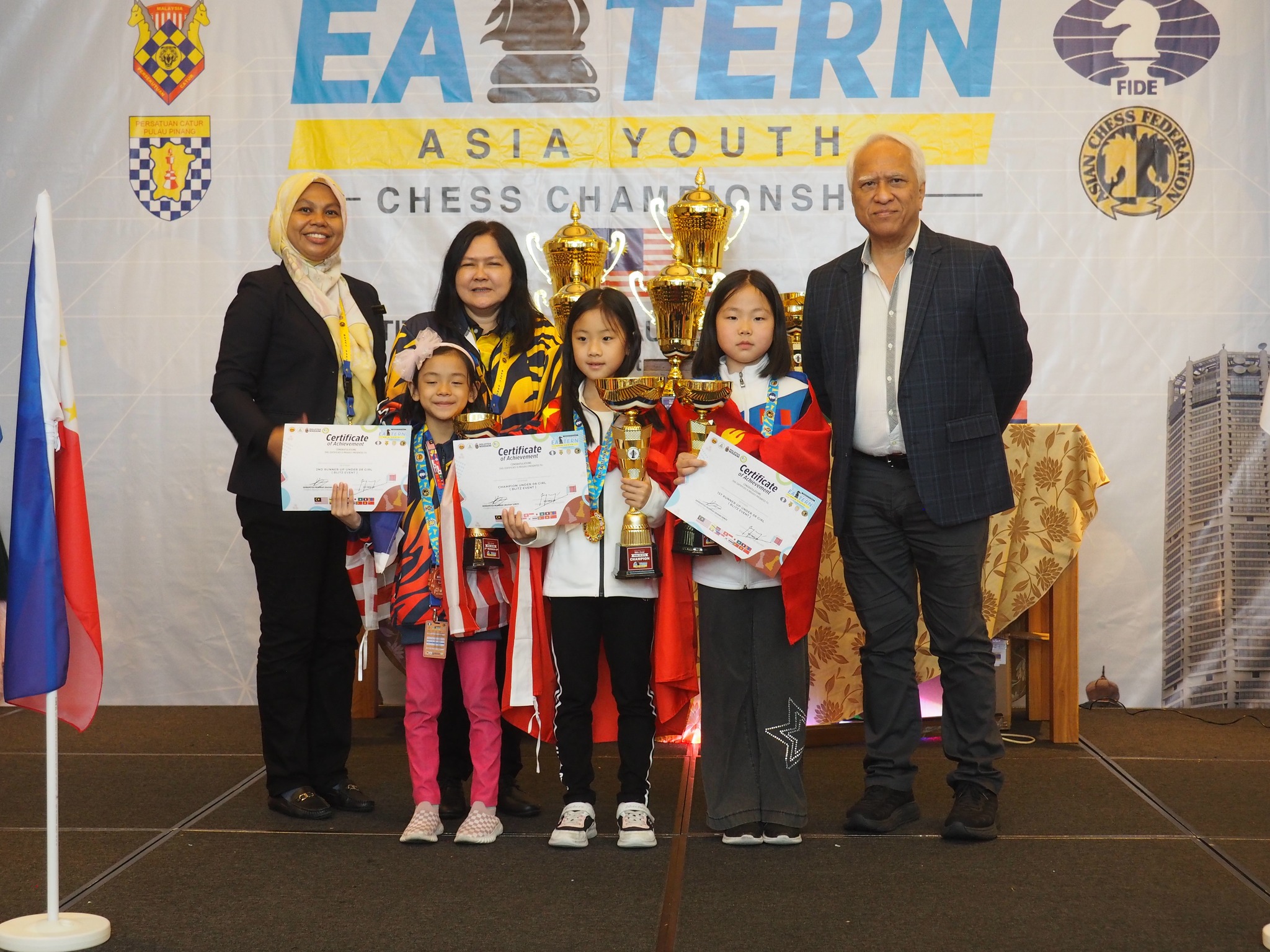
China, Singapore, Malaysia and Vietnam Top Eastern Asia Youth Blitz Championship

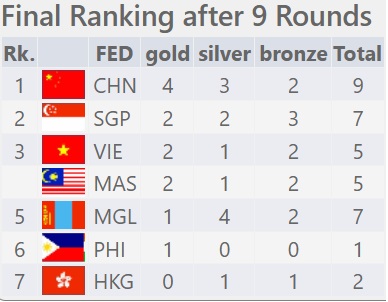
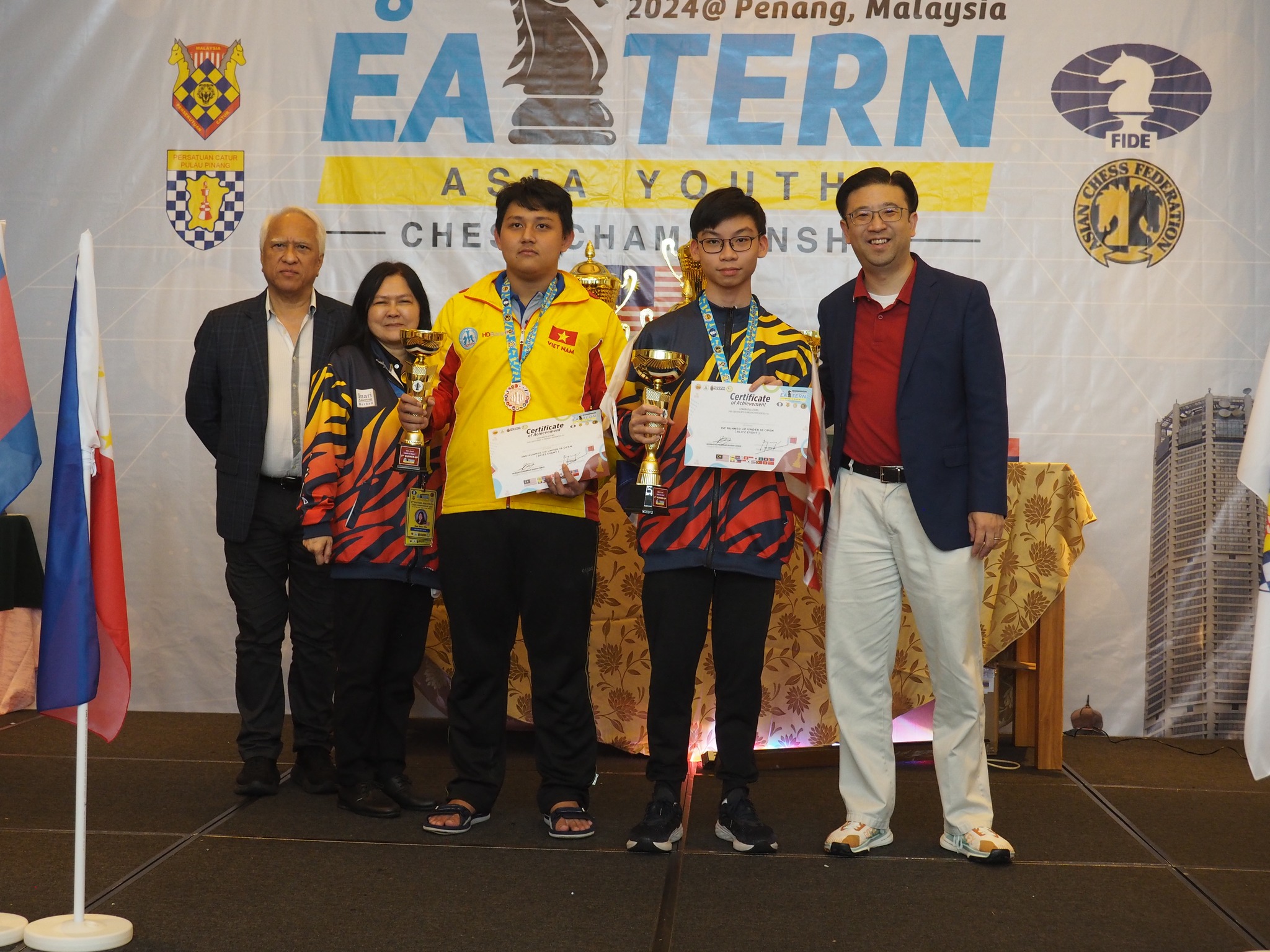
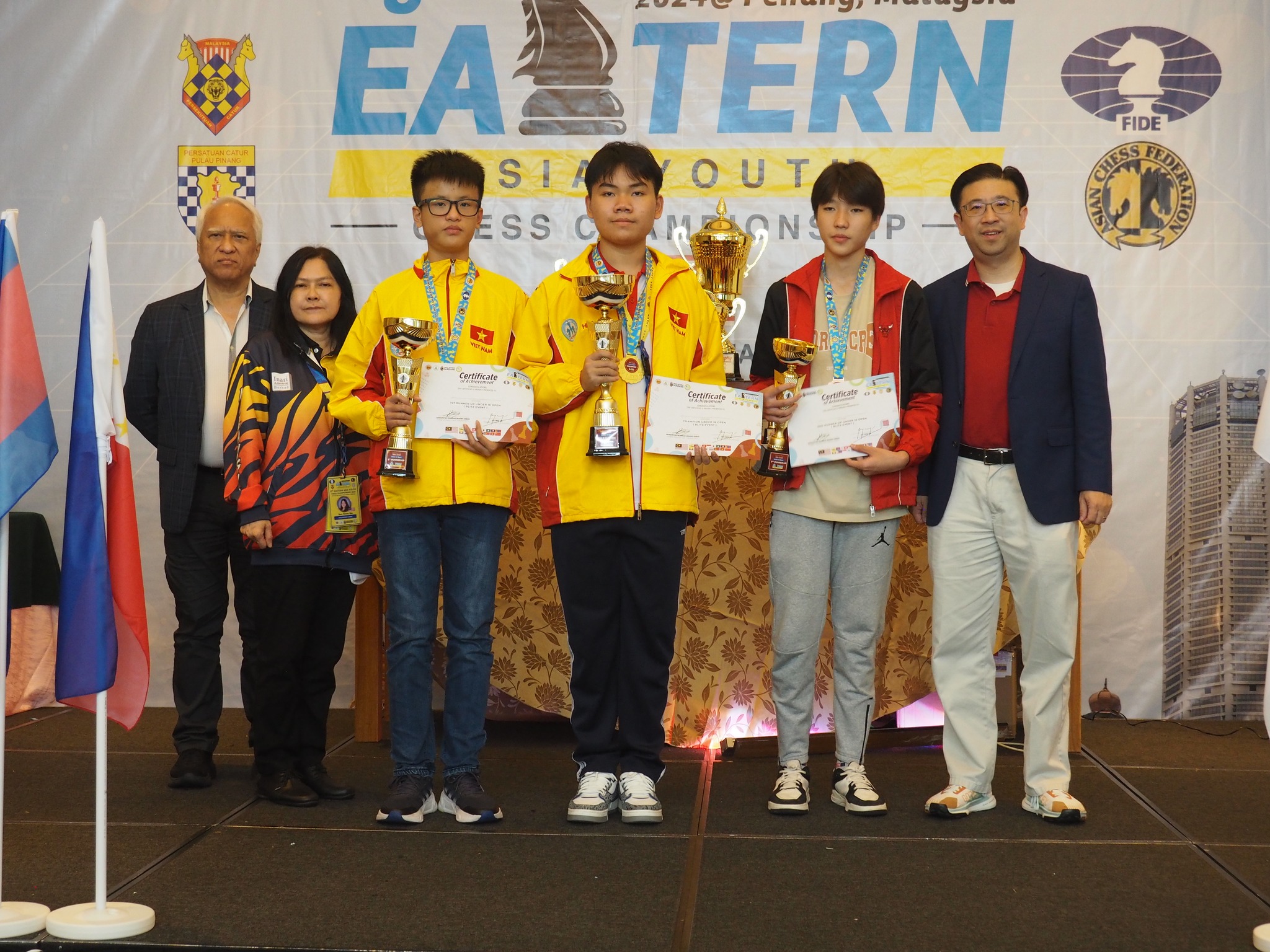
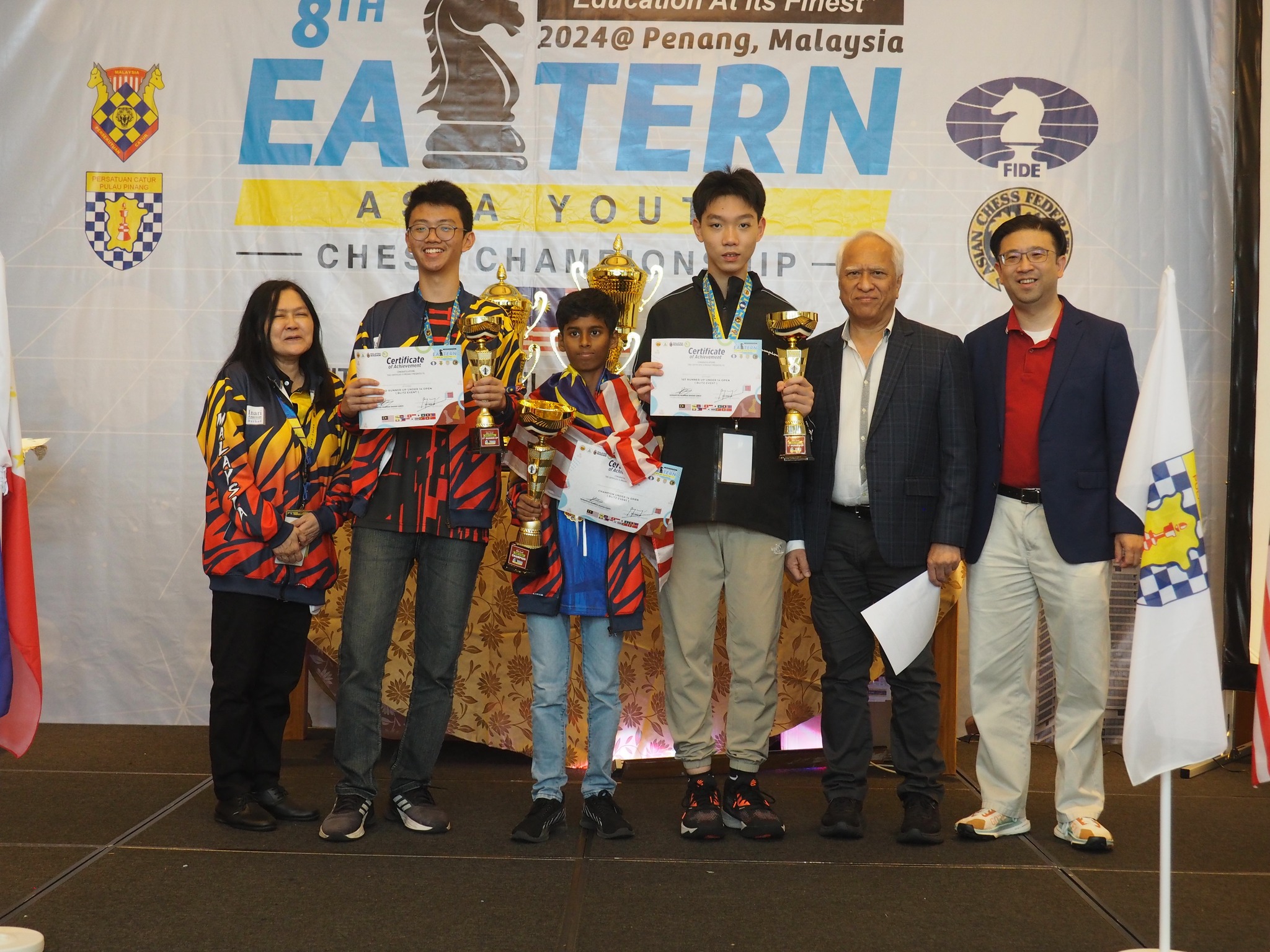
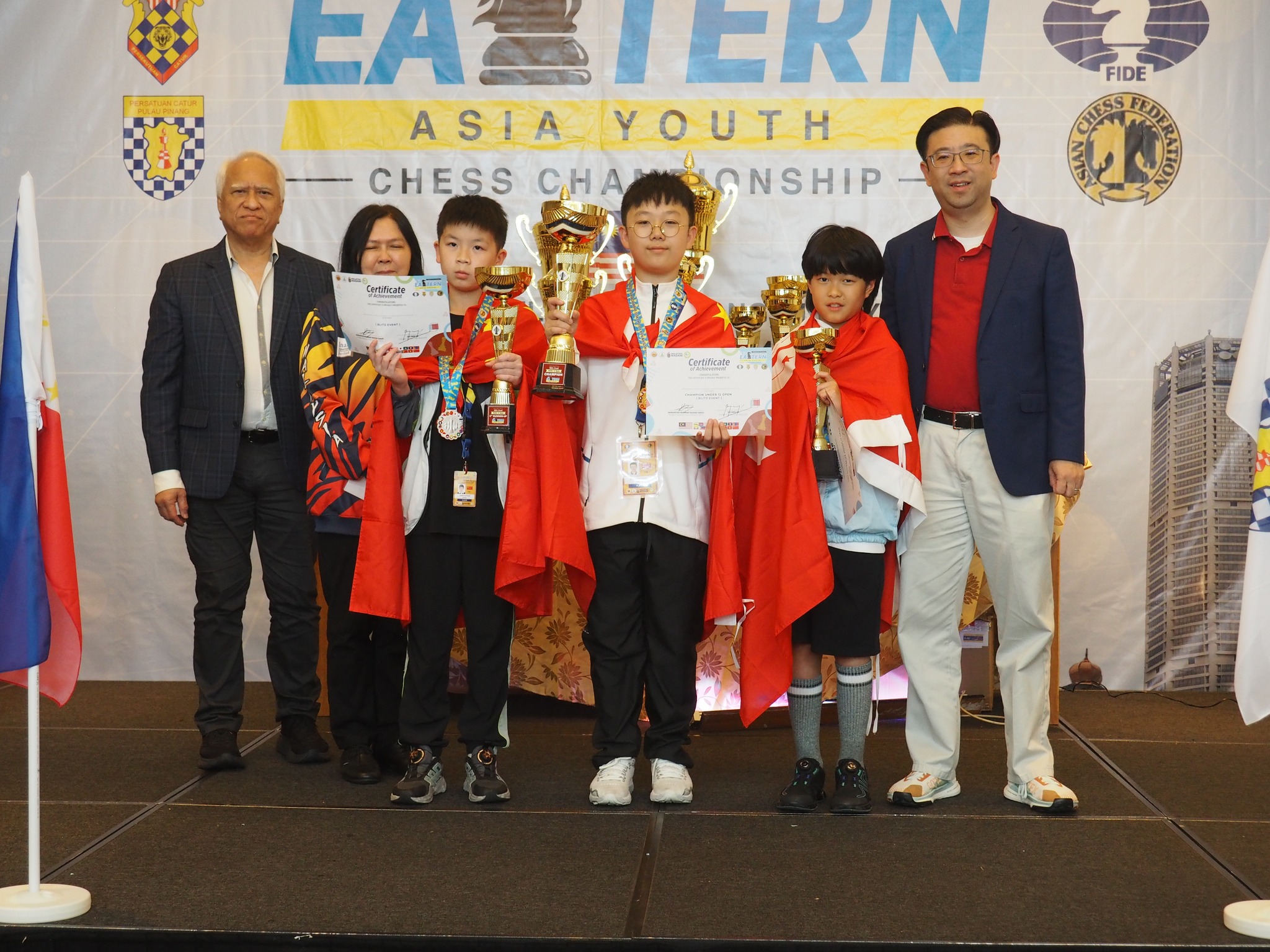
Chinese youths again dominated the Eastern Asia Youth Blitz Chess Championships held Saturday, 20th July in Penang, Malaysia. China tallied four gold medals followed by Singapore, Vietnam and Malaysia with two gold medals each. Singapore finished second with two silver. Host Malaysia and Vietnam tied at one silver and two bronze medals each. Visit chess-results.com for round by round results and final standings.

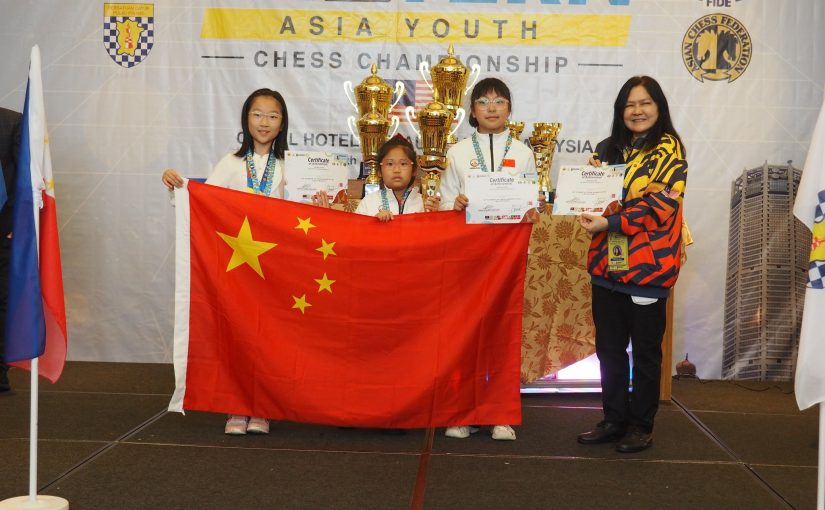
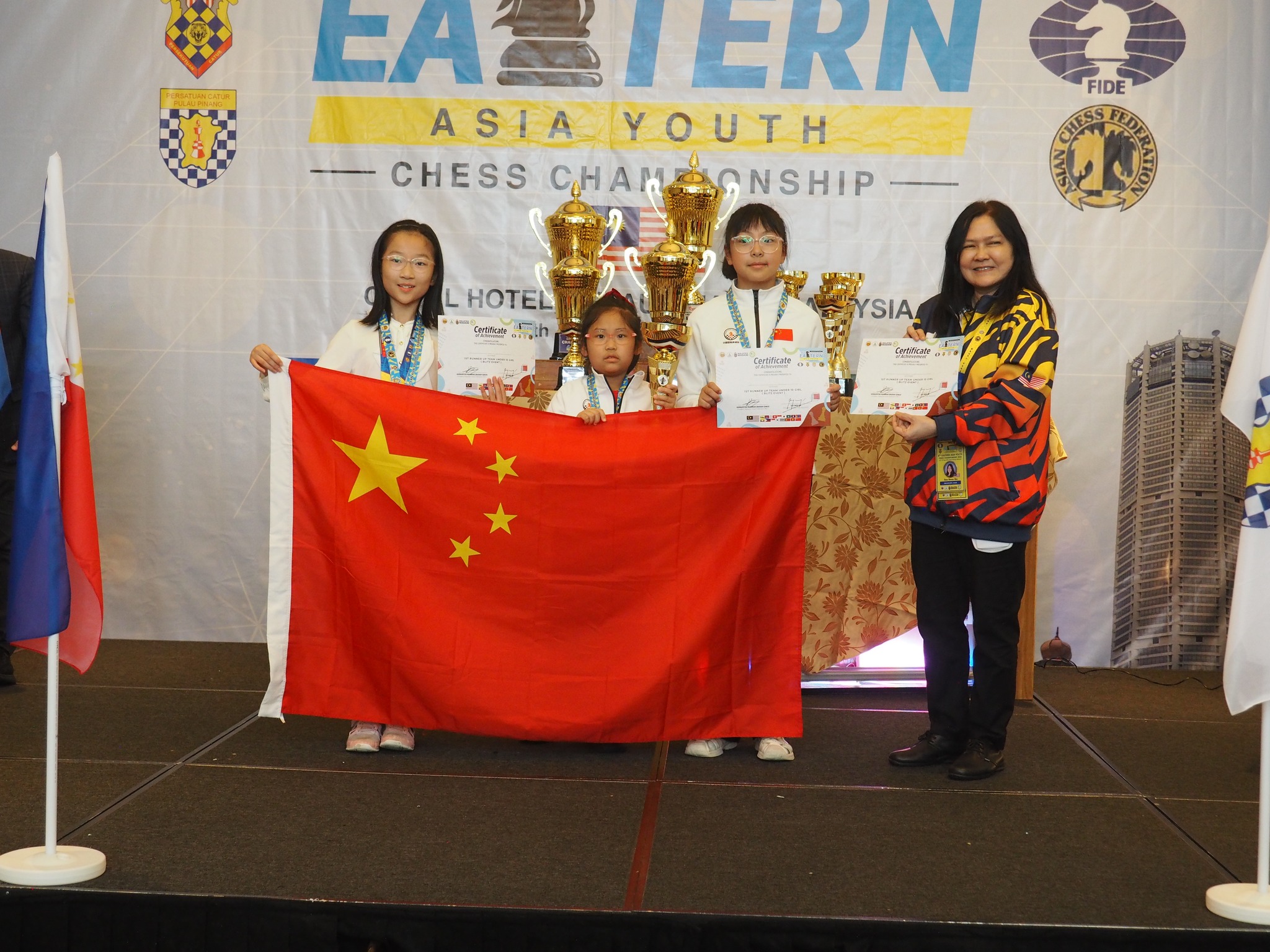
In photo is Penang Chess Association president Atty. Swee Sie See (right) with winning Chinese girls. The tournament was organized by the Penang Chess Association and Malaysia Chess Federation under the auspieces of the Asian Chess Federation and FIDE.

Visit Penang Chess Association facebook page. All photos by Quah Seng Sun.

Boys blitz under-18 medalists

Boys blitz under-16 medalists.

Boys blitz under-14 medalists

Boys blitz under-12 medalists

Boys blitz under-10 medalists

Boys blitz under-8 medalists.

Girls blitz under-18 Medalists

Girls blitz under-16 medalists

Girls blitz under-14 medalists

Girls blitz under-12 medalists.

Girls blitz under-10 medalists.

Girls blitz under-8 medalists.

Chess World Celebrates FIDE’s 100th Anniversary

On this 100th anniversary of the governing body of chess, we highlight the evolution and lasting influence of this discipline in global culture and sport; consolidating the mission of making chess an educational tool and a cultural bridge between nations.

by Dr. Uvencio Blanco Hernández

Introduction
The International Chess Federation (FIDE) celebrates today (20 July 2024) its 100th anniversary of its founding in Paris in 1924.
At that time, Paris was a vibrant and cosmopolitan city, at the height of the cultural and artistic effervescence of the 1920s, known as the “Roaring Twenties”.

The city, recovering from the ravages of World War I, became an epicentre of art, literature and fashion. Montmartre and Montparnasse were the bohemian quarters where artists such as Picasso, Hemingway and Fitzgerald lived and worked. Cafés and cabarets, such as the famous Moulin Rouge, were meeting places for
intellectuals and creators. The city’s architecture combined the elegance of Haussmannian boulevards with the innovation of Art Deco.

In this atmosphere, the 1924 Olympic Games also brought an air of sporting celebration and modernisation, with the construction of new stadiums and the promotion of international events. Paris was, without doubt, a city in the throes of transformation and bursting with life and creativity.

One hundred years later, these days, the Summer Olympic Games are once again taking place in Paris, the third organised by this beautiful city, after those of 1900 and 1924. The current Games have around 10,500 athletes from more than 200 countries competing in 32 sports, with a total of 329 medal events.

A bit of history
FIDE was established in the framework of the award ceremony of the first (unofficial) Chess Olympiad and coinciding with the Paris Olympic Games on July 20, 1924. The initiative to found it came from Pierre Vincent, secretary general of the French Chess Federation under the motto “Gens una sumus” (“We are one family”);
proposed by the Russian immigrants Vitaly Halberstadt and Viktor Kahn, signatories of the founding act.
Representatives from fourteen countries took part in the founding congress, which was held in the Town Hall of the 9th arrondissement of Paris (6 Rue Drouot). The founding federations were: Argentina, Belgium, Canada, Czechoslovakia, Spain, France, Great Britain, Hungary, Italy, the Netherlands, Poland, Romania, Switzerland
and Yugoslavia.
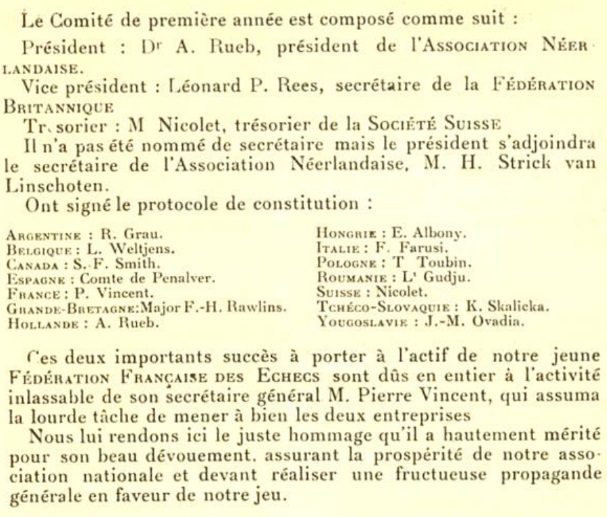
The term of office was set at 4 years per term; the first board of directors consisted
of:
President Alexander Rueb Netherlands
Vice President Leonard P. Rees Great Britain
Secretary M. H. Strick van Linschoten Netherlands
Treasurer M. Nicolet Switzerland

These federations came together with the aim of creating an organization that would promote chess and regulate international competitions, thus laying the foundations for the growth and development of chess throughout the world.
Interestingly, future powers such as the United States and the Union of Soviet Socialist Republics (USSR) were not founding members of FIDE. Since its inception, FIDE has been a driving force in popularizing chess worldwide
by becoming the world’s leading chess authority, overseeing competitions and promoting the development of the sport at all levels.

A beginning has been made, the foundations have been laid, and the prospects are fairly good that we shall soon have a working organization whose aim will be, to some extent, to bring order out of chaos and to have a central authority, One of the main aims of which will be to bring together at international congresses lovers of the game from far distant points of the globe. 
American Chess Bulletin, November 1924.

We can verify that, since its creation, FIDE has organized world championships, fostering legendary figures such as José Raúl Capablanca, Bobby Fischer, Garry Kasparov and Magnus Carlsen. Over the years, FIDE has implemented grading systems and standardized rules, fostering the professionalization of chess and expanding its global reach.

FIDE Presidents
To date, FIDE’s presidency has been held uninterruptedly by eight leaders, with Sweden’s Folke Rogard at the helm for a record 21 years after the Second World War.
# Period Periods Presidents Federation
1 1924-1939 4 Alexander Rueb Netherlands
2 1939-1946 2 Augusto De Muro Argentina
3 1946-1949 1 Alexander Rueb Netherlands
4 1949-1970 5 Folke Rogard Sweden
5 1970-1978 2 Max Euwe Netherlands
6 1978-1982 1 Friorik Olafsson Iceland
7 1982-1995 3 Florencio Campomanes Philippines
8 1995- 2018 5 Kirsan Ilyumzhinov Russia
9 2018-2026 2 Arkady Dvorkovich| Russia
In the attached list, we can see that the Netherlands has exercised eight times. Russia seven, Sweden five, the Philippines three, Argentina two and Iceland one.

Milestones in the history of FIDE
FIDE, as a centenary sports organization, has countless milestones to showcase. Among the most important chess events from the founding of FIDE to the present day, we can cite the following:
1924 Foundation of FIDE in Paris, France.

1927 The first Chess Olympiad is held in London.
1948 FIDE begins organising the World Chess Championship.
Mihail Botvinnik (USSR) becomes the 1st FIDE World Champion and 6th in history.
1950 First Grandmaster titles awarded by FIDE.
1970 Implementation of the Elo rating system by FIDE.
1970 Match USSR vs Rest of the World, Belgrade.
1971 Publication of the first official FIDE rating list.
1972 Match of the century between Bobby Fischer and Boris Spasky.
1975 Karpov becomes world champion by default after Fischer’s resignation.
1984-85 First Karpov-Kasparov match, the longest in history.
1985 Kasparov becomes the youngest world champion in history.
1993 Break-up between Kasparov and FIDE, creation of PCA.
1999 FIDE is recognized by the International Olympic Committee.
2000 Implementation of the knockout system for the FIDE World Championship.
2006 Reunification of the world chess title in match between grandmasters Vladimir Kramnik (Russia) and Vesselin Topalov (Bulgaria); Kramnik wins.
2007 First World 960 Chess Championship (Fischer Random) recognized by FIDE.
2013 Magnus Carlsen becomes world champion.
2018 Implementation of the VAR system in top-level tournaments.
2020 Rise of online chess due to the COVID-19 pandemic.
2021 Chess is included in the first ever e-sports Olympiad.
2024 FIDE centenary celebration with global events and a Guinness World Record attempt

These milestonesreflect the evolution of organized chess, changes in world championships, the introduction of new technologies and the global growth of the game under FIDE’s supervision.

FIDE between marches and counter-marches
As we have already stated, FIDE has undergone a significant evolution from its founding in 1924 to the present day. As an organization made up of men and interests, FIDE has had its ups and downs; its ups and downs, such as the accession to control of the World Championship (finally achieved 24 years after its foundation), the organization of some Olympiads and important events in questionable locations, the negotiations over the Fischer-Karpov match in 1975, the schism with the Grandmasters Association in 1993, the suspension of the Karpov-Kasparov match in 1985, the scandal of the Krammik-Topalov match in 2006, the departure of Ilyumhinov from the presidency in 2018, among others. However, it has managed to overcome the impact of these. Some important elements of it, associated with the milestones described above, are the following:

Growth
Founded with the support of 14 countries in 1924, FIDE has grown to include 190 national federations. Chess is universally distributed and is played by more than 600 million people.
Organizational structure
FIDE has established standing commissions (Rules, Arbiters, Rating, Trainers, etc.) and an Executive Committee for its management.

Organization of events
In 1927, FIDE organised the first Chess Olympiad in London, marking the beginning of major international competitions.
Supervision of the World Championship
In 1948, FIDE began to supervise the World Chess Championship, centralizing control over the most prestigious title.
Titles and ratings
In 1950, FIDE began awarding international titles such as Grandmaster. In 1971, it published the first official rating list, implementing the Elo system.
Olympic recognition
In 1999, FIDE was recognised by the International Olympic Committee, increasing the prestige of chess as a sport.
Expansion of competitions: FIDE has expanded its range of events, including rapid and blitz championships, tournaments for the disabled, veterans and children.
Technological adaptation
FIDE has incorporated modern technologies such as the VAR system into high-level tournaments and has promoted online chess, especially during the COVID-19 pandemic.
Funding
FIDE has developed a self-financing system based on federation, player, tournament, title and rating fees, as well as seeking sponsors.
Currently, FIDE’s official headquarters is located in Lausanne, Switzerland and is affiliated with the International Mental Sports Association (IMSA).
The celebration
The FIDE centenary celebration includes special events and tributes to chess grandmasters and contributors. These events aim not only to applaud FIDE’s centenary, but also to promote chess globally and recall the most important milestones in the organization’s history.
To celebrate this milestone, FIDE has organized a series of events throughout the year, including:

Chess festivals, tournaments organized all over the world under the #FIDE100 umbrella.
Exhibitions of historical archives, chess memorabilia around the world.
Publication of the FIDE Golden Book, documented by Willy Iclicki, chairman of the FIDE History Committee.

An international art competition to create posters that inspire communities to join in the celebration of chess.
A social media campaign covering significant events in FIDE’s history, from 1924 to the present day.
The creation of an online chess museum with rare photographs, unique publications about FIDE and posters of past events.
Today, 20 July, International Chess Day proposed by the United Nations (UN), FIDE will attempt to set a Guinness World Record for the most games played in one day; aiming to reach over 1 million games played in person and over 15 million online.
The celebrations will culminate tonight with a special gala in Paris itself. Also in the framework of the Budapest Olympiad, on 19 September FIDE will bring together leading figures from the world of chess, including prominent players, leaders and historical personalities of FIDE. The gala includes commemorative speeches, presentations on the history of FIDE, and special awards.


This 100th anniversary highlights the evolution and enduring influence of chess in world culture and sport, cementing FIDE’s mission to make chess an educational tool and a cultural bridge between nations.

Conclusions
– In the 100 years of its existence, the International Chess Federation (FIDE) has had a significant impact on the popularity of chess by playing a crucial role in its worldwide development and promotion.
– Since its founding in 1924, FIDE has worked to organise and regulate chess competitions, set standards and award international titles, such as Grandmaster, which has contributed to the professionalisation and prestige of
the sport.
– One of FIDE’s most notable achievements has been the organisation of major events such as the World Chess Championship Cycle and the Chess Olympiads, which have attracted players from all over the world and increased the visibility of chess in the international sphere.
– FIDE has promoted chess in several categories, including tournaments for the disabled, veterans and children, which has helped expand its reach and accessibility.
Chess has experienced a resurgence in popularity, especially in the e-sports Community. Broadcasts of chess games on different platforms have reached unprecedented levels of viewership, and chess has been included in events such as the first eSports Olympiad and the European Games in Krakow. This combination of traditional chess and e-sports has made the game more accessible and attractive to new generations of players.
– FIDE has also worked to have chess officially recognised as an Olympic discipline by the International Olympic Committee, which could further increase its prestige and popularity.
– FIDE has implemented modern technologies, such as the VAR system, to improve fairness and transparency in competitions.

– FIDE has been instrumental in the promotion and development of chess, helping it to become a global sport with an ever-growing community of players and an increasing presence in the traditional and e-sports arena.

Sources

Blanco, U. (2020). El ajedrez patrimonio cultural de la humanidad. Version Kindle, Amazon
ChessBase. El Día Internacional del Arte de Ajedrez de la FIDE. Comunicado de prensa
FIDE. 16/05/2024 –

https://es.chessbase.com/post/dia-internacional-del-arte-de-ajedrez-de-la-fide-
comunicado-de-prensa

ChessBase. El centenario de la FIDE comienza con una lectura sobre Folke Rogard en la
Copa Rilton. Por Comunicado de prensa, FIDE03/01/2024 –

https://es.chessbase.com/post/centenario-fide-comienza-con-lectura-sobre-folke-rogard-
en-la-copa-rilton-2024

ChessBase. La FIDE está preparando la celebración de su centenario en 2024. Por
ChessBase, 26/09/2023 –

https://es.chessbase.com/post/la-fide-est-preparando-la-celebracin-de-su-centenario-en-
2024

ChessBase. París de 1924 y su “olimpiada” de ajedrez. Por Uvencio Blanco Hernández,
23/03/2021 –
https://es.chessbase.com/post/olimpiada-de-ajedrez-de-paris-1924
FIDE. FIDE celebrates its centenary anniversary with a series of key events. 20/09/2023
https://www.fide.com/news/2640
Revista Zetta. La antorcha de la FIDE llega a Colombia para celebrar el ajedrez.
27/05/2024.-

La antorcha de la FIDE llega a Colombia para celebrar el ajedrez


Imagen 1 por Uvencio Blanco Hernández.-
Imagen 2 Copia del Acta fundacional FIDE cortesía del MF Sergio Ernesto Negri.
Professional Chess Association of the Philippines Champions Tour 2024

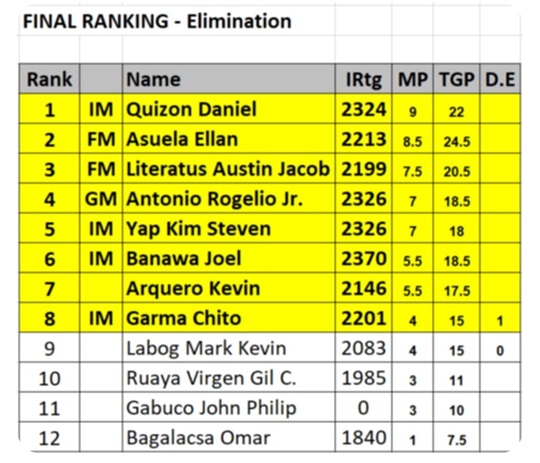
After two days of eliminations on Friday and Saturday, eight players successfully advanced to the quarter finals on Sunday 21 July 2024 in the ongoing PCAP Champions Tour at Greenhills Malls in San Juan City, Philippines.
Qualified are IM Daniel Quizon (total of 9 match points, FM Ellan Asuela (8.5 match points), FM Austin Jacob Literatus (7.5 match points), IM Kim Steven Yap (7.0 match points), GM Rogelio “Joey” Antonio Jr. (6.0 match points), IM Joel Banawa (5.5 match points), Kevin Arquero (5.5 match points), and IM Chito Garma(4.0 match points).
Garma makes it to the Final eight after Antonio defeated Mark Kevin Labog on Sunday. Garma and Labog finished identical 4.0 match points, but Garma took the last spot with a better direct encounter tie break. Earlier, GAB chairman Atty. Francisco Rivera, PCAP chairman Michael Angelo Ong Chua, PCAP founder and commissioner Atty. Paul Elauria led the opening rites on Friday. -Marlon Bernardino-

China, Malaysia, Vietnam Top Eastern Asia Youth Chess Championship in Malaysia

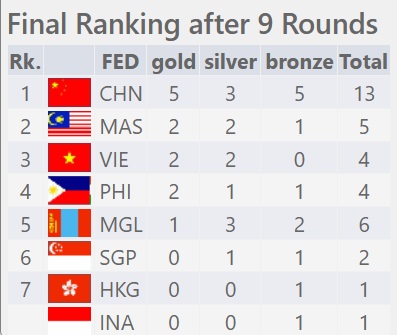
China youths dominated the Eastern Asia Youth Chess Championship with 5 gold medals followed by Malaysia, Vietnam and Philippines with two gold medals each. Malaysia finished in second slot with two silver and two bronze medals. Vietnam had two silver medals while Philippines had one silver and one bronze medal. Visit chess-results.com for round by round results and standings.

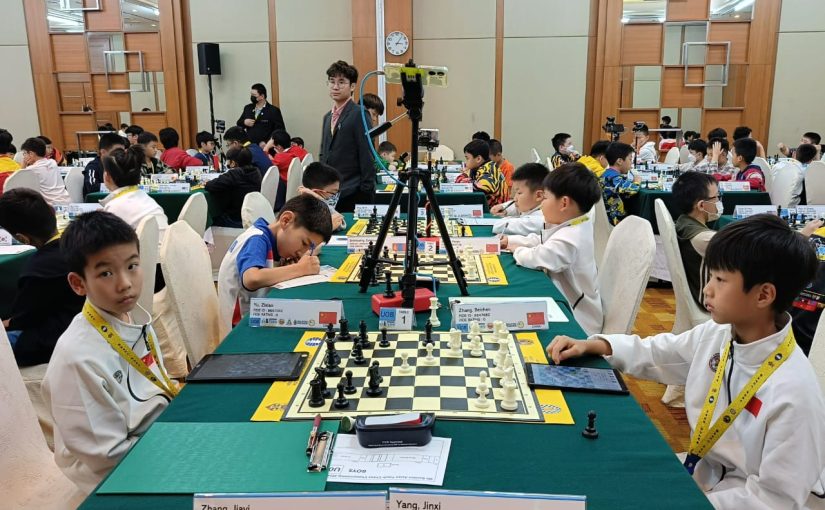
The Eastern Asia Youth Chess Championship standard event was held 14-20 July 2024 in Penang, Malaysia organized by the Penang Chess Association and Malaysian Chess Federation under the auspices of FIDE and the Asian Chess Federation supported by the FIDE Planning and Development Commission. All photos by Quah Seng Sun.

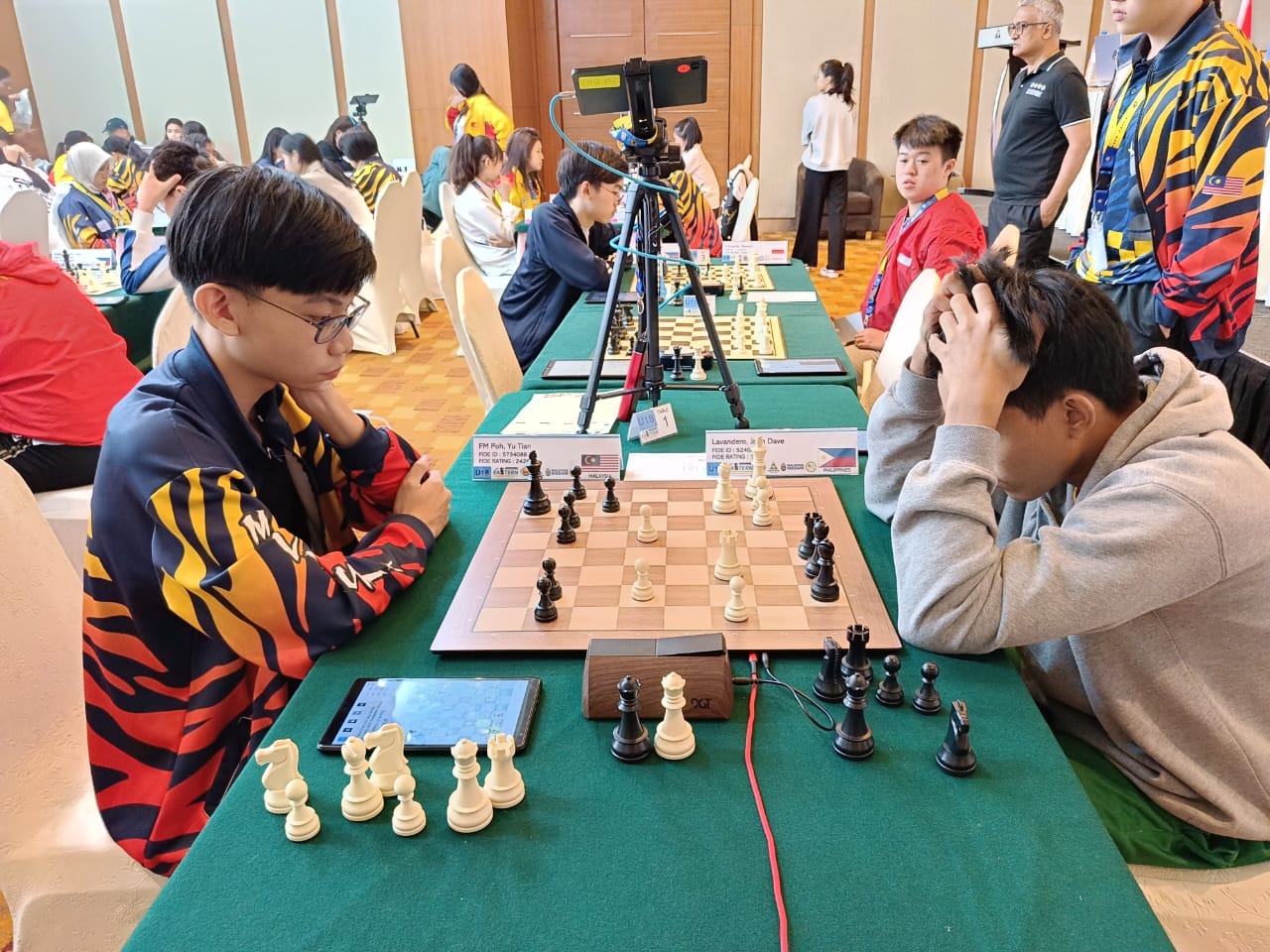
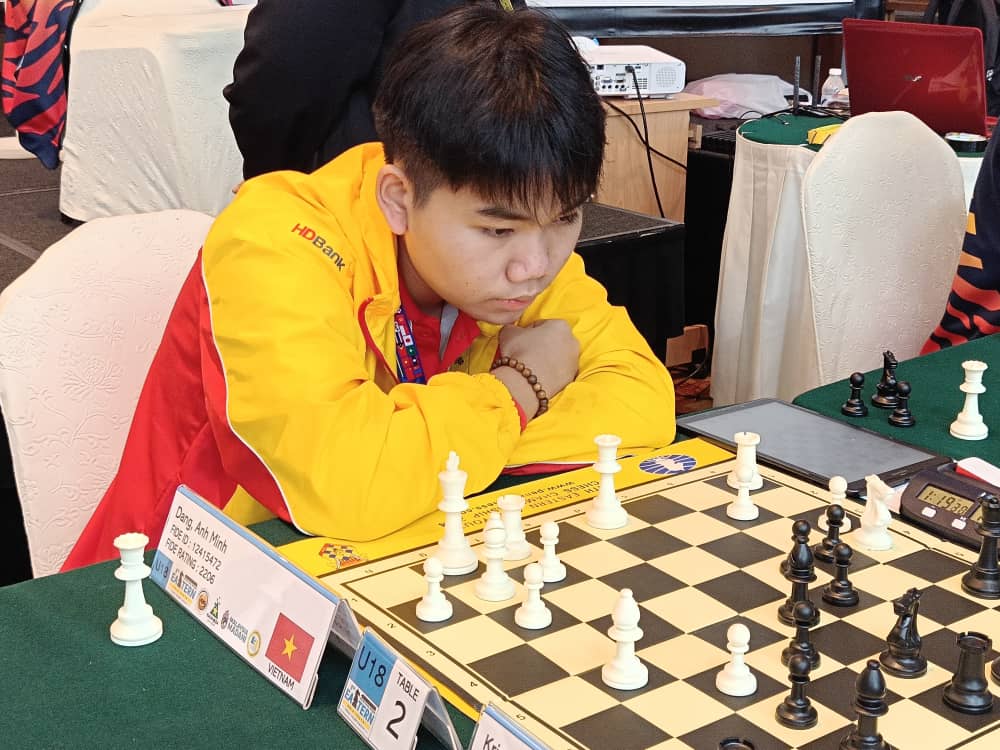
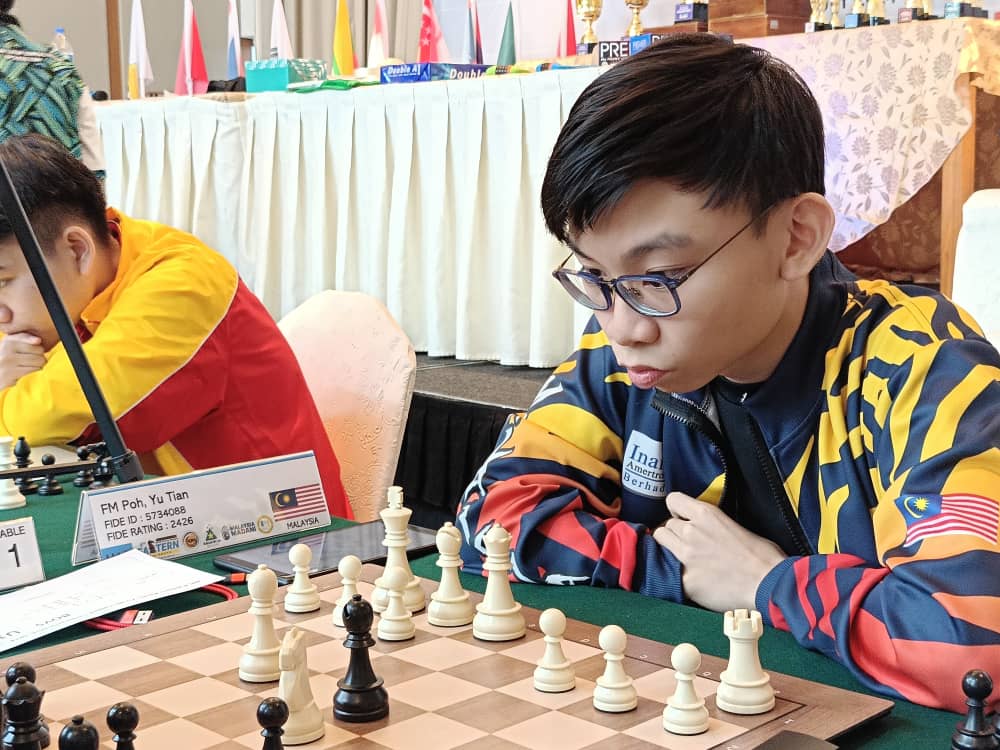
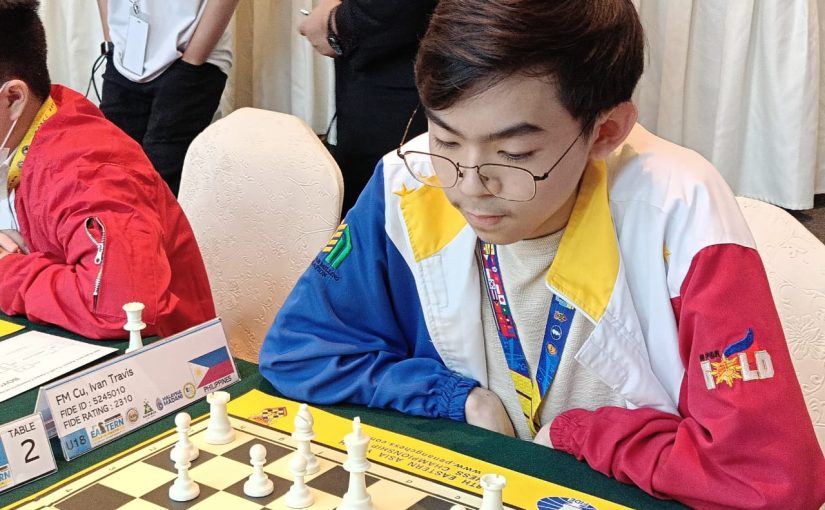
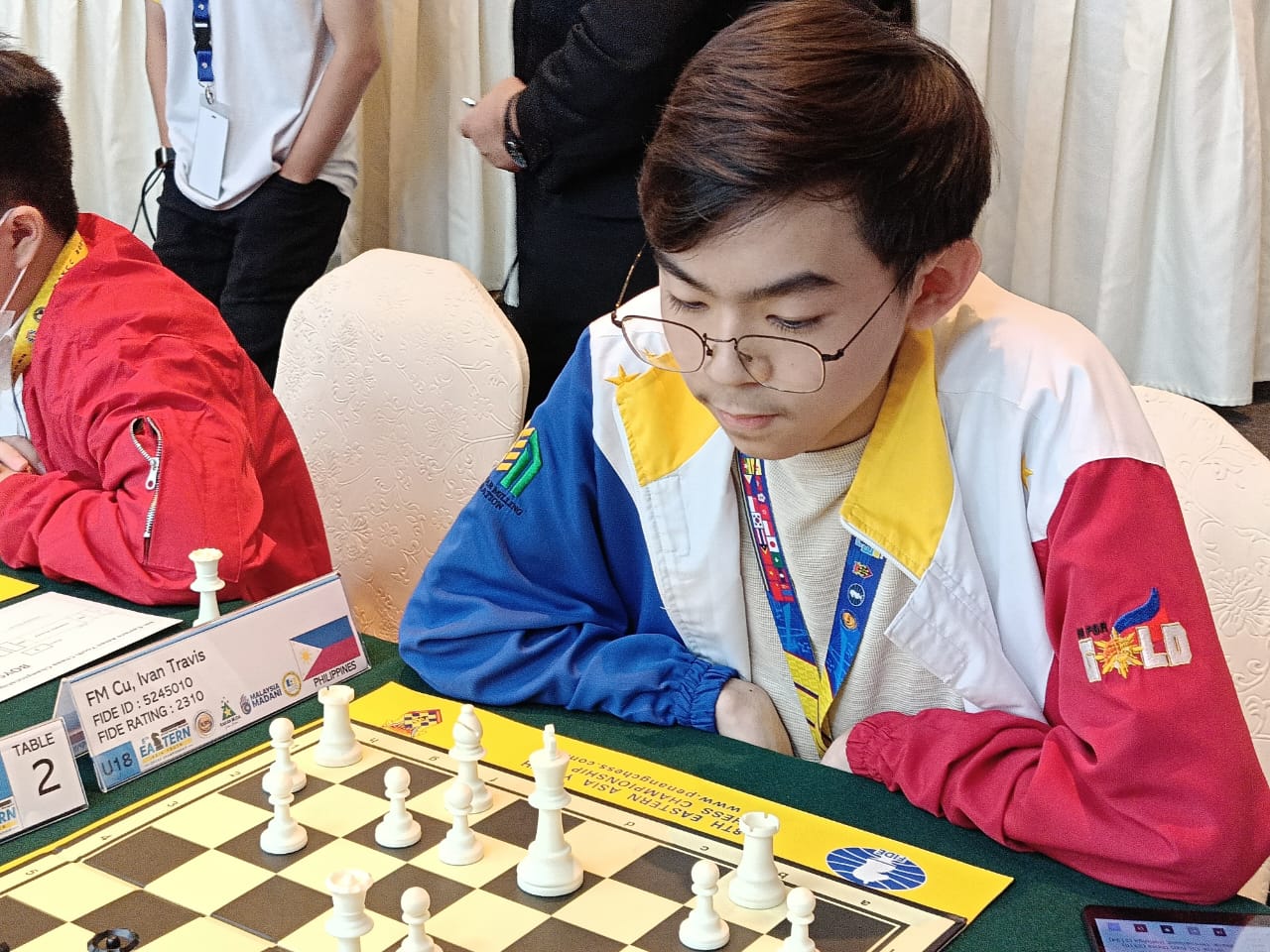
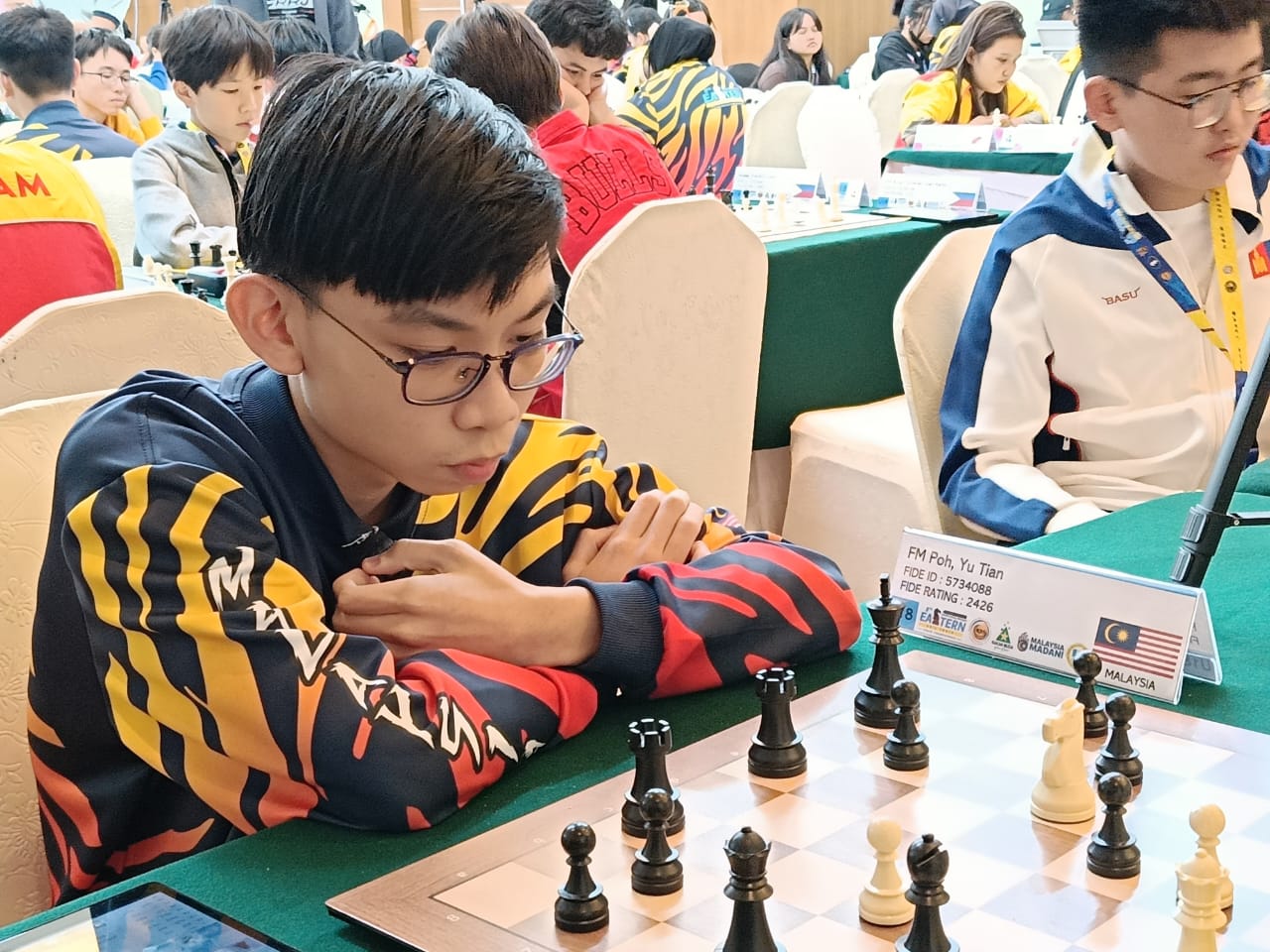
FM Poh Yu Tian of Malaysia (above left) beat John Dave Lavandero of the Philippines (above right) in the final 9th round to win the gold medal in the boys under-18 division with 8 points. Dang Anh Minh of Vietnam was held to a draw by Tuguldur, Soninbayar of Mongolia to finish second with 7 points for the silver medal. Reynard Kristopher beat FM Ivan Travis Cu of the Philippines to land third place with 6.5 points for the bronze medal.

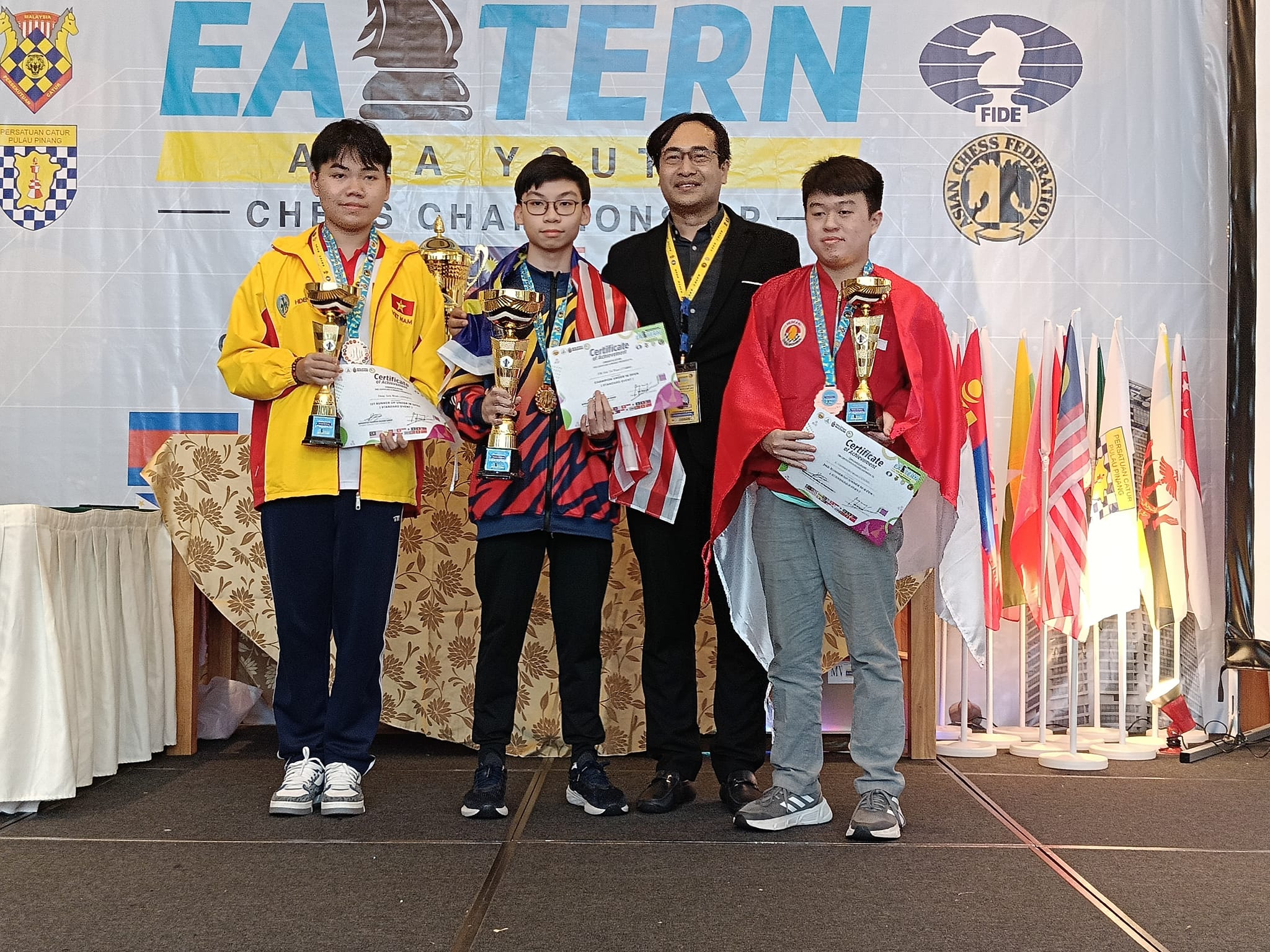
Boys under-18 (left to right): silver medalist Dang Anh Minh of Vietnam, gold medalist FM Poh Yu Tian of Malaysia and bronze medalist Reynard Kristopher of Indonesia.

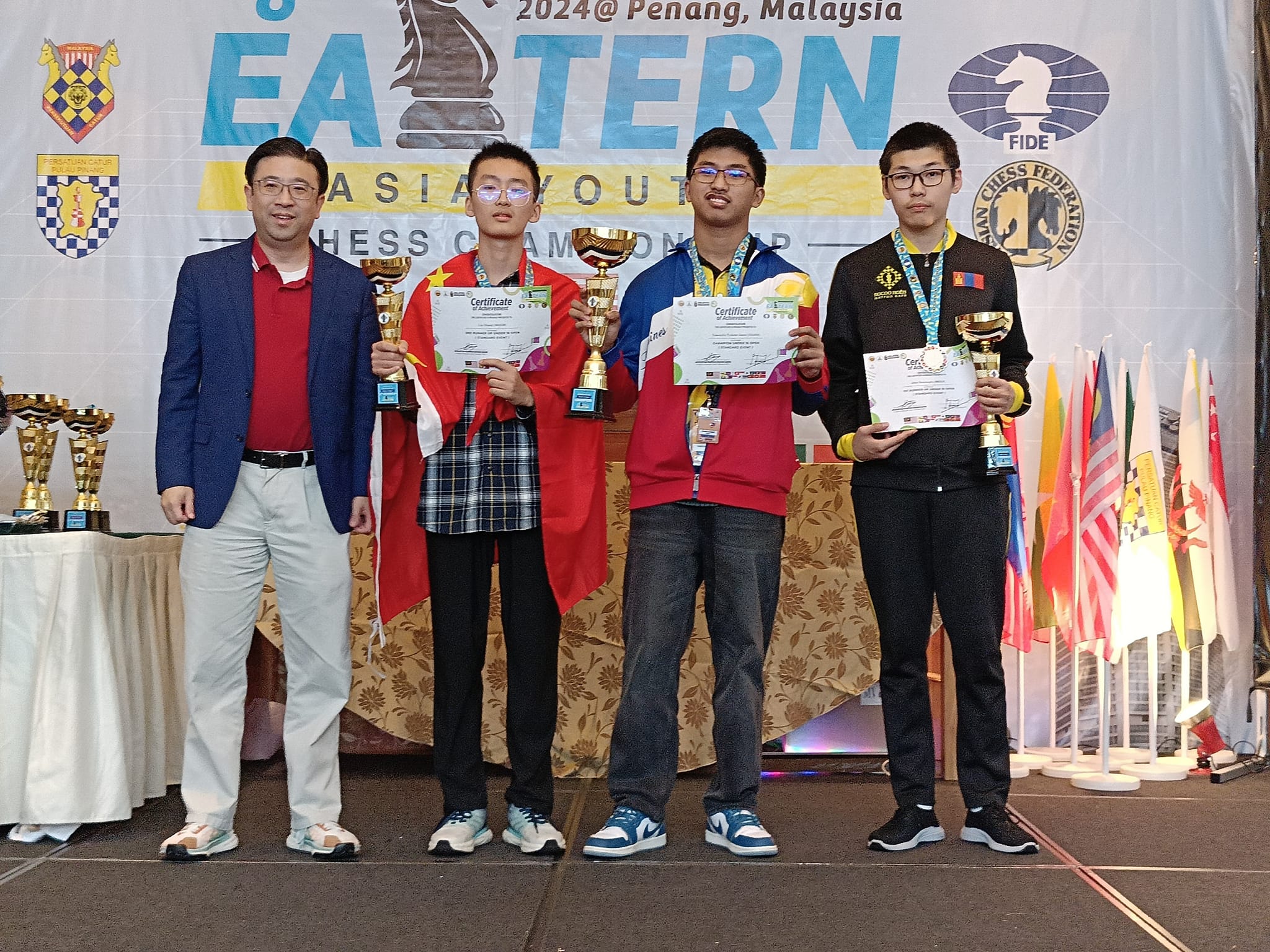
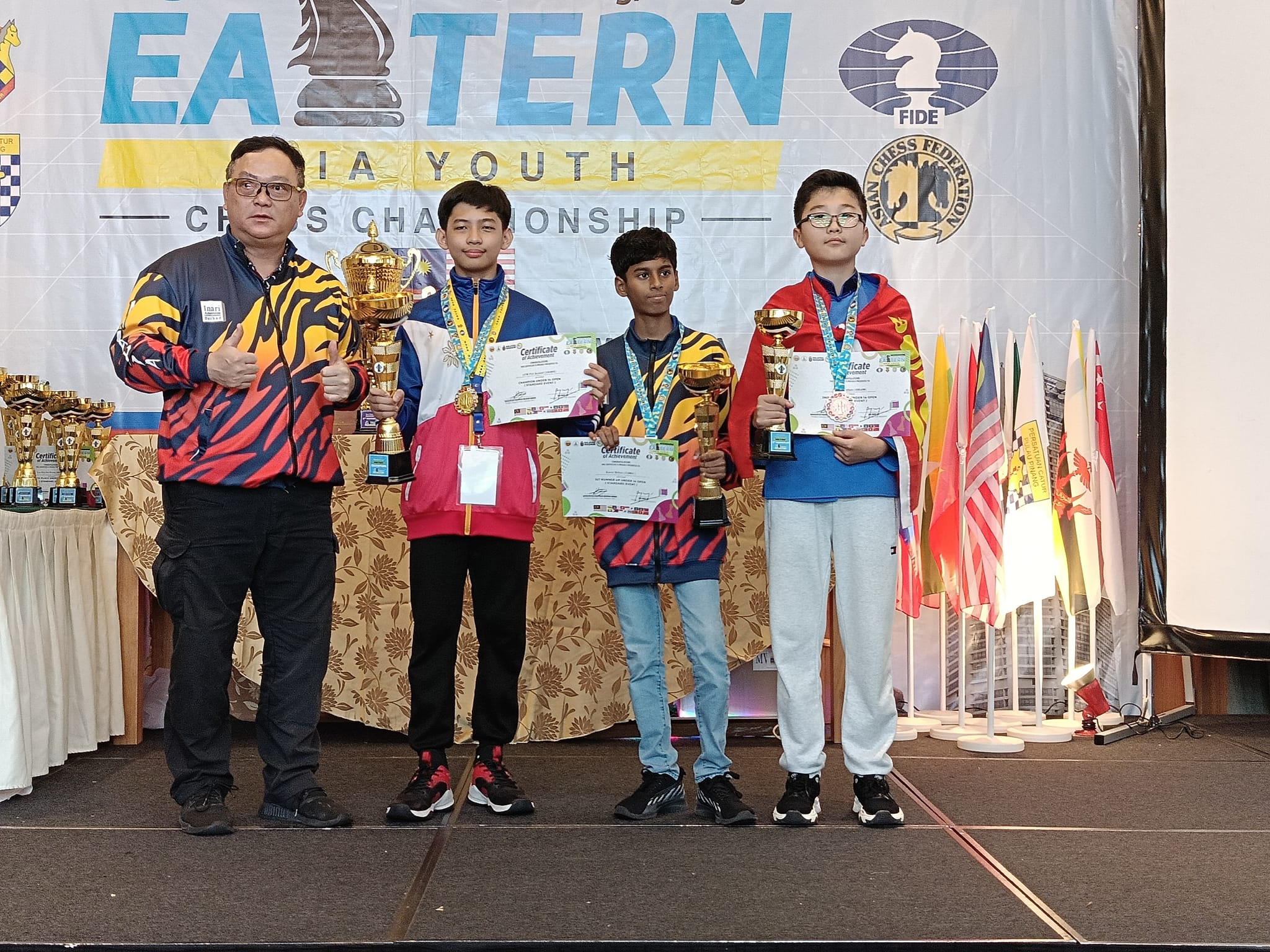
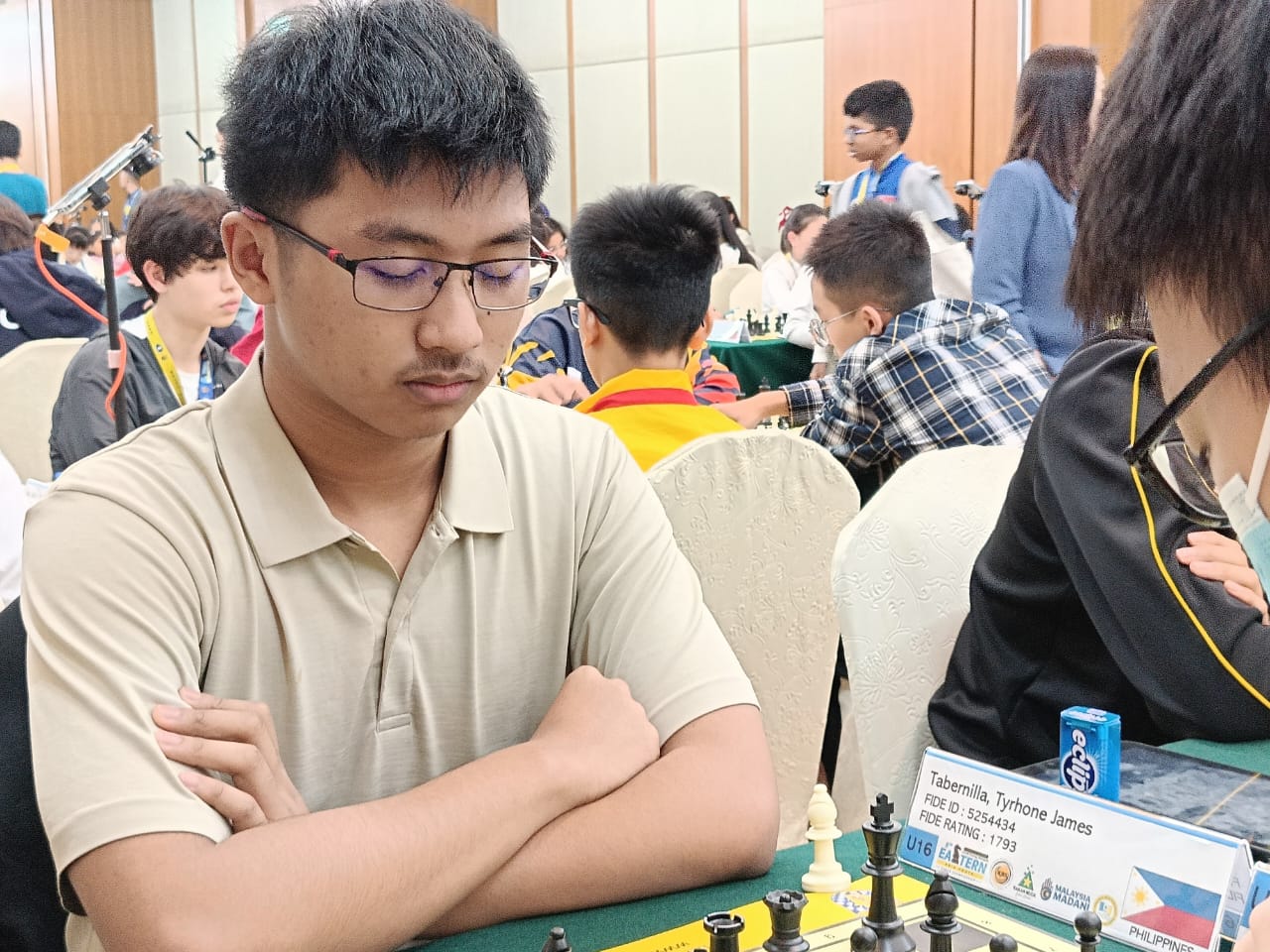
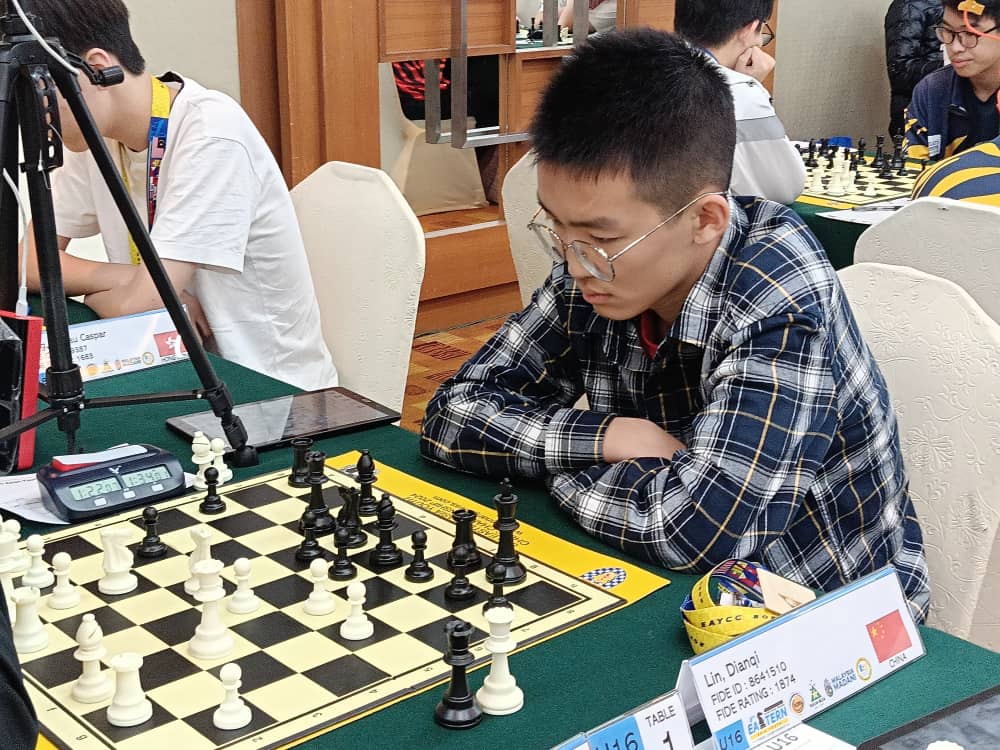
Tyrhone James Tabernilla of the Philippines (second from right) won the gold medal in the boys under-16 division alone with 7 points. The 16-year old Grade 11 student of De La Salle Santiago Zobel School Vermosa scored 5 wins and 4 draws. Burentegsh of Mongolia (right) won the silver medal with 6.5 points and a better tie break over Lin diangi of China (second from left) who won the bronze also with 6.5 points.

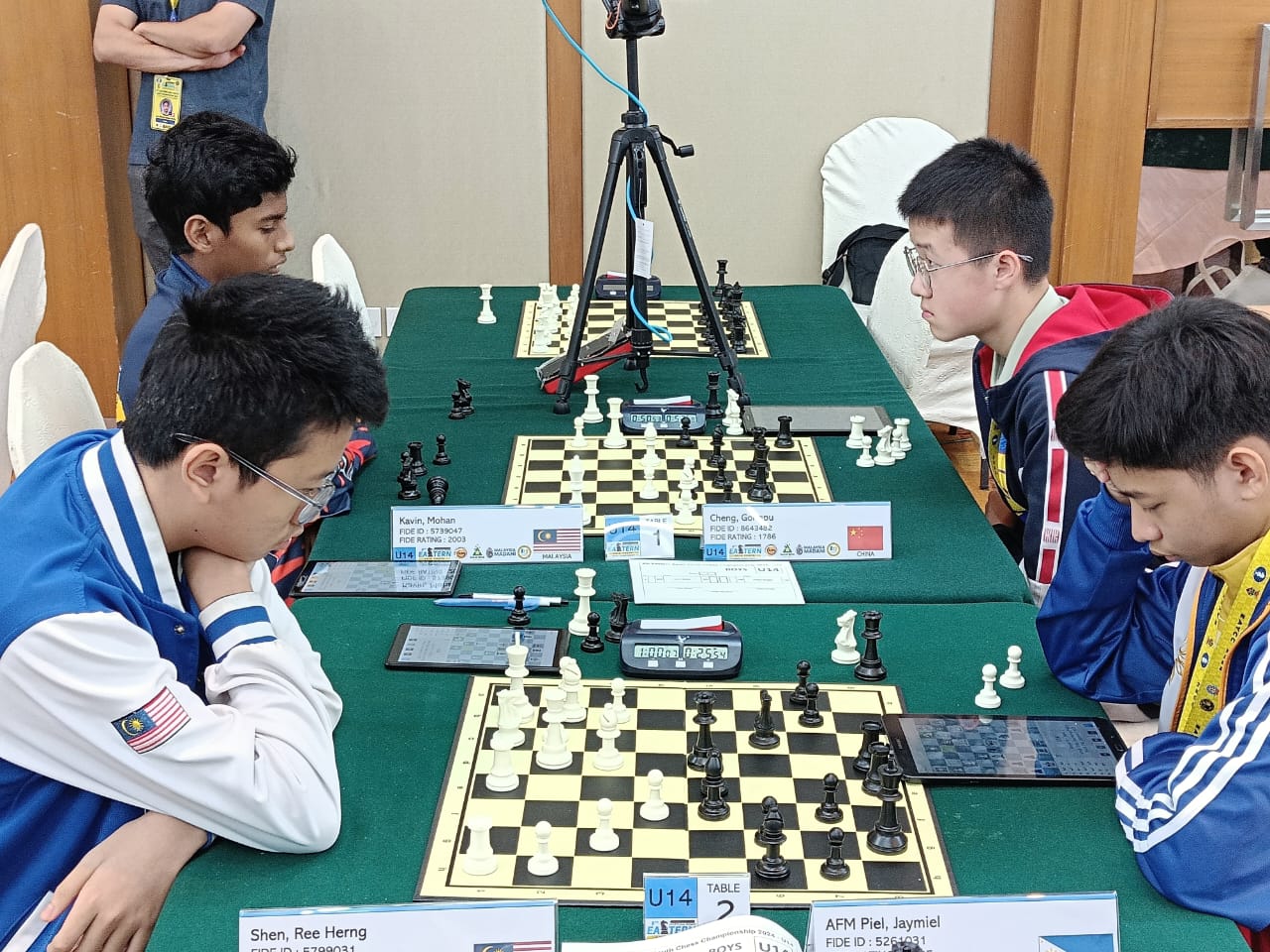
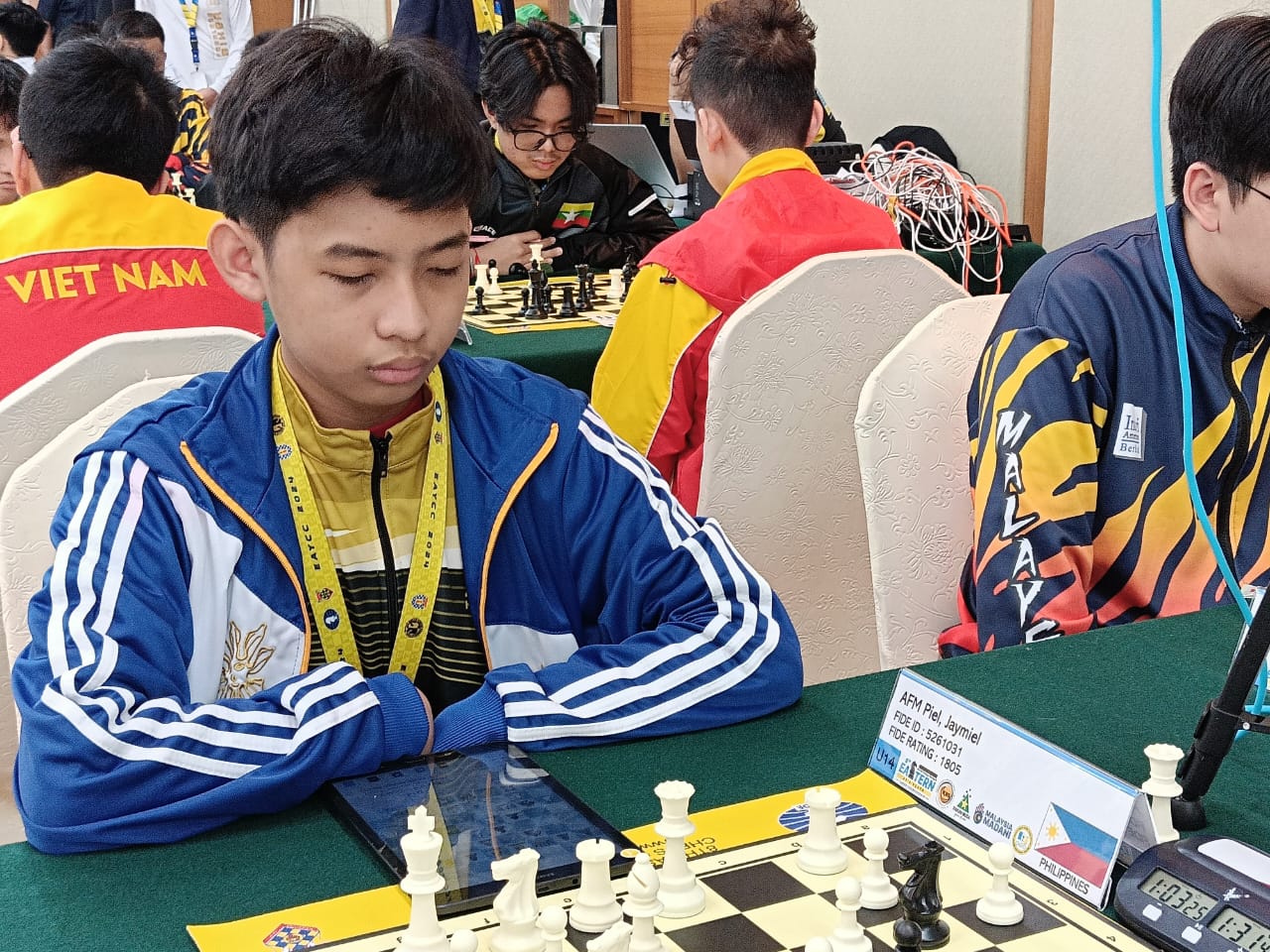
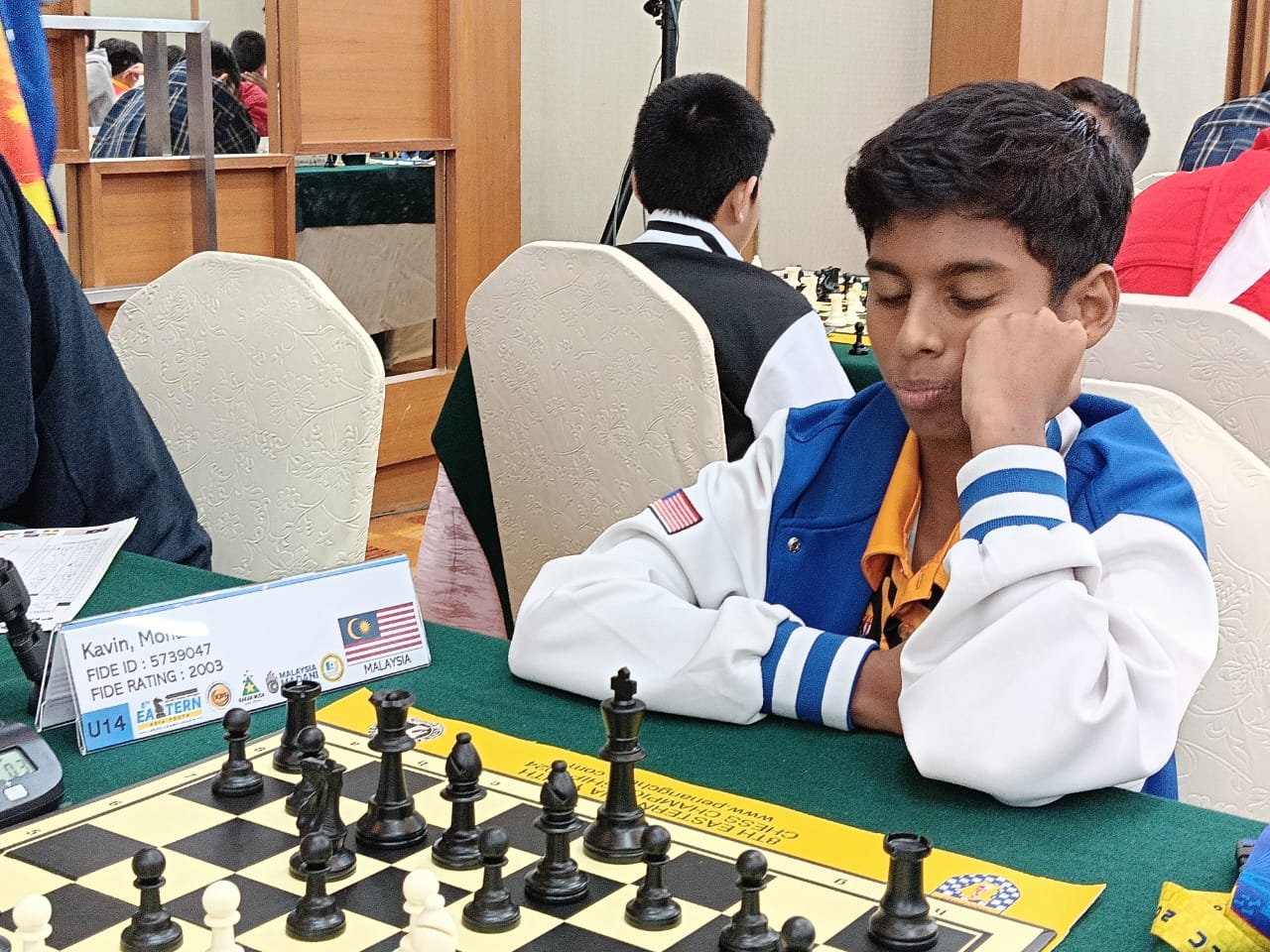
Jaymiel Piel of the Philippines (right) beat Shen, Ree Herng of Malaysia (left) in the final round to win the gold medal in the boys under-14 division finishing first alone with 7.5 points. Mohan Kavini of Malaysia drew with Cheng, Gongpu of China to win the silver medal with 7 points. Ganganbars Zev of Mongolia won the bronze with 6.5 points.

Boys under-14: Gold medalist Jaymiel Piel of Philippines (second from left), then silver medalist Mohan Kavin of Malaysia and bronze medalist Ganganbars Zev of Mongolia (right).   

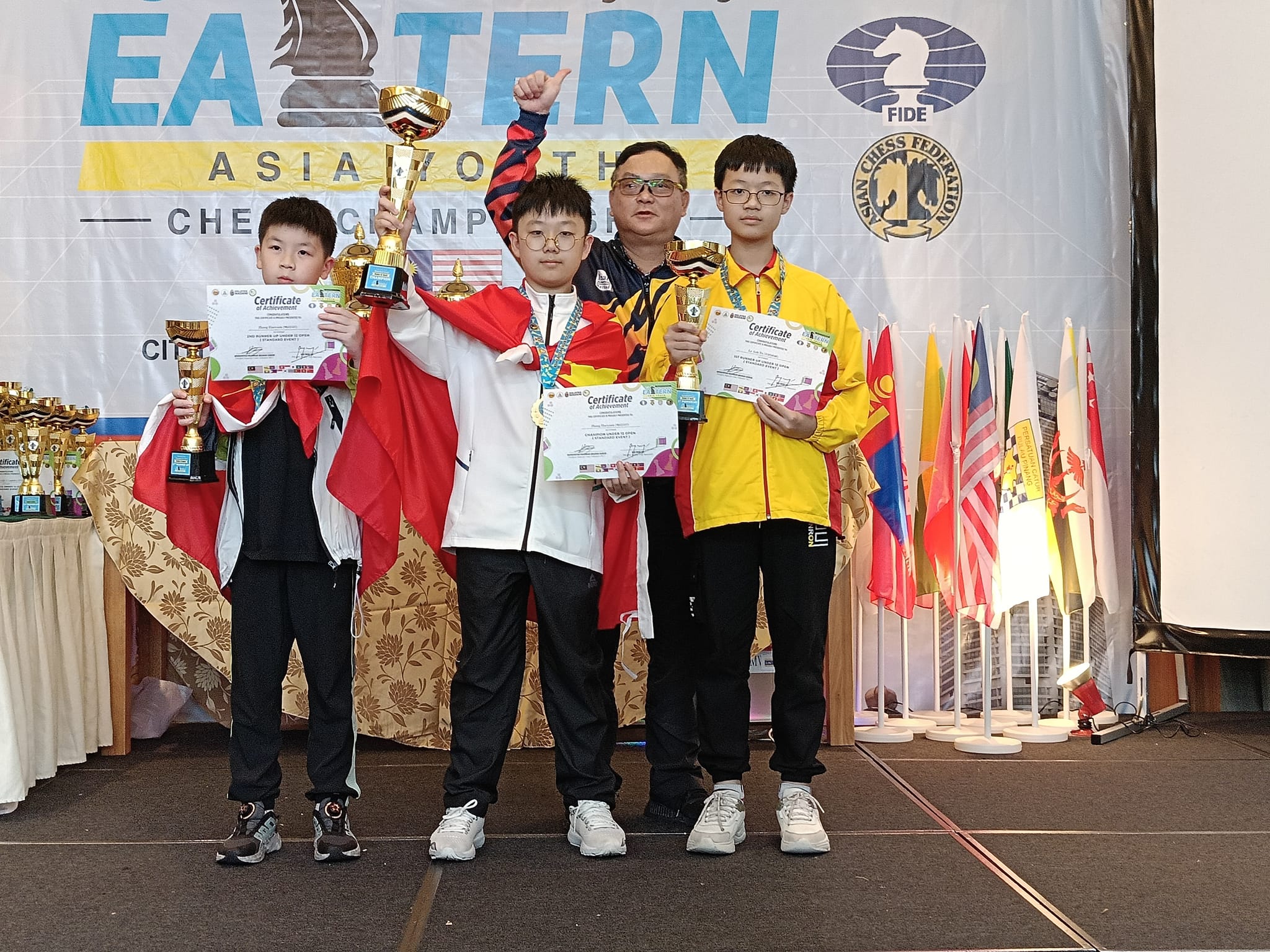
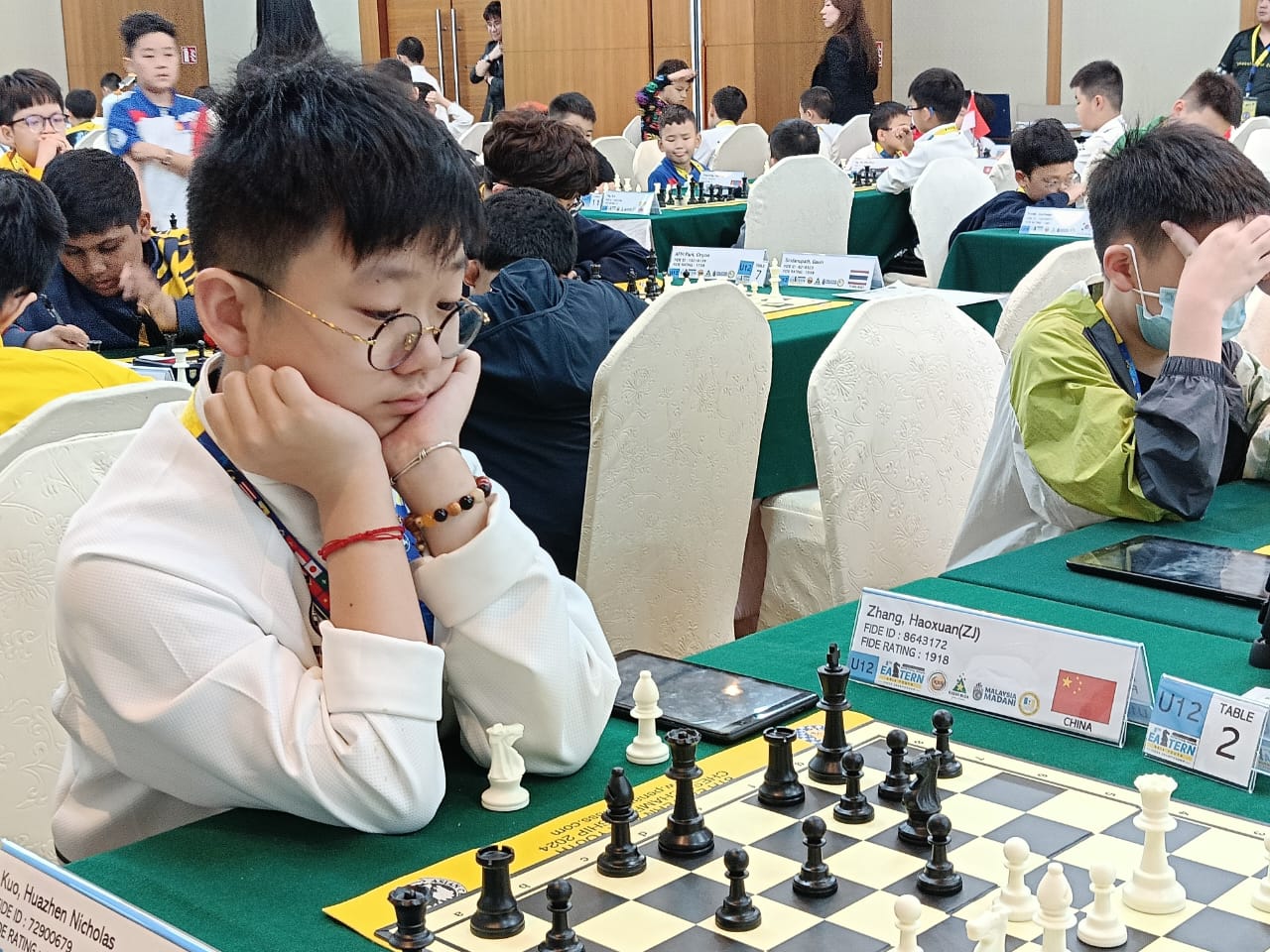
Zhang Haoxuan (Zj) beat Poon, Pak Yu of Hong Kong to finish alone with 7 points for the gold medal. Le Anh Tu of Vietnam and Chinese Zhang Haoxuan and Wang, Zihao(Sh) tied with 6.5 points each. Le and Zhang prevailed by tie break to win the silver and bronze medals, respectively.

Boys Under-12 (left to right):  bronze medalist Zhang Haoxuan of China, gold medalist Zhang Haoxuan (Zj) of China and silver medalist Le Anh Tu of Vietnam.

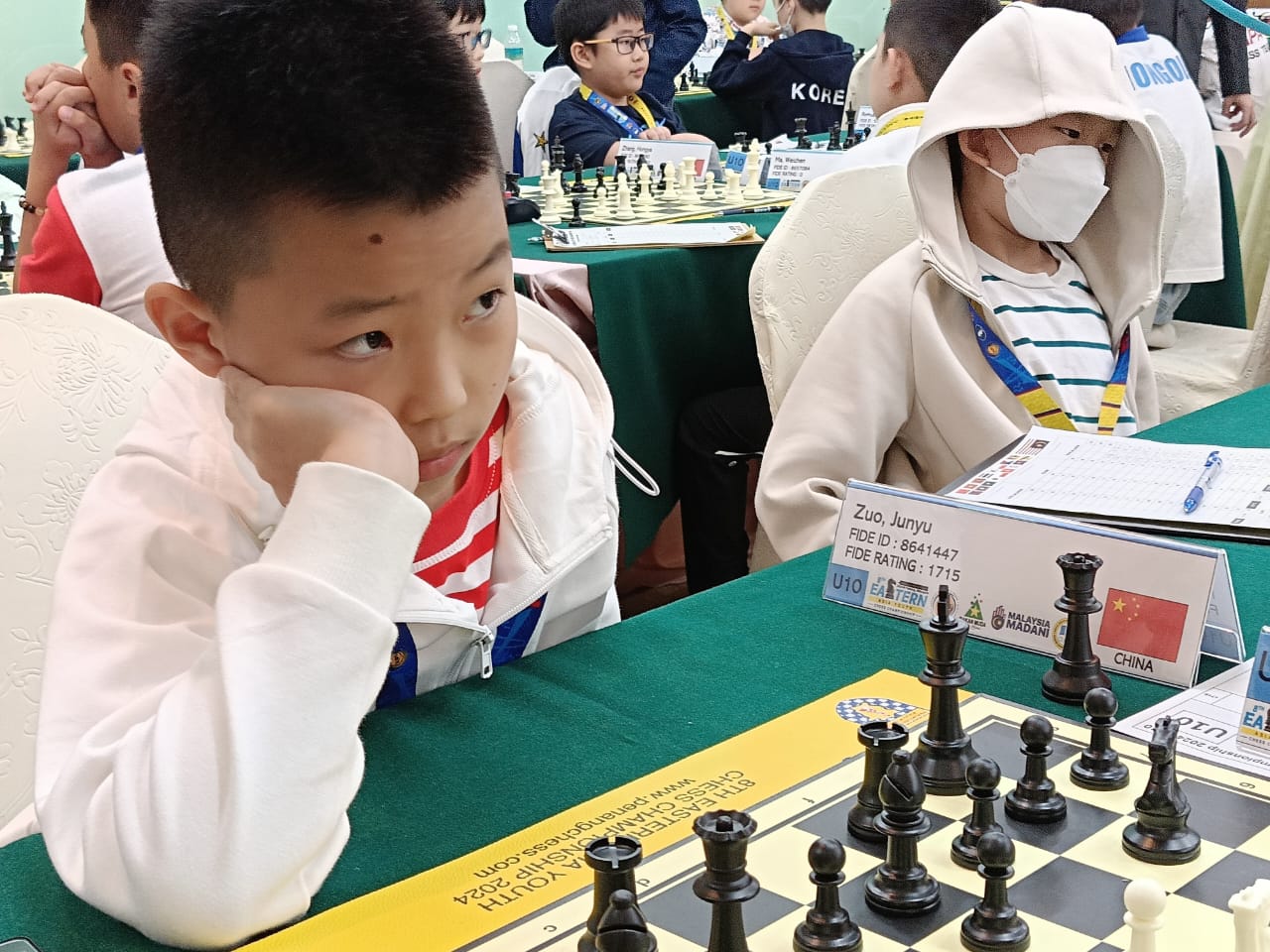
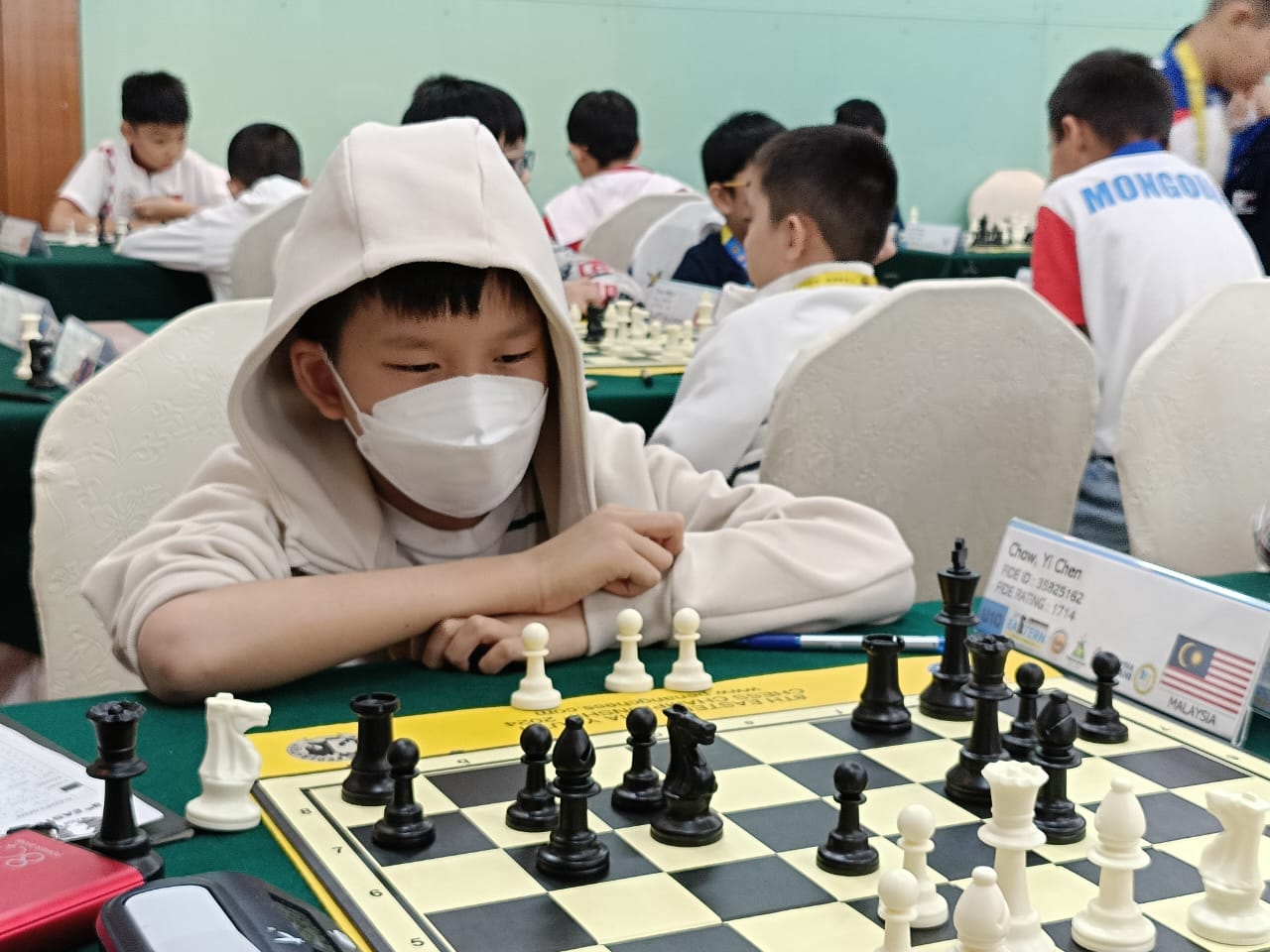
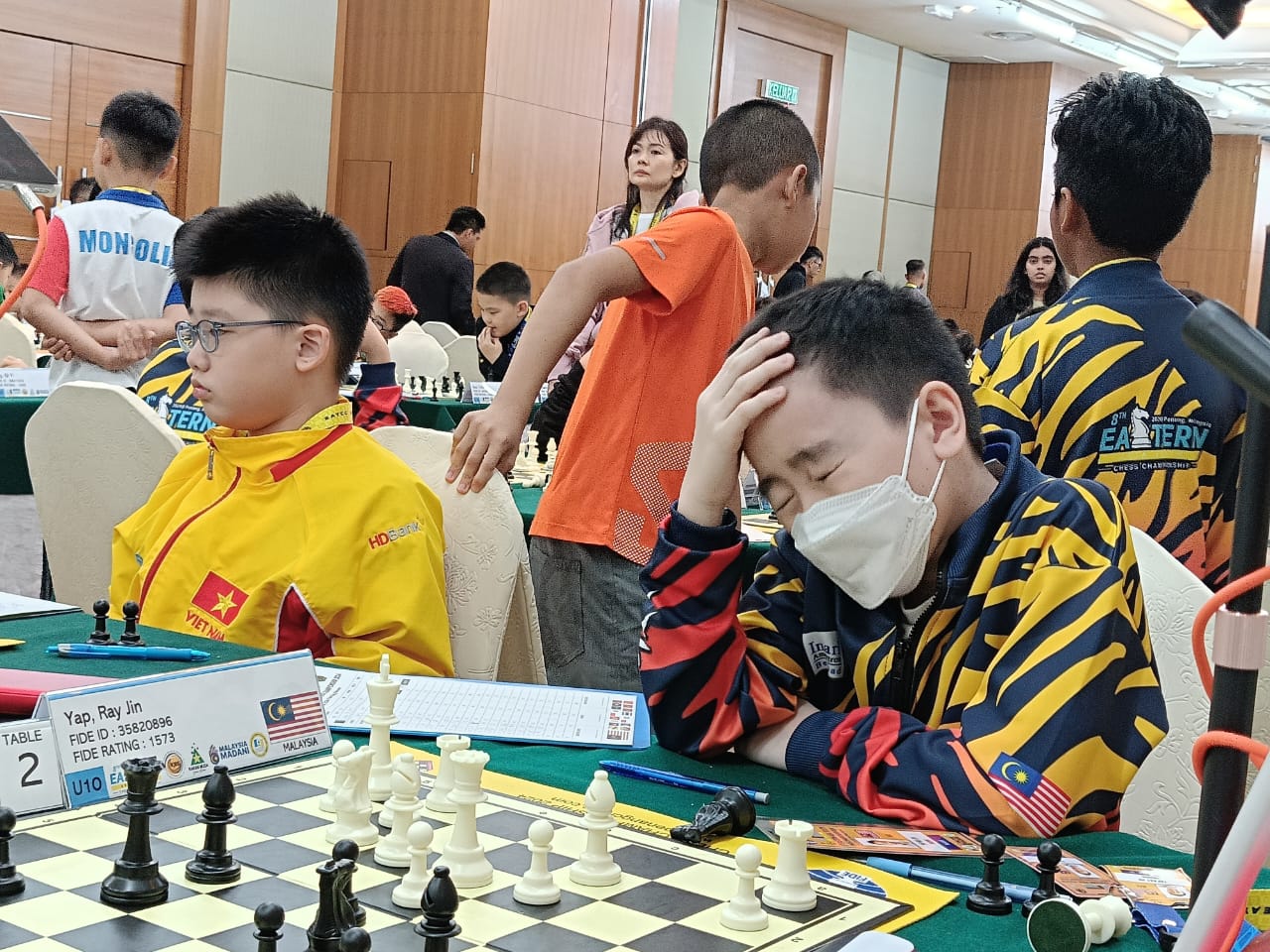
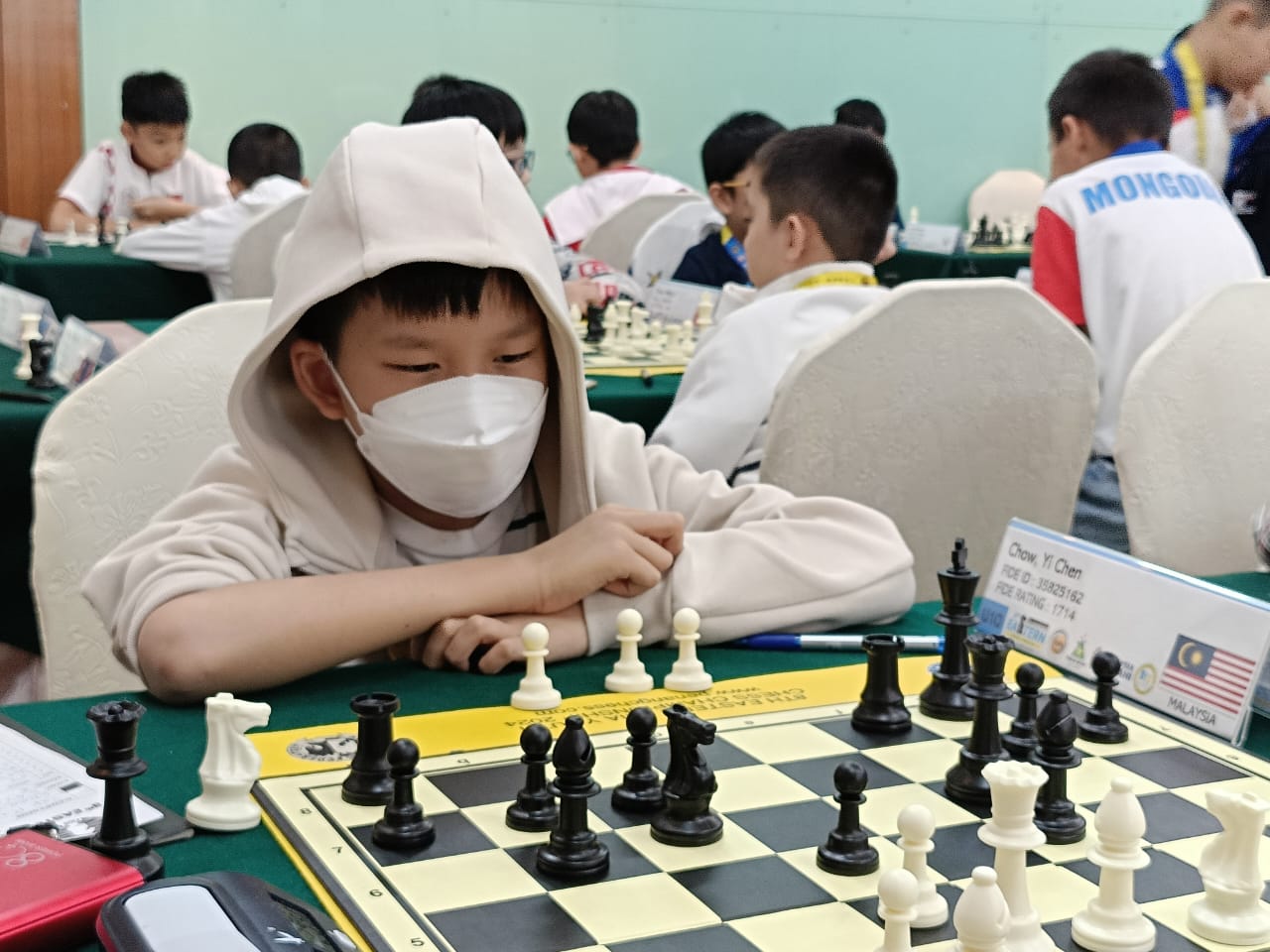
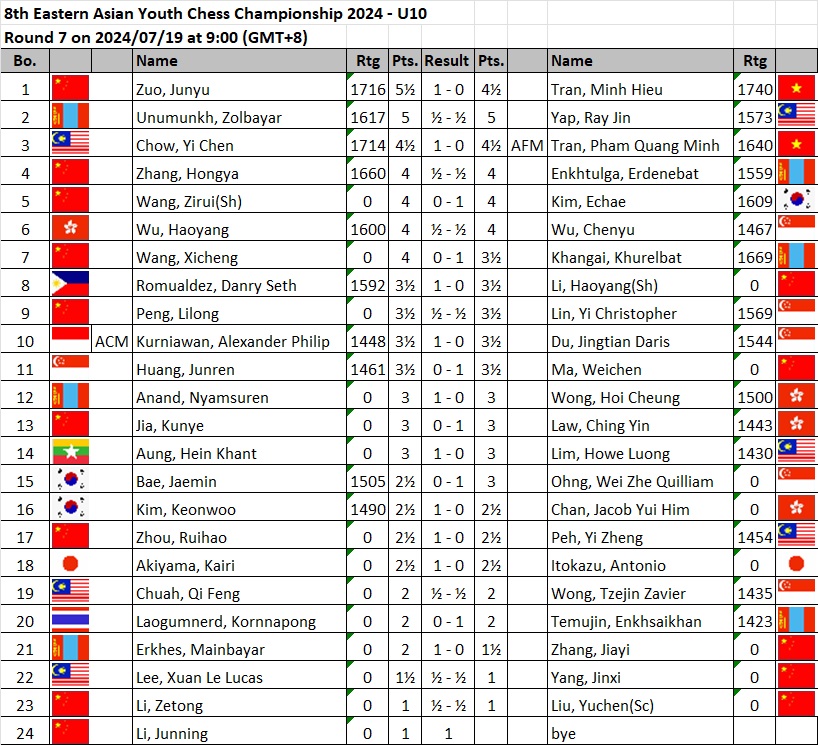
Zuo Junyu of China continued his winning ways by beating Erdenebat Enkhtulga of Mongolia in the 9th round to win the gold medal with 8.5 points. Chow Yi Chen of Malaysia beat Zolbayar Unumunkh of Mongolia to win the silver medal with 7 points. Yap Ray Jin of Malaysia drew with Aleander Philip Kurniawan of Indonesia for 6.5 points to win the bronze medal. Khangai, Khurelbat of Mongolia tied with Yap but lost on Direct Encounter tie break.

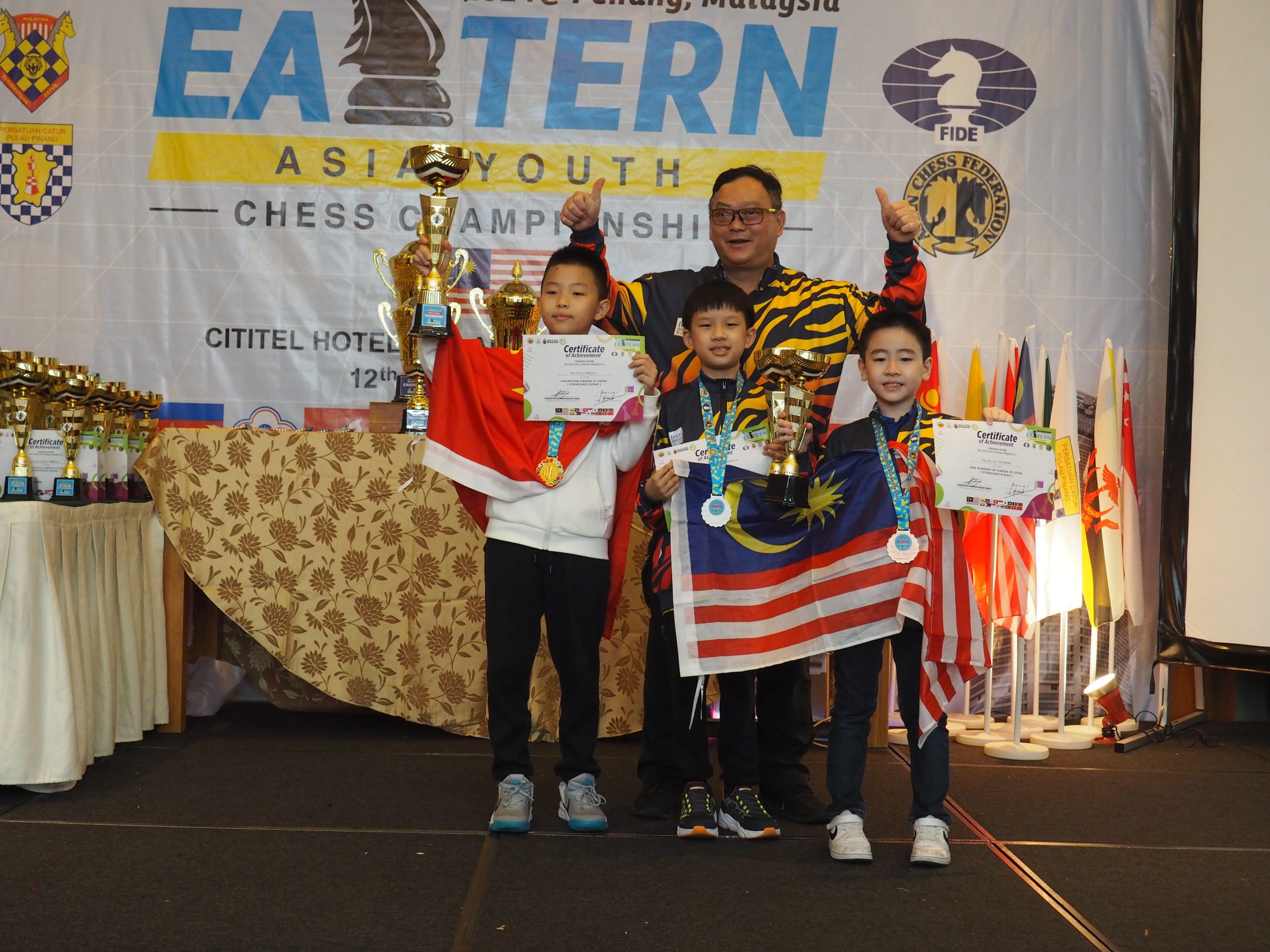
Under-10 gold medalist Zuo Junyu of China (left), silver medalist Chow Yi Chen of Malaysia (center) and bronze medalist Yap Ray Jin of Malaysia (right).

Boys under-10 medalists (l to r): Zuo Junyu of China, Chow Yi Chen and Yap Ray Jin of Malaysia

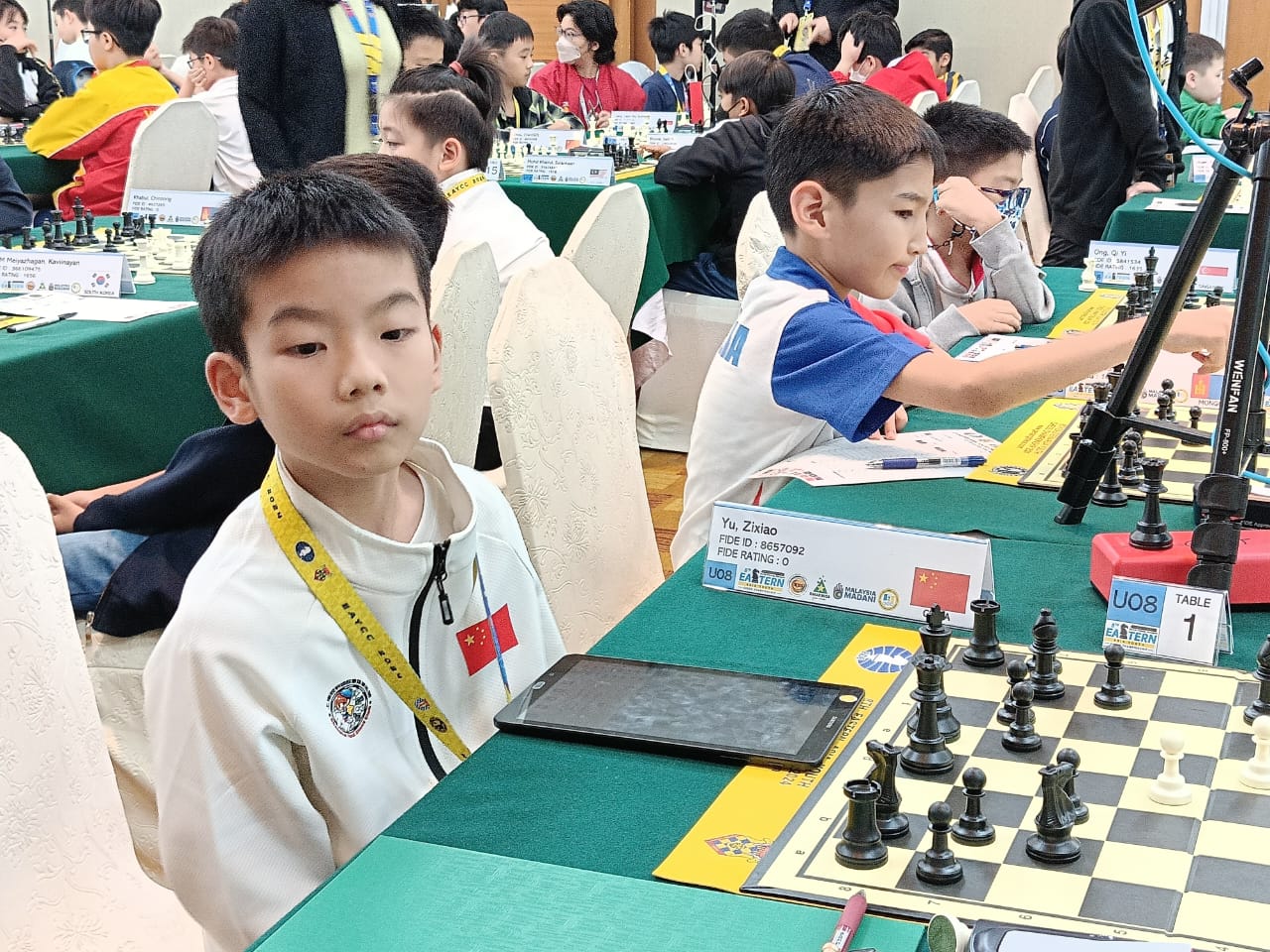
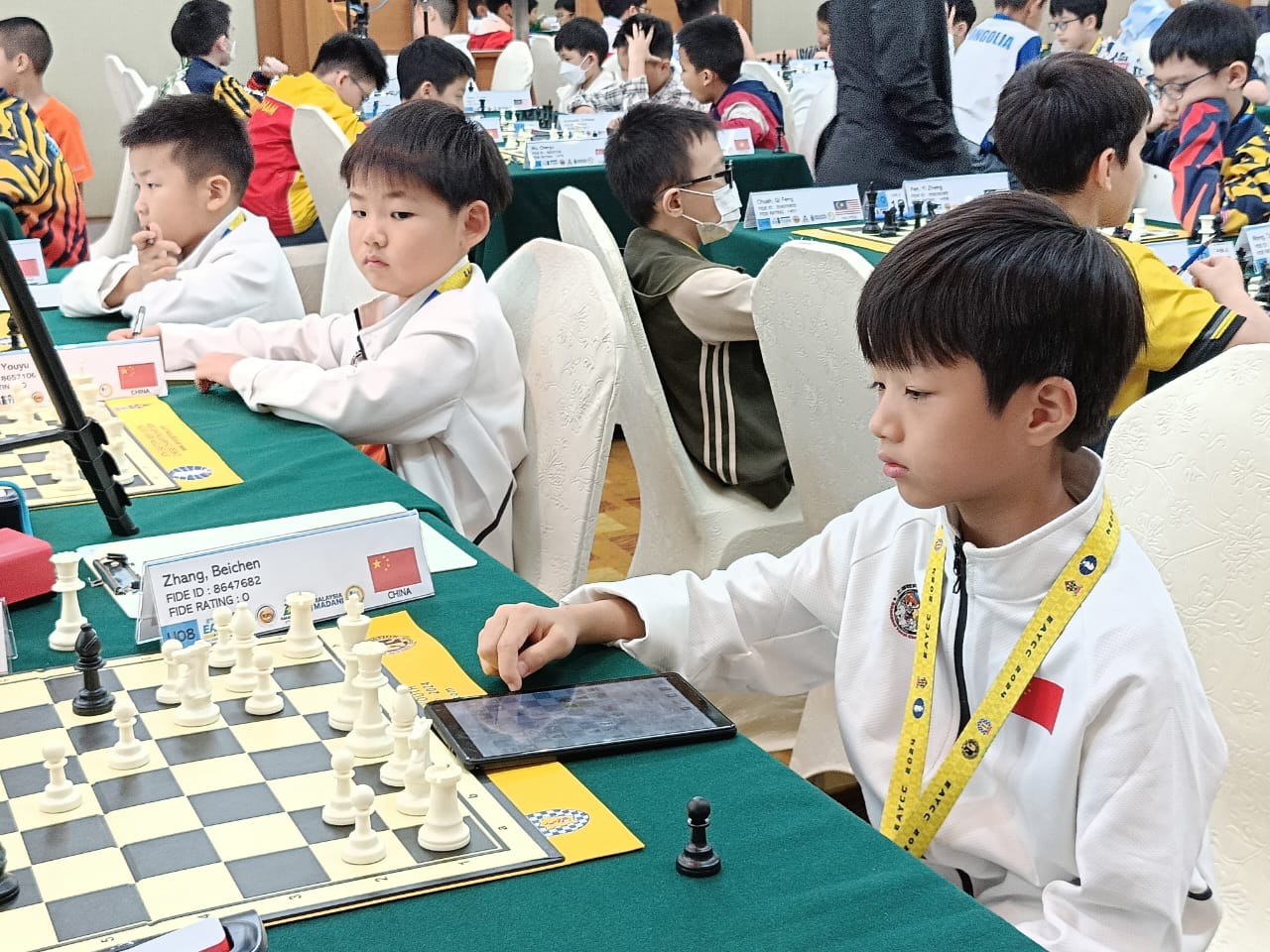
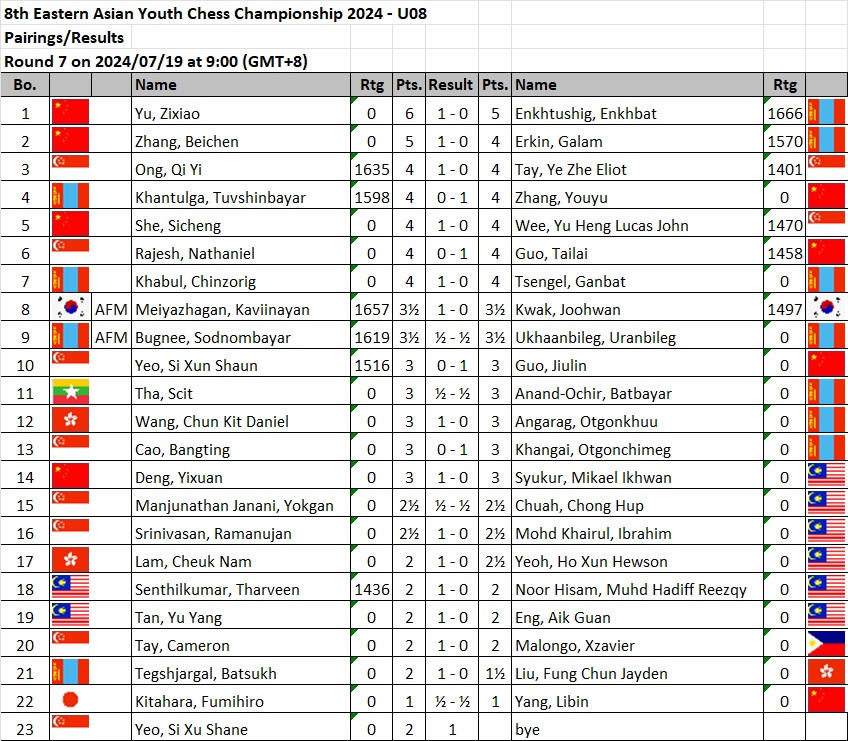
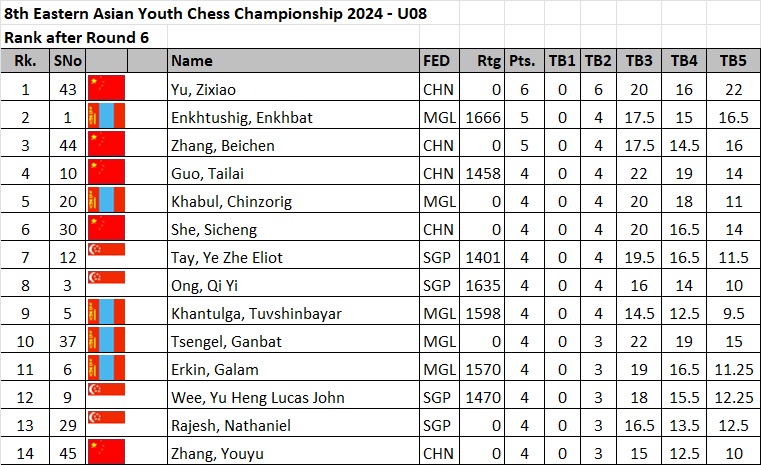
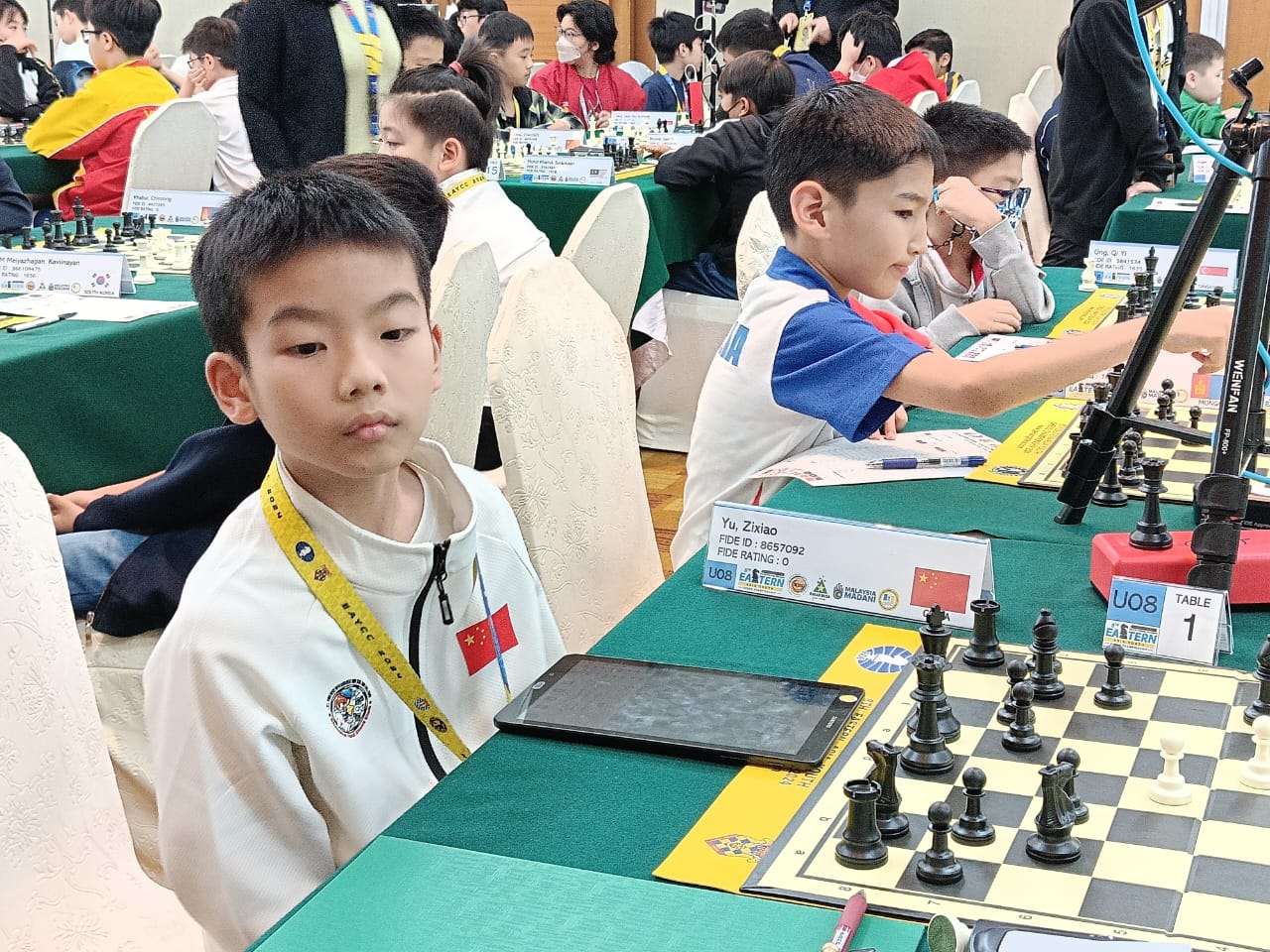
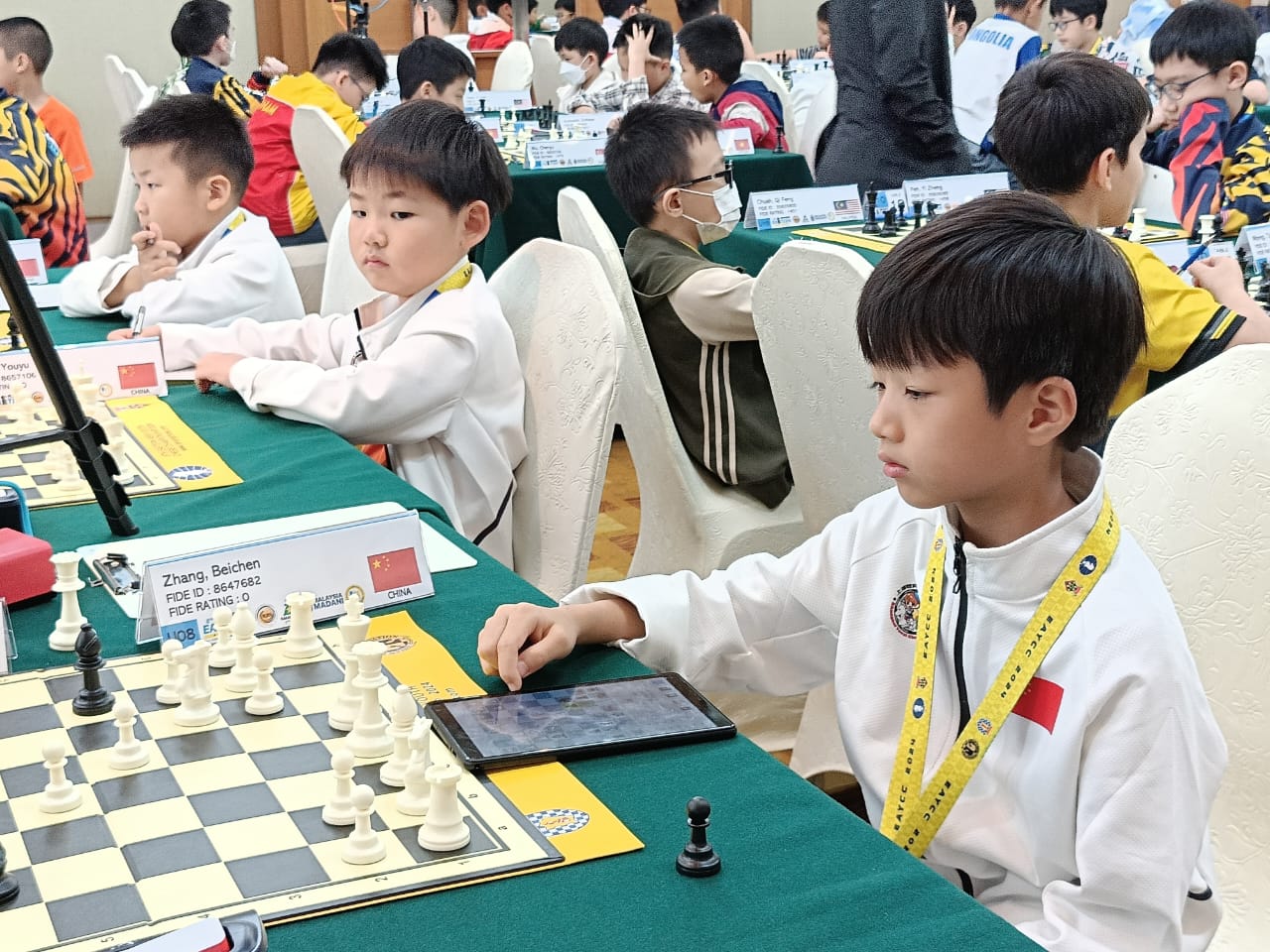
Foreshadowing the future, the top four in the under-8 boys were all from China. Yu Zixiao (above left) beat Ong, Qi Yi of Singapore to finish alone with 8.5 points out of 9 rounds for the gold medal. Zhang Beichen (above right) beat Enkhtushig, Enkhbat of Mongolia to register 7.5 points for the silver medal. Guo Tailai beat Meiyazhagan, Kaviinayan of Korea to earn the bronze medal with 6.5 points and a better tie break over compatriot She, Sicheng who tied with 6.5 points.

Boys under-8 medalists (l to r): Guo Taial, Yu Zixiao and Zhang Beichen.
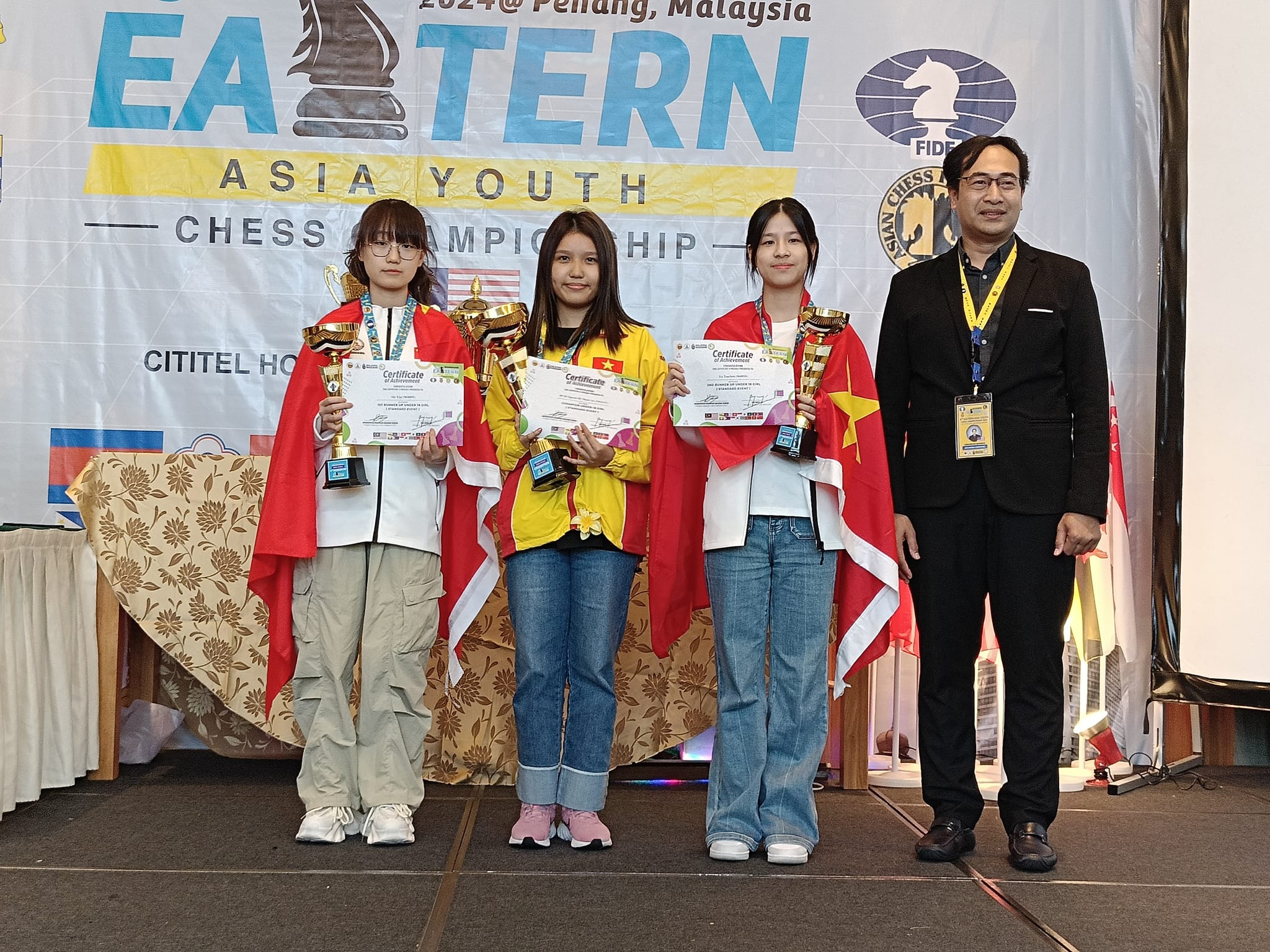
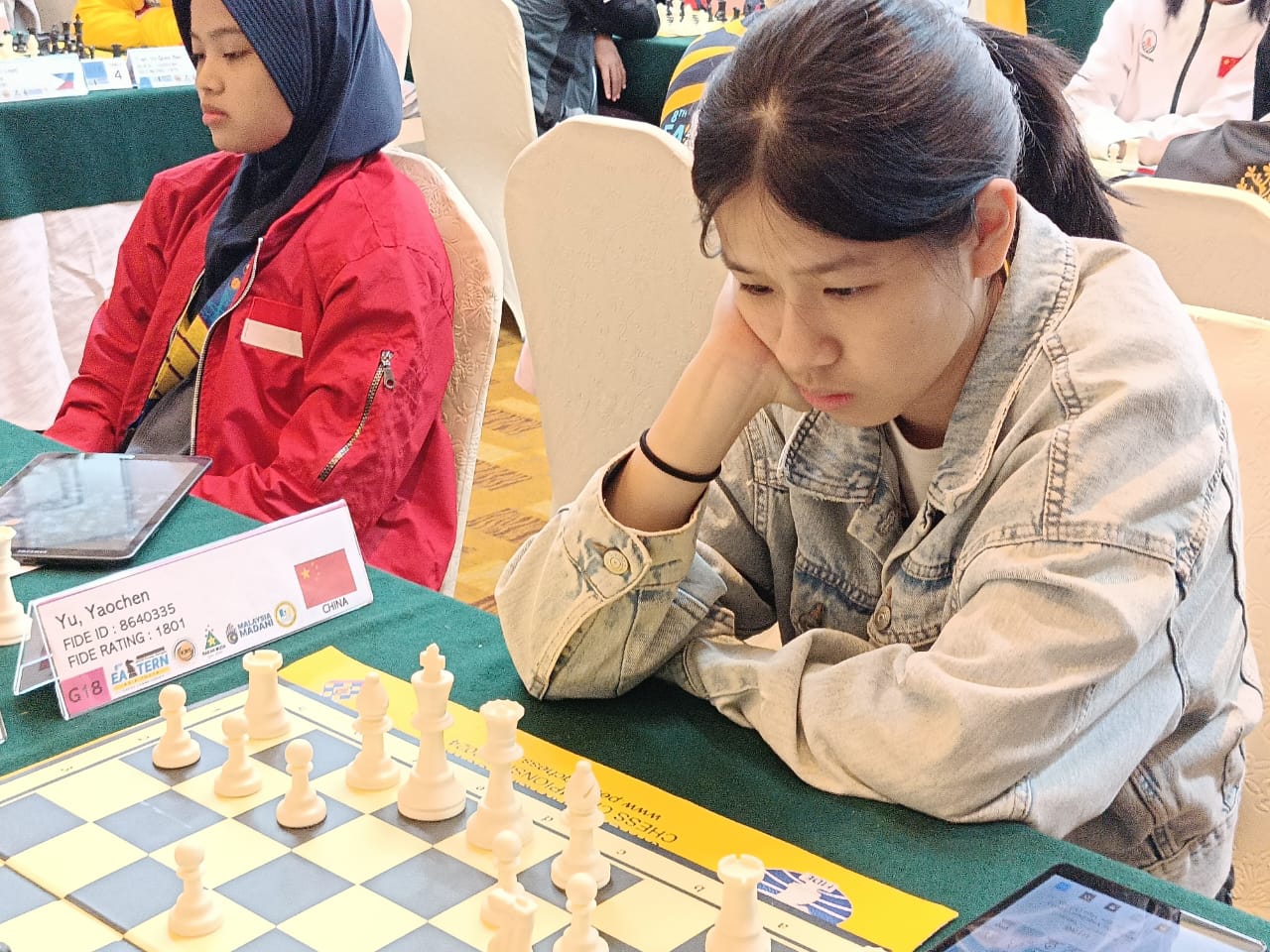
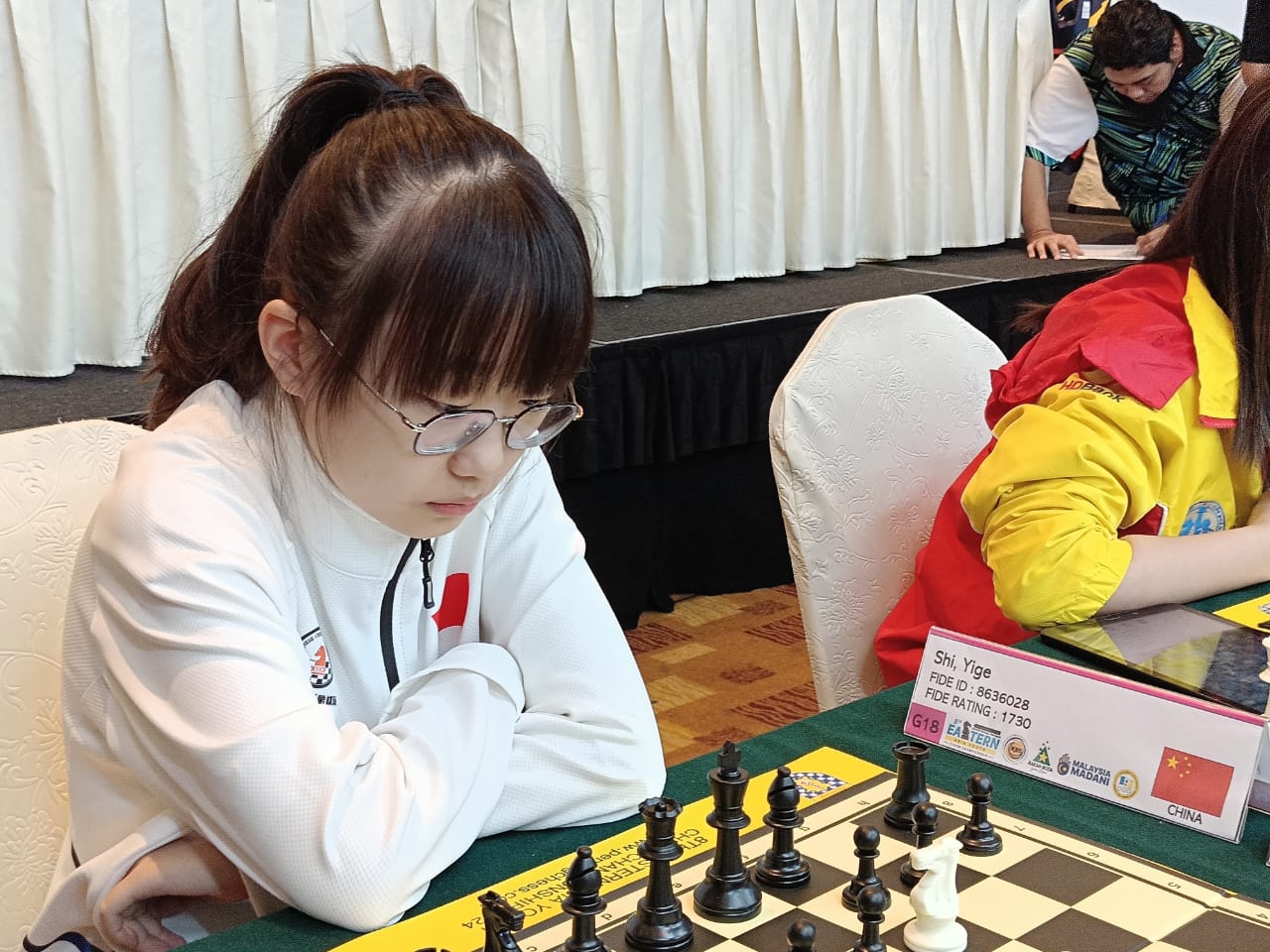
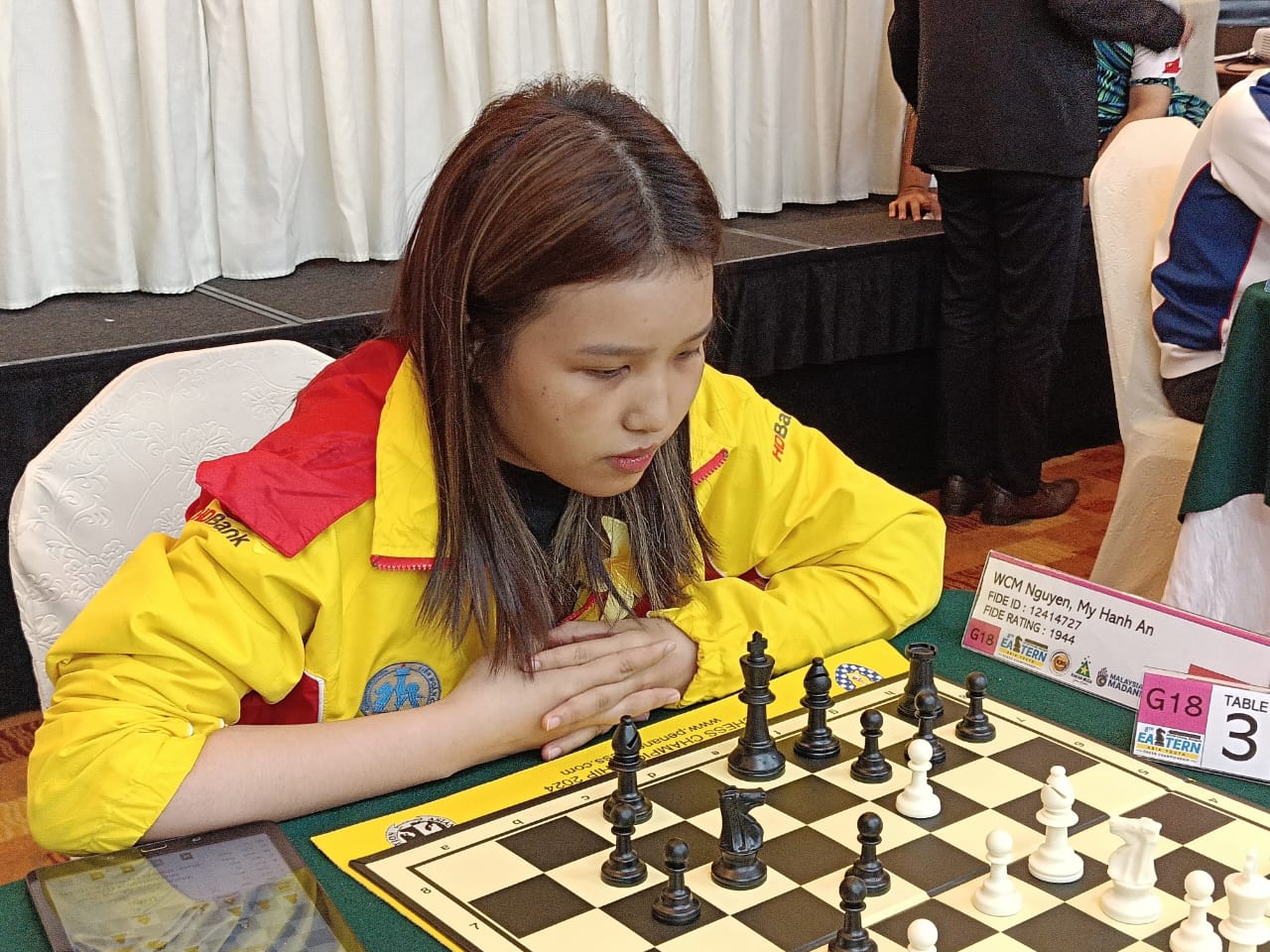
Nguyen My Hanh An of Vietnam beat Abd, Aziz A Dira A Ddawiyah of Malaysia to register 6.5 points in the girls under-18 division in a tie with Shi Yige of China who beat Malaysian Chong Rou Yi in the 9th round. My Hang An (second from left) won the tie break by Direct Encounter to earn the gold medal while Shi Yige (left) settled for the silver medal. Yu Yaochen of China (second from right) beat Mohd, Faris Hashsya Nawwaarah of Malaysia to win the bronze medal, prevailing by tie break over Amin-Erdene, Bayanmunkh of Mongolia.

Nguyen Ngoc Hien of Vietnam (second from left) beat Enkhkhaliun, Zoljargal of Mongolia to finish alone with 8 points for the gold medal in girls under-16. Mongolians Altankhuyag Maral (left) and Davaakhuu Unurzul (second from right) finished in a tie with 6.5 points each but Maral prevailed in the tie break for the silver medal.

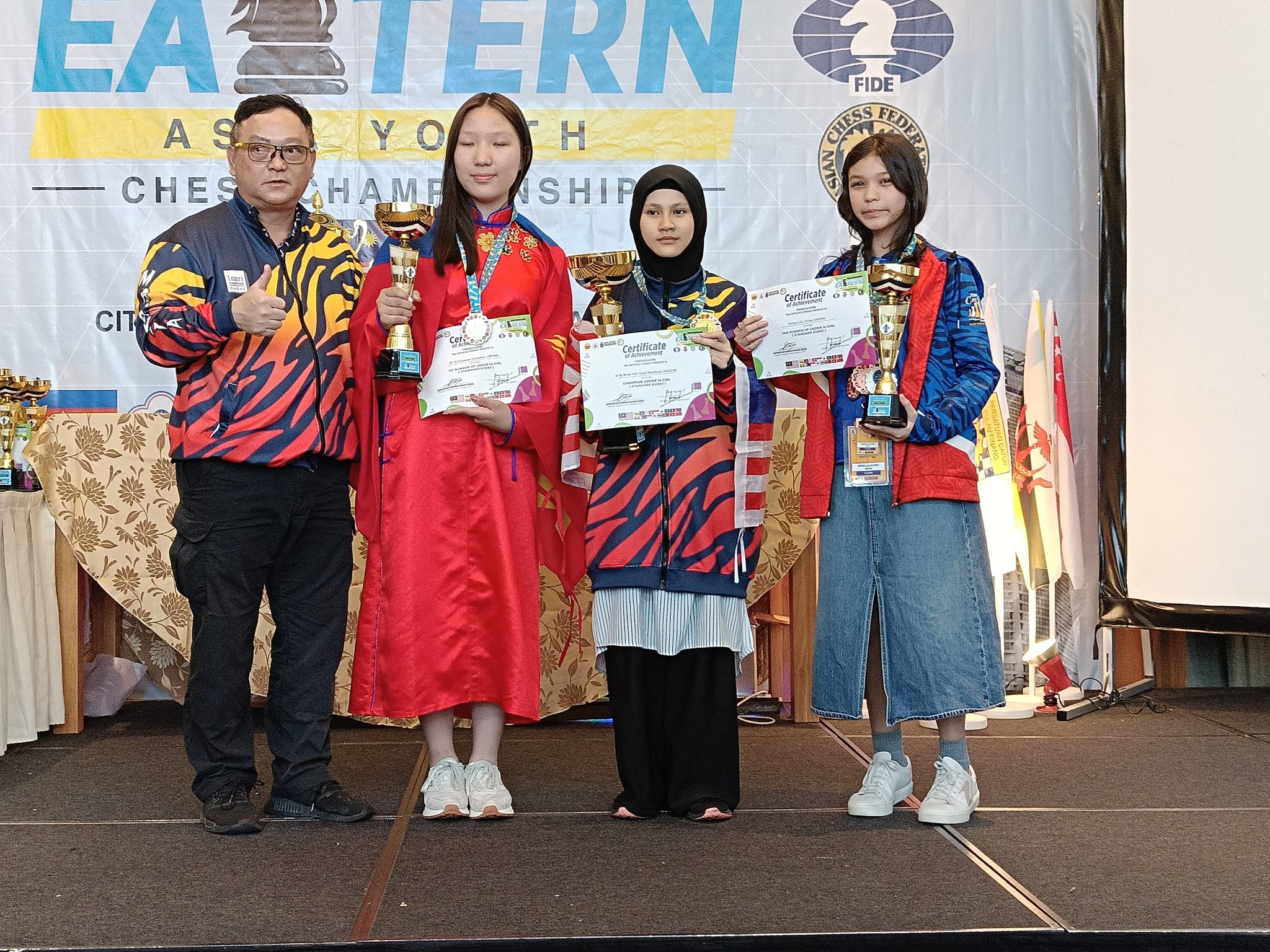
Mohd, Afif Ainul Mardhiah of Malaysia (third from left) drew with Hong Jueun of Korea in the final round to finish alone with 7.5 points and win the gold medal in the girls under-14 category. Dorjsuren Tselmuun of Mongolia and Lila Alyssa Serina of the Philippines followed in a tie with 6.5 points each. Tselmuun won the Direct Encounter tie break having beatn Serina in a previous round,

Tselmeg Myagmar of Mongolia beat Liu, Chengxi of China to tally 7.5 points for the gold medal in the girls under-12 division. Veluruga Sreekarthika of Singapore beat Lim, Yijia Claire of Malaysia to tie at 7.5 points for the silver medal. Myagmar (second from left) won the Direct Encounter tie break having beaten Sreekarthika (left) in a previous round. Erstwhile leader Xue Tianhao of China (right) ended in third place with 6.5 points despite a final round loss to compatriot Chen, Sihan(Sh).

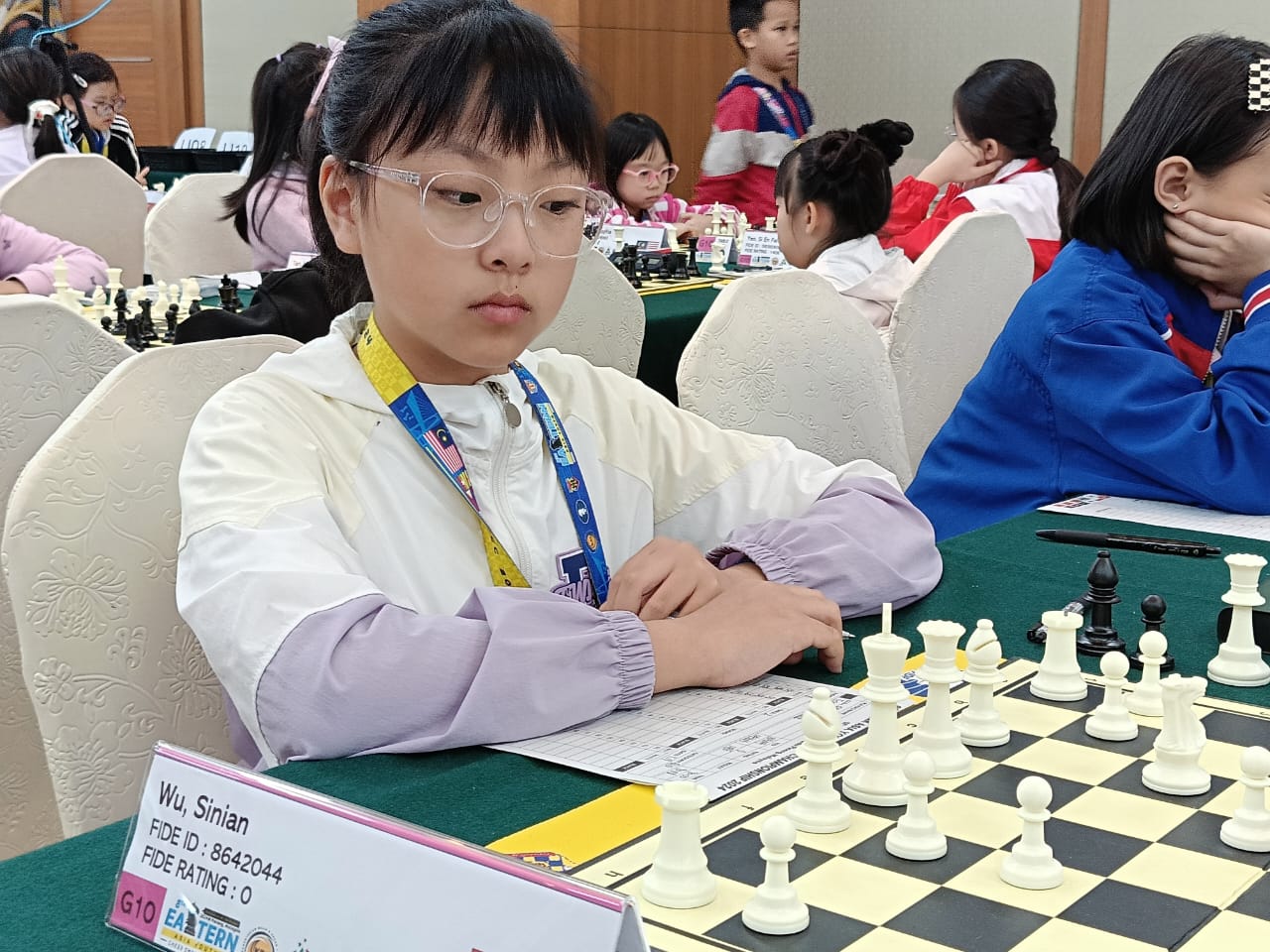
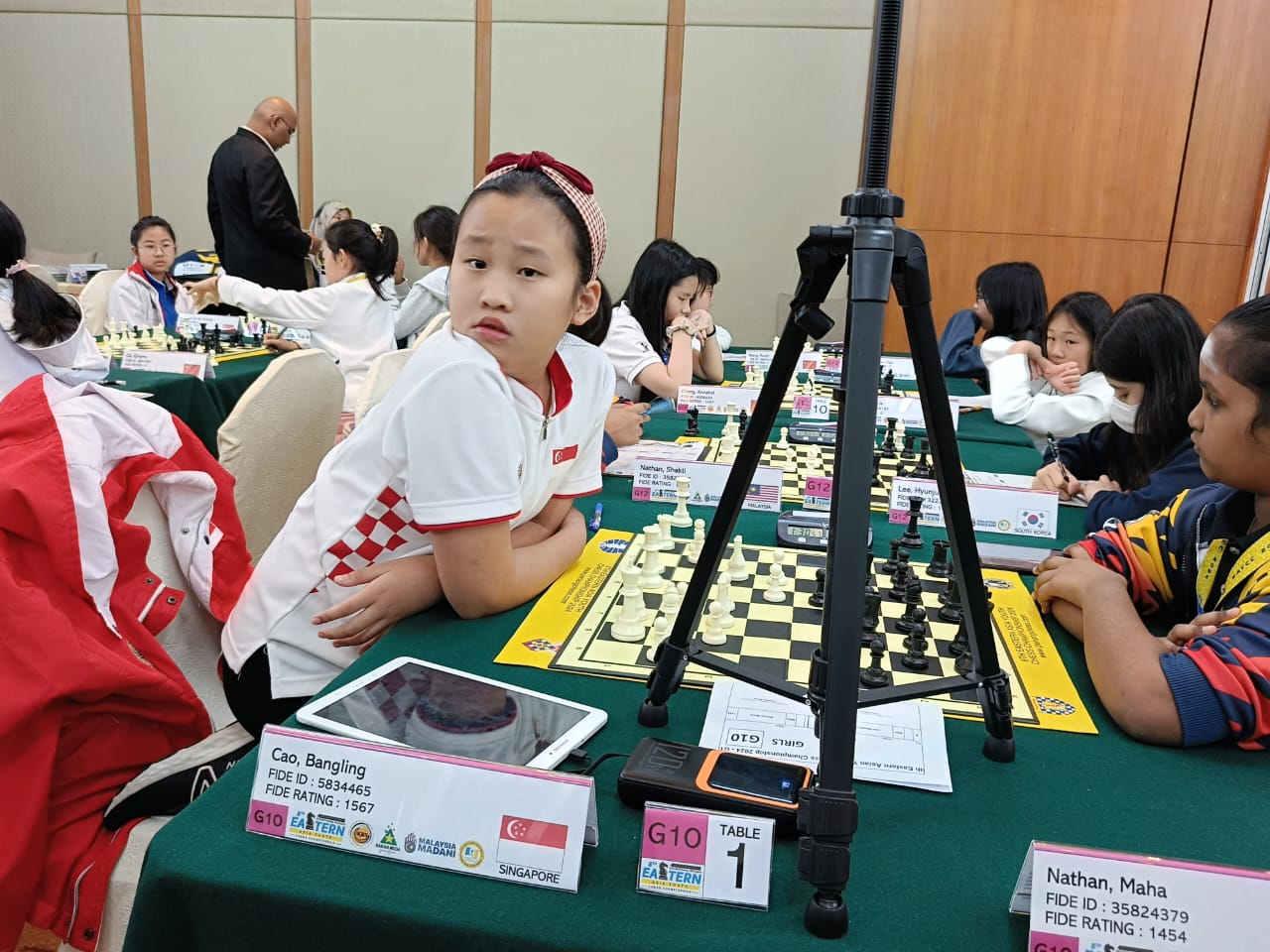
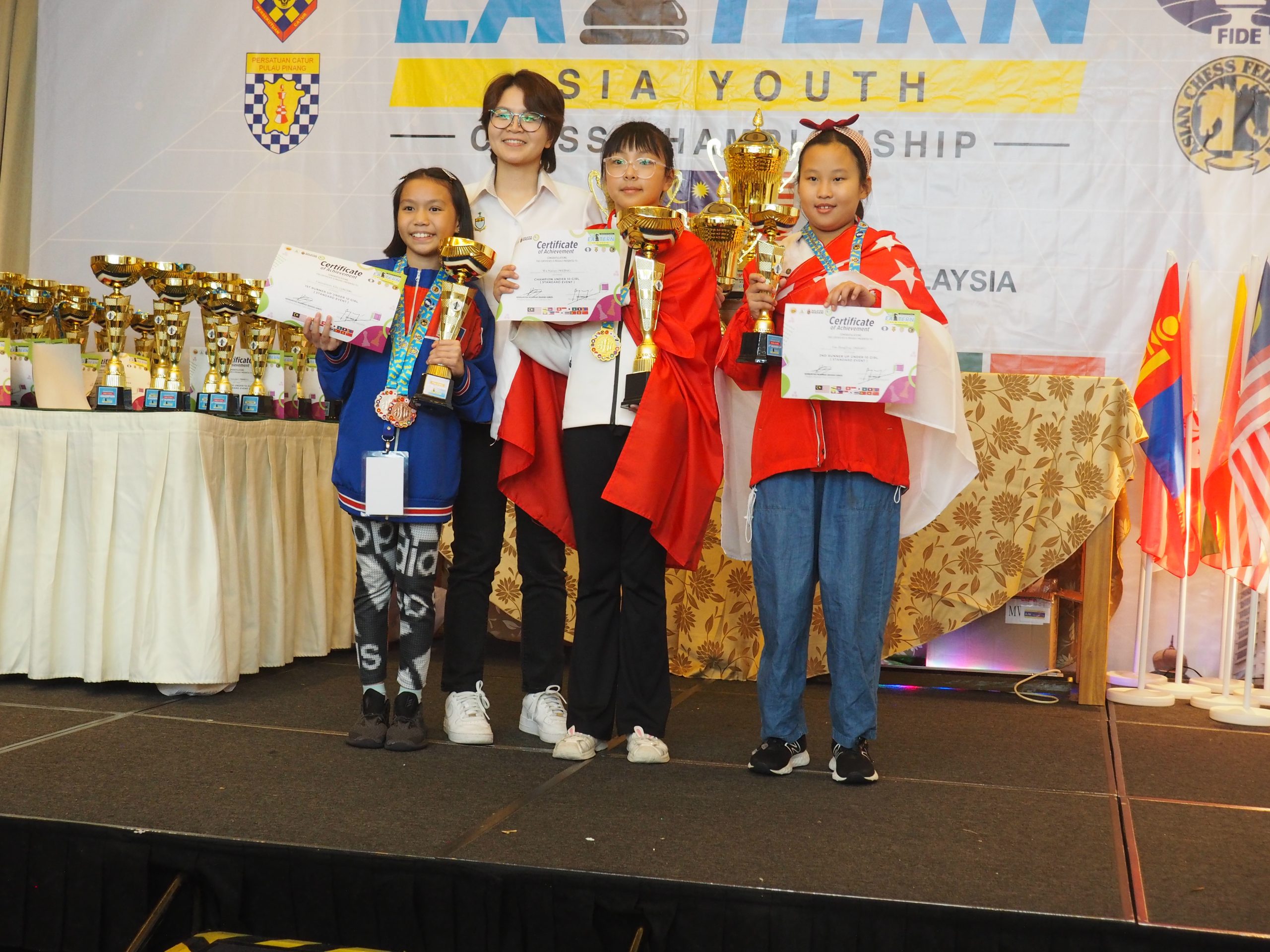
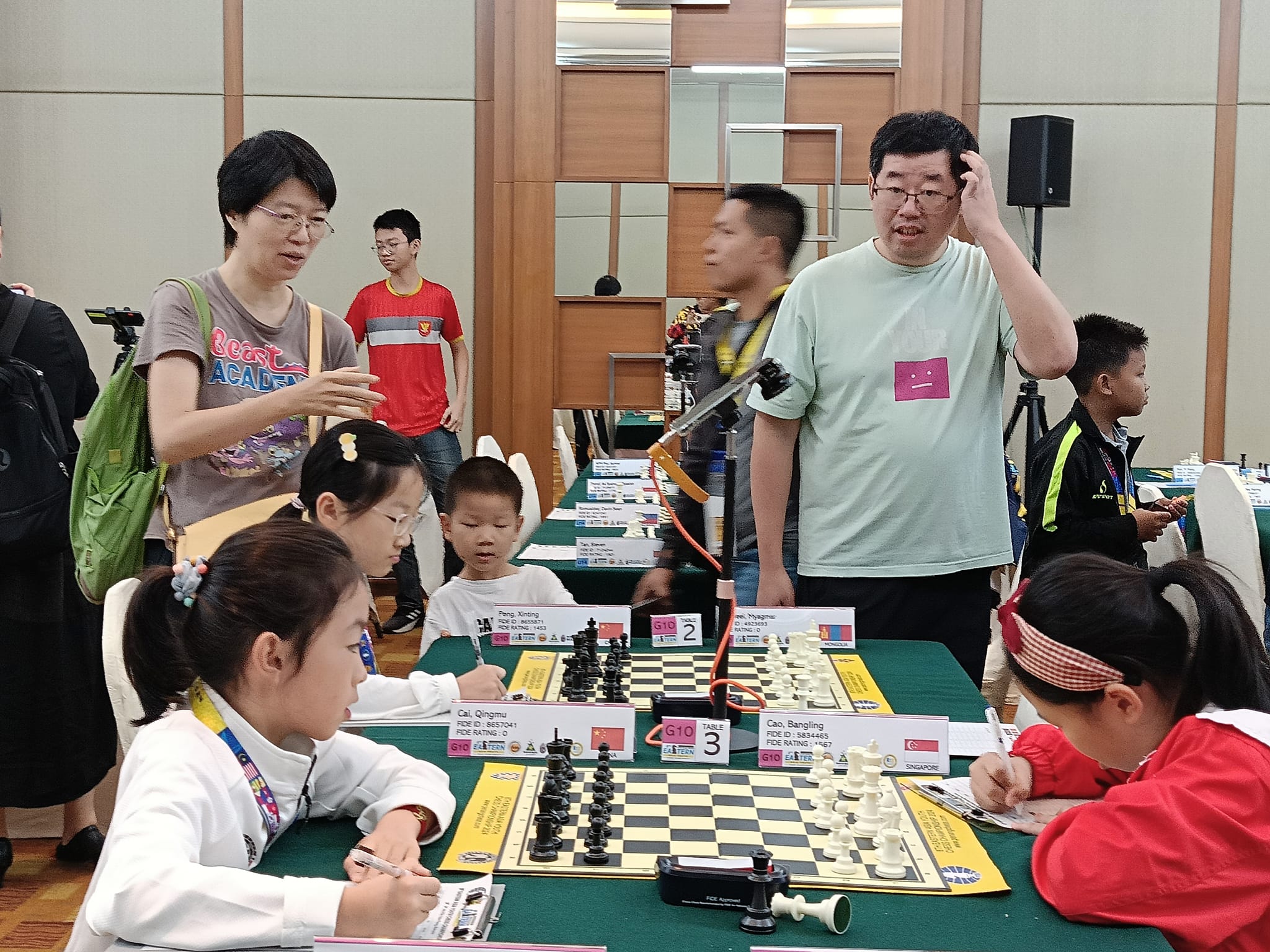
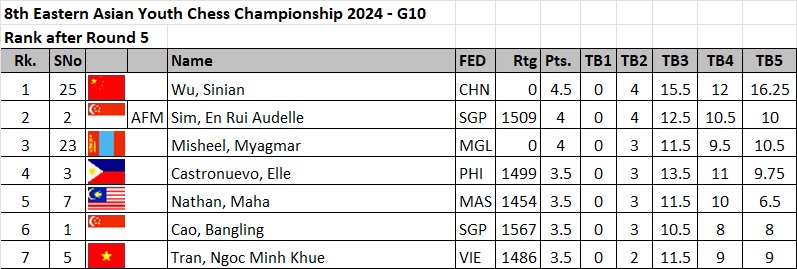
Wu Sinian of China (left) beat compatriot Cai Qingmu in the final round to finish alone with 7.5 points for the gold medal in the girls under-10 category. Elle Castronuevo of the Philippines beat Maha Nathan of Malaysia to follow with 6.5 points for the silver medal with higher tie break over Cao Bangling of Singapore (right) who drew with compatriot Yeo Si En Faith for the bronze medal.

Girls under-10 medalists (l to r): Eli Castronuevo of the Philippines, Wu Sinian of China and Cao Bangling of Singapore.
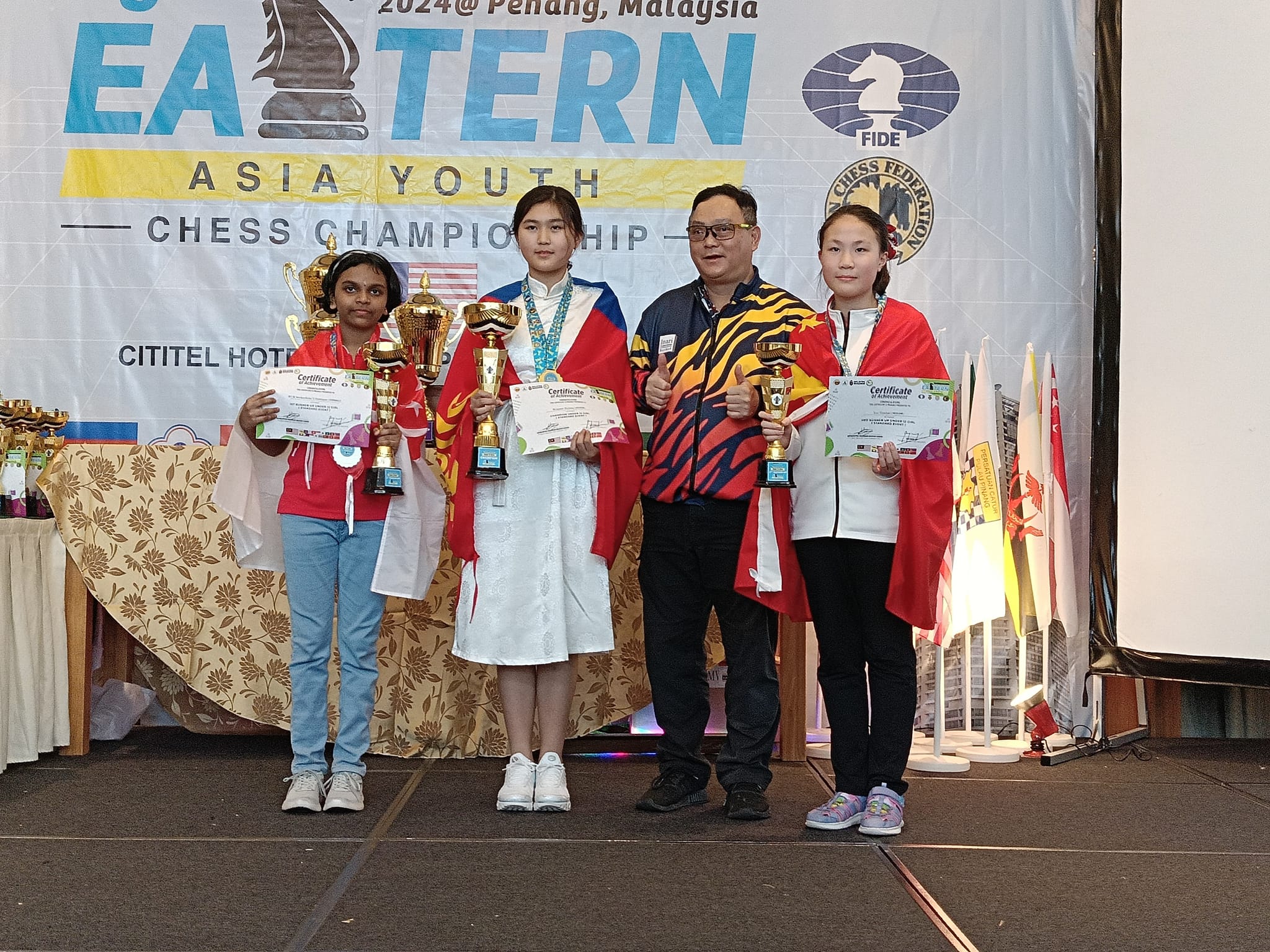
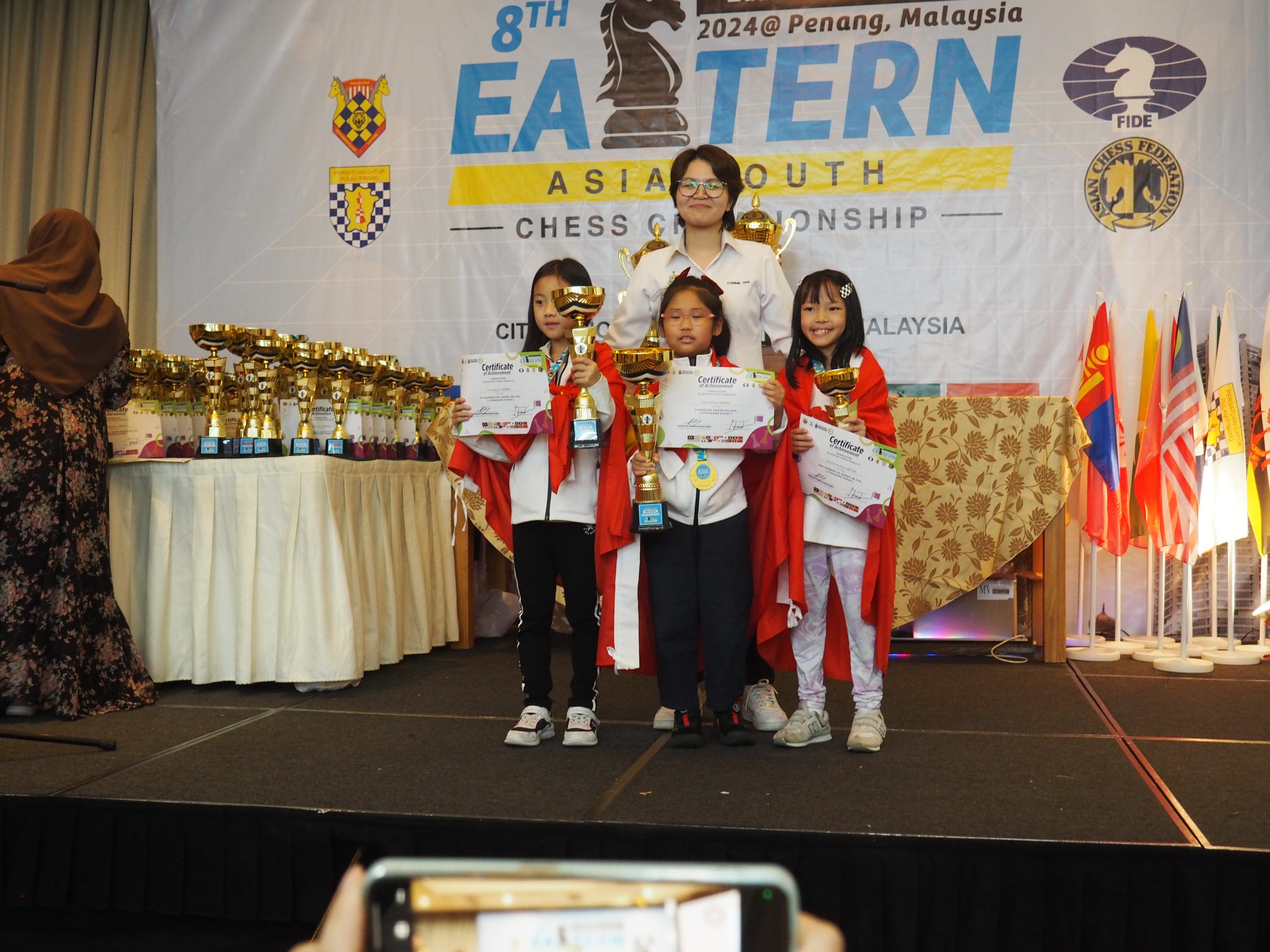
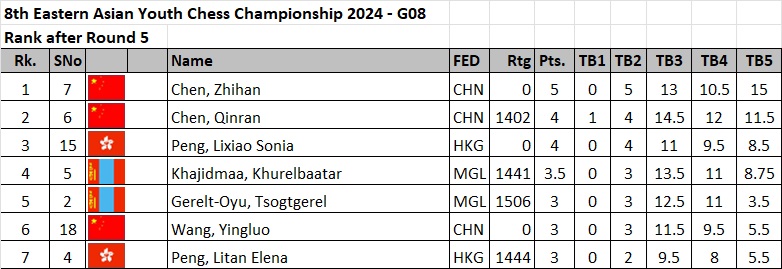
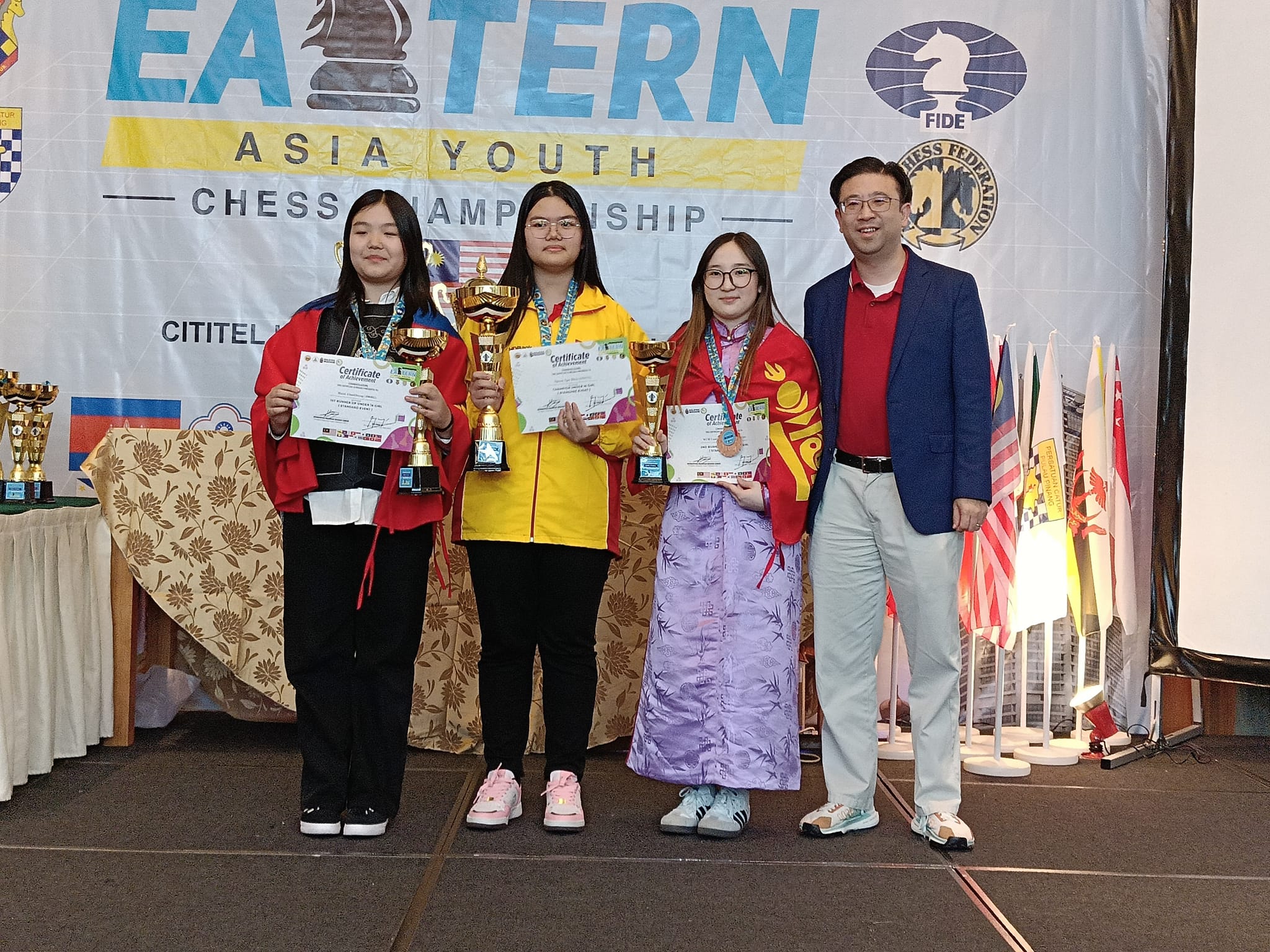
Under-8 girls medalists (left to right): Chen Qinran, Chen Zhihan and Peng Lixiao Sonia
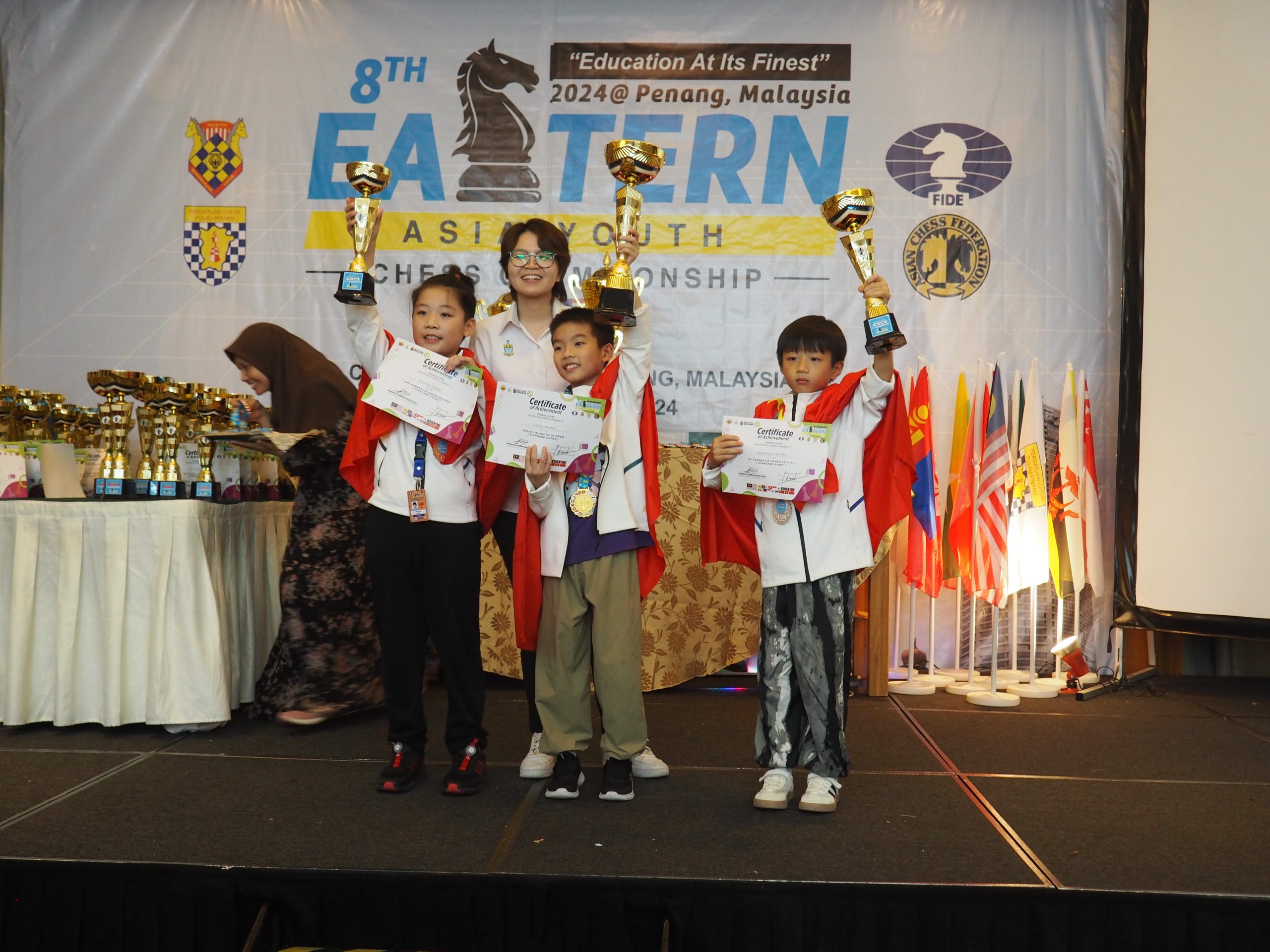
Chen Zhihan of China (above center) beat Oyunsunder, Chagdar of Mongolia in the 9th round to maintain a perfect score and win the gold medal in the girls under-8 division. Chen Qinran of China (left) beat Peng Litan Elena of Hong Kong to win the silver medal with 6.5 points in a tie with Peng Lixiao Sonia of Hong Kong (right) who won the bronze medal after drawing with Tselmuun, Nyamkhuu of Mongolia.

Tense Fight in Homestretch of Eastern Asia Youth Chess Championship
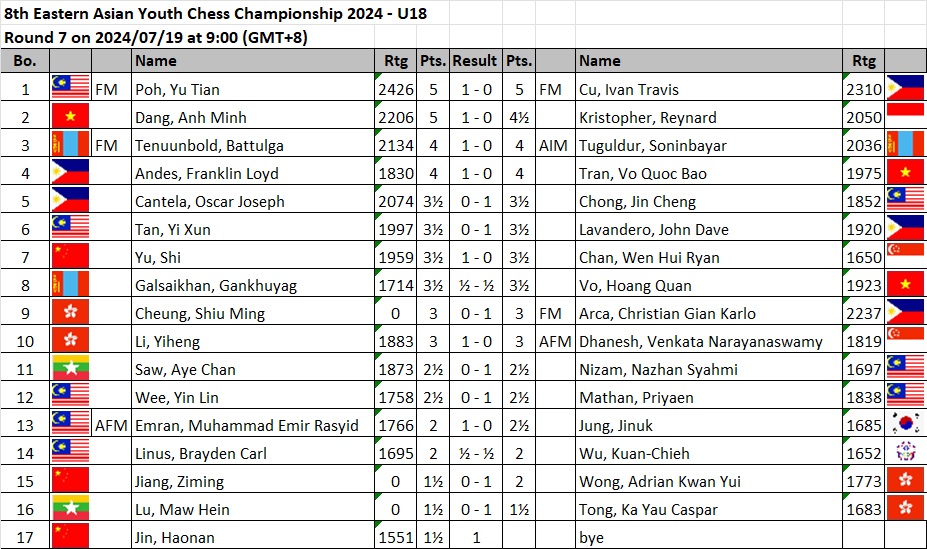
FM Poh Yu Tian of Malaysia (above right) beat FM Ivan Travis Cu of the Philippines in the 7th round while Dang Any Ming of Vietnam (above left) beat Reynard Kristopher of Indonesia to maintain their tie for the lead with 6 points each in the boys under-18 division. In the homestretch of the Eastern Asia Youth Chess Championship in Penang, Malaysia, three players follow with 5 points each, namely Cu, Franklin Loyd Andes of the Philippines and Battulga Tenuunbold of Mongolia,
Visit chess-results.com for round by round results and standings and to download games. All Photos by Quah Seng Sun.


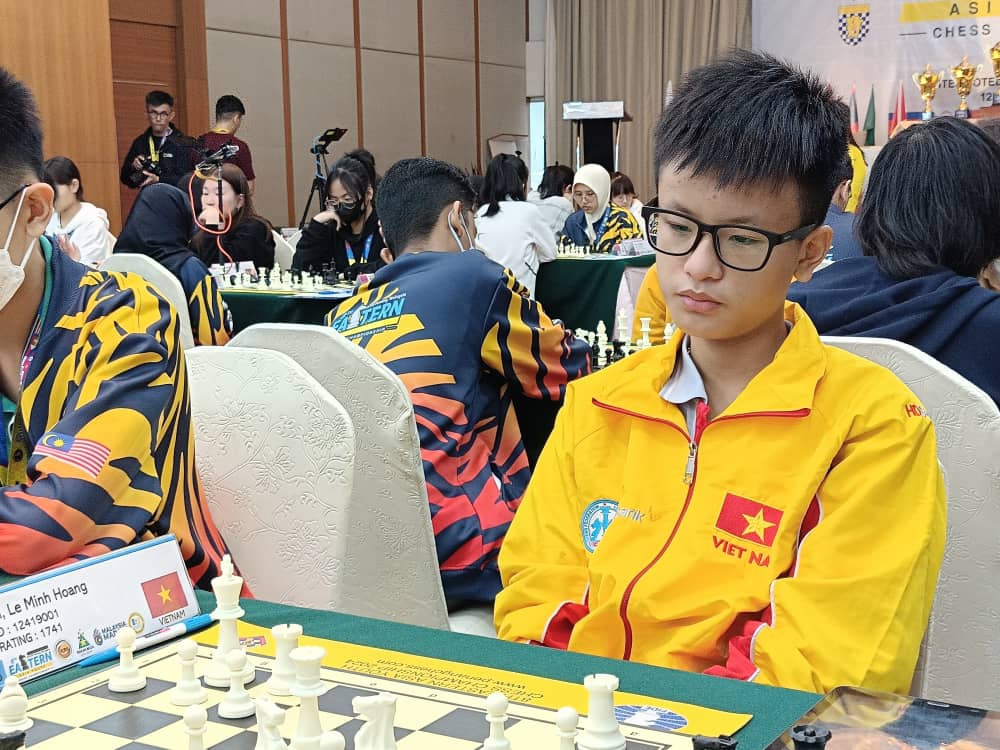
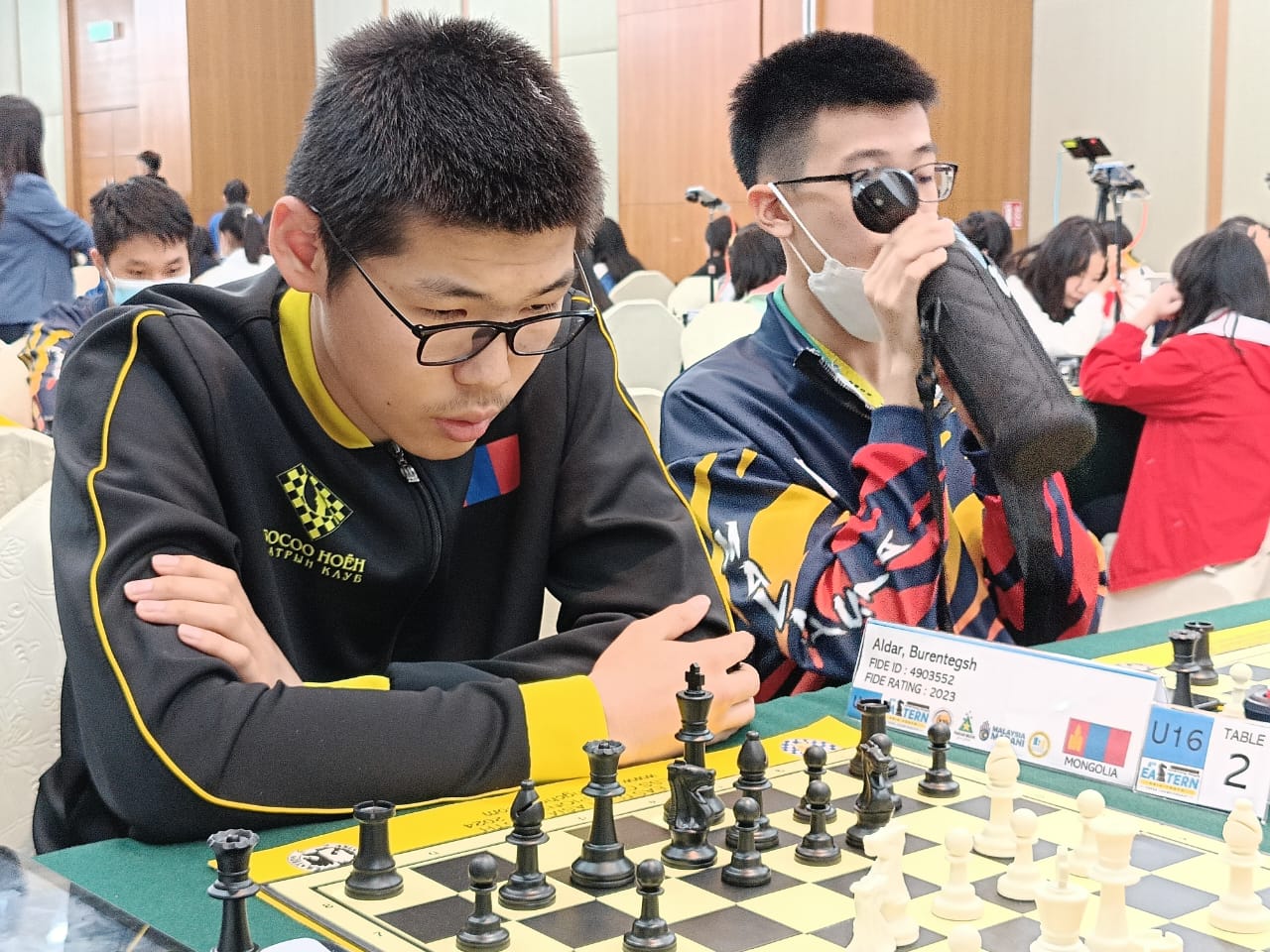
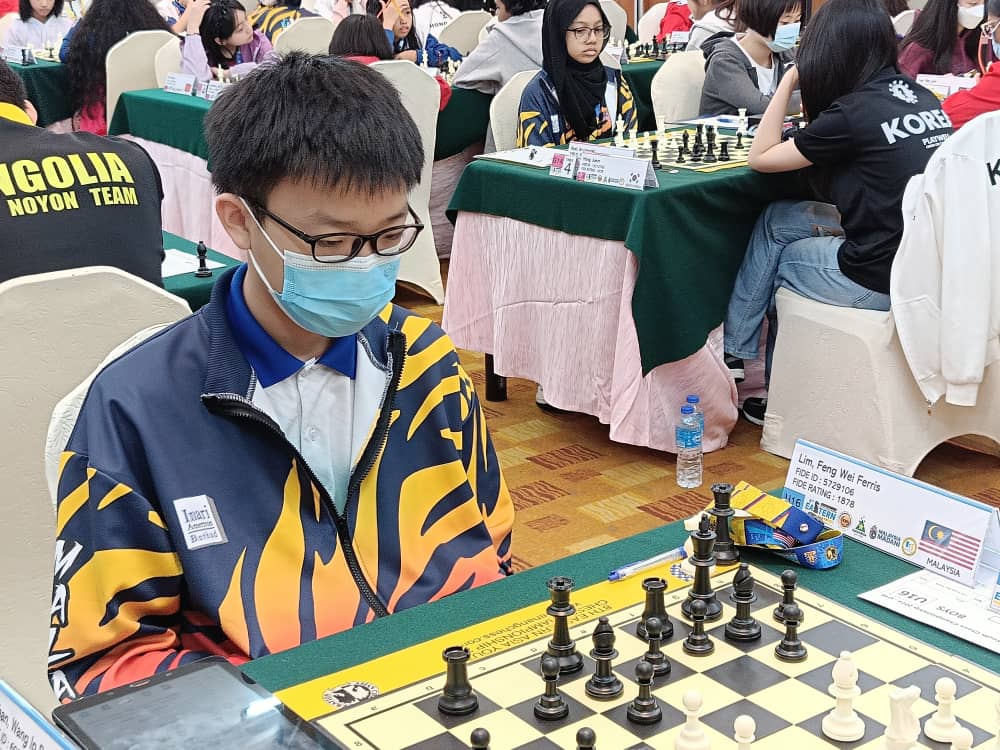
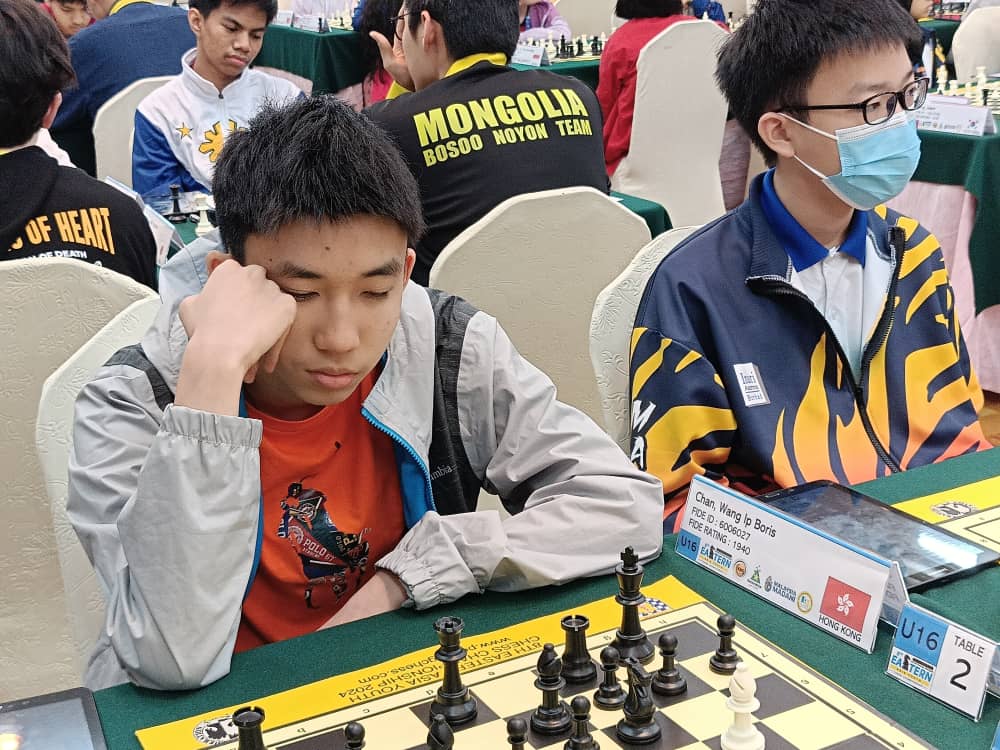
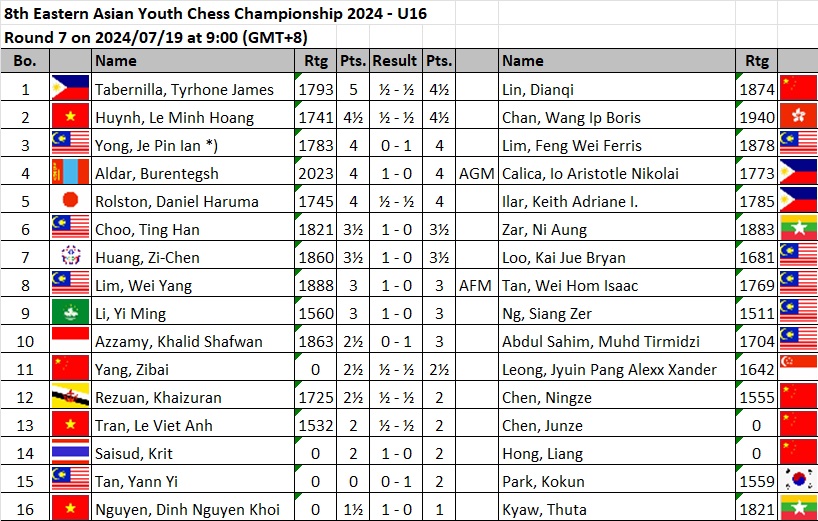
Tyrhone James Tabernilla of the Philippines (above left) drew with Lin Diang of China (above center) in the 7th round to maintain solo lead with 5.5 points followed by five players with 5 points each, namely Lin, Le Minh Hoang Huynh of Vietnam (above right), Aldar Burentegsh of Mongolia (below left), Lim, Feng Wei Ferris of Malaysia (below center) and Chan Wag Ip Boris of Hong Kong (below right).

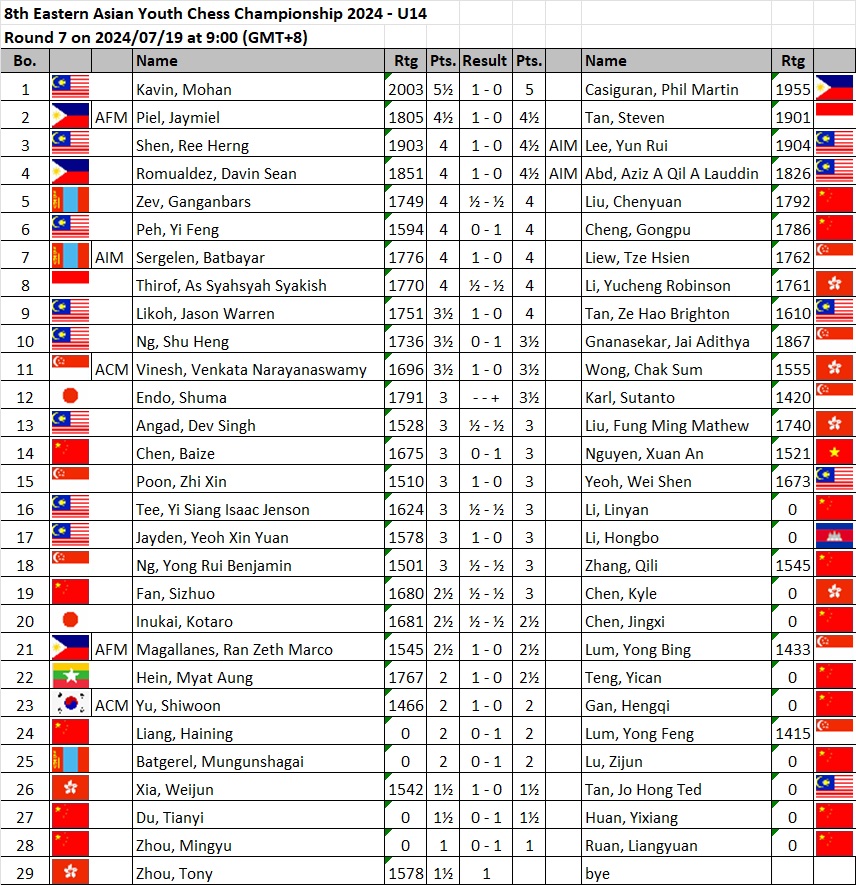
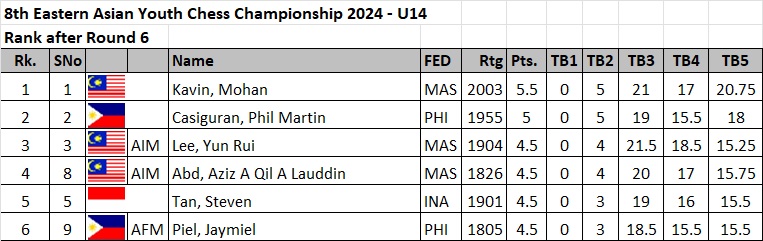
Mohan Kavin of Malaysia (above right) beat Phil Martin Casiguran of the Philippines in round 7 to maintain solo lead with 6.5 points followed by Jaymiel Piel of the Philippines (above left) with 5.5 points and five other players with 5 points each.

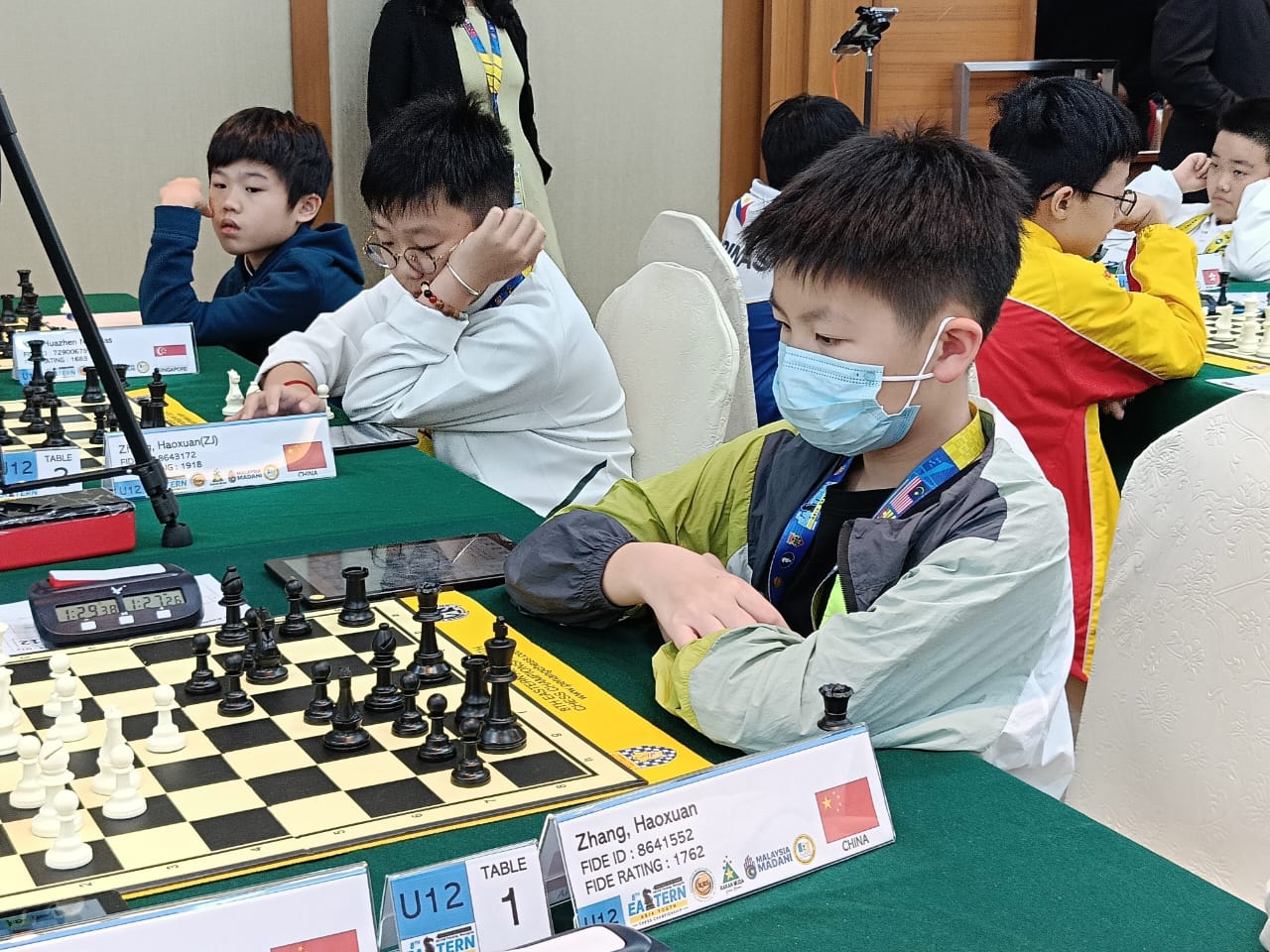
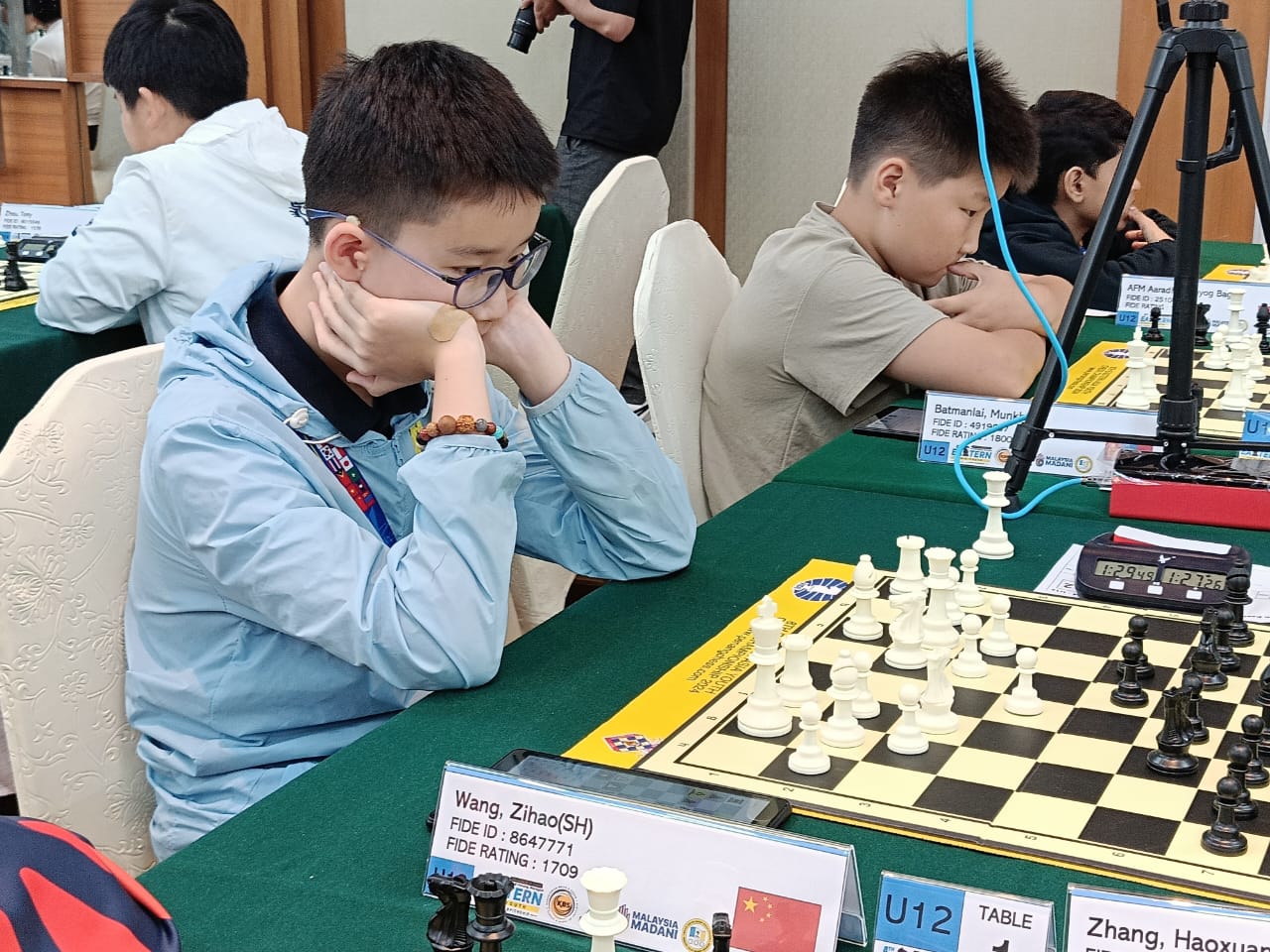
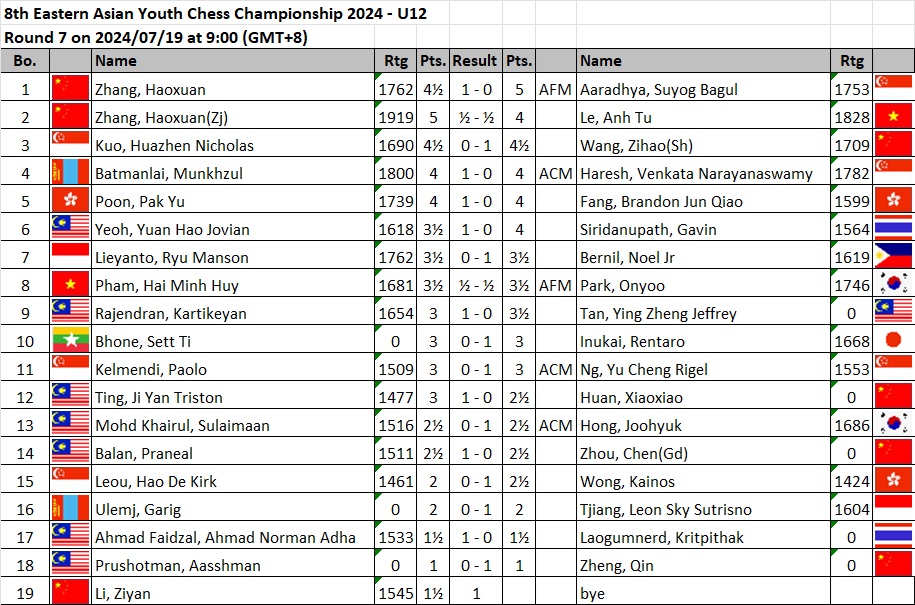
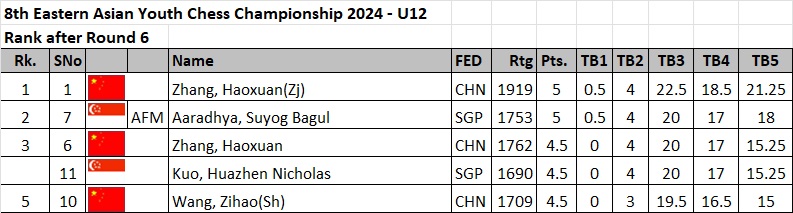
Zhang Haoxuan of China (above center) beat Suyog Bagul Aaradhya of Singapore to share the lead with 5.5 points in the boys under 12 together with compatriots Zhang Haoxuan (Zj) (above left) and Wang Zihao (Sh) (above right). Aaradhya and two others follow with 5 points each.

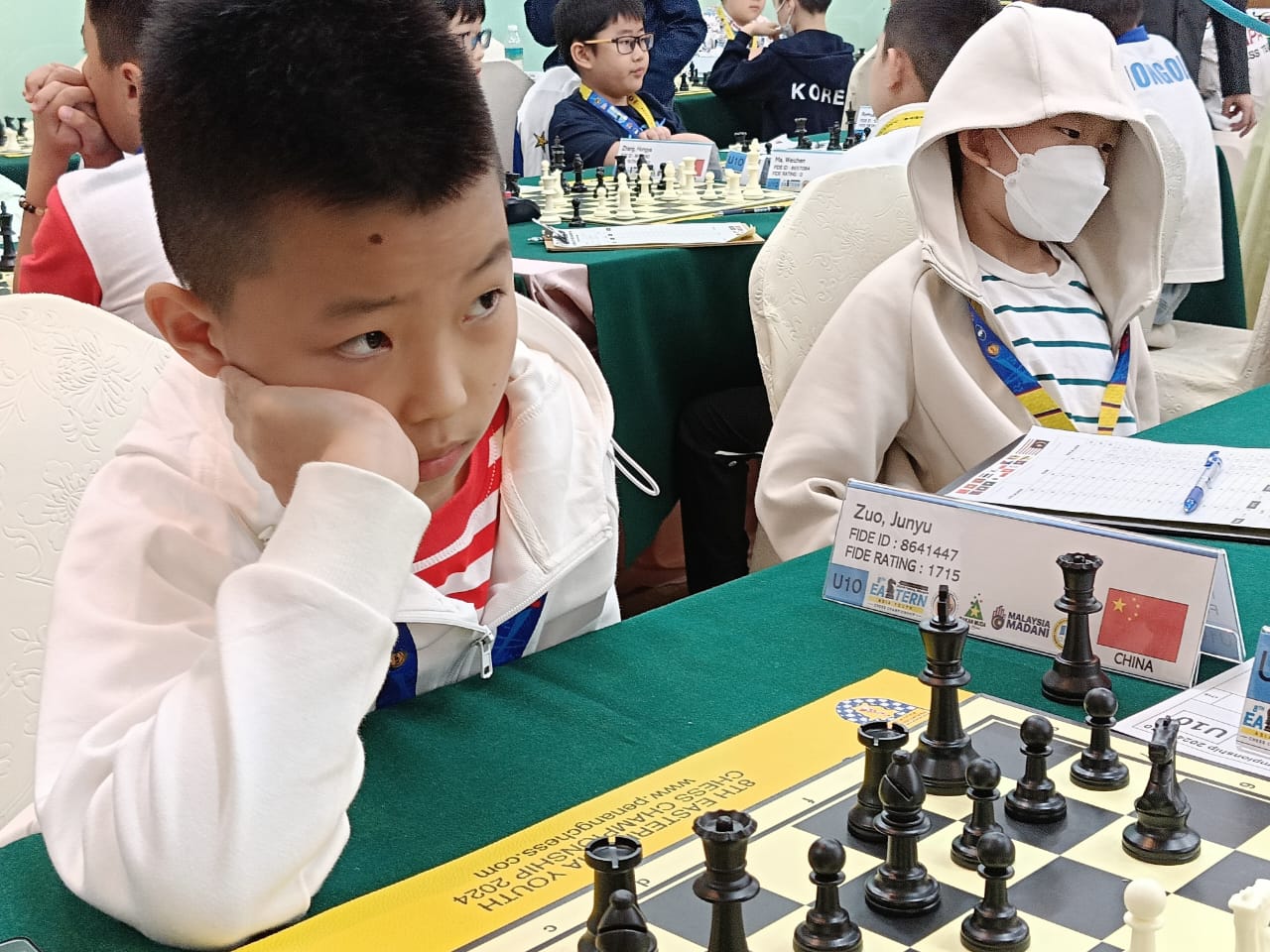
Zuo Junyu of China (above left) beat Tran Minh Hieu of Vietnam to maintain solo lead with 6.5 points in the boys under-10 division. Three players follow with 5.5 points each, namely Cho Yi Chen of Malaysia (above right), Zolbayart Unumunkh of Mongolia and Yapo Ray Jin of Malaysia.

Yu Zixiao of China (photo above) beat Enkhbat Enkhtushig of Mongolia to maintain his perfect score alone with 7 points in the boys under-8 division. Zhang Beichen of China (above right) beat Galam Erkin of Mongolia to follow in second slot with 6 points. Six other players trail with 5 points each.


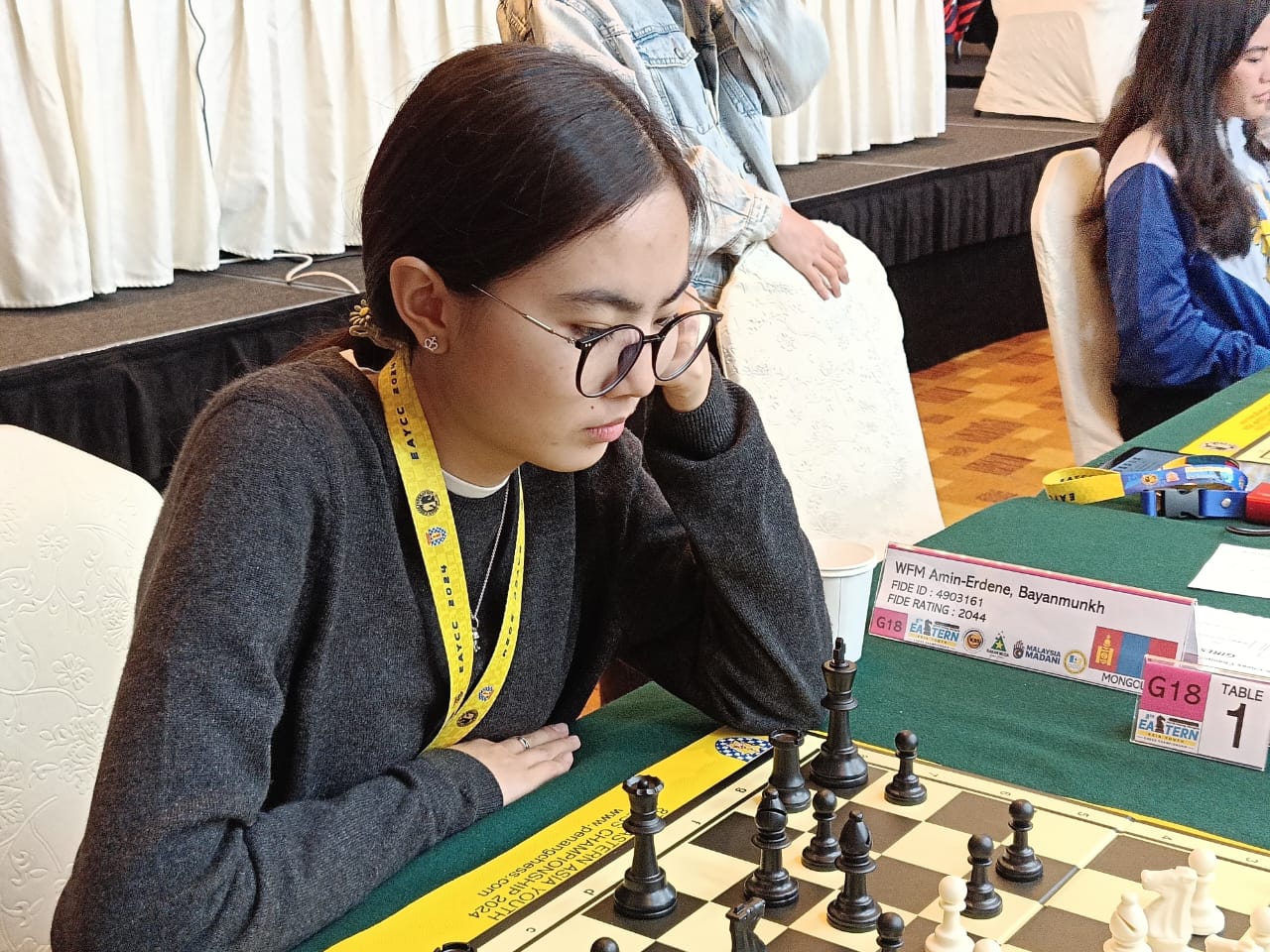
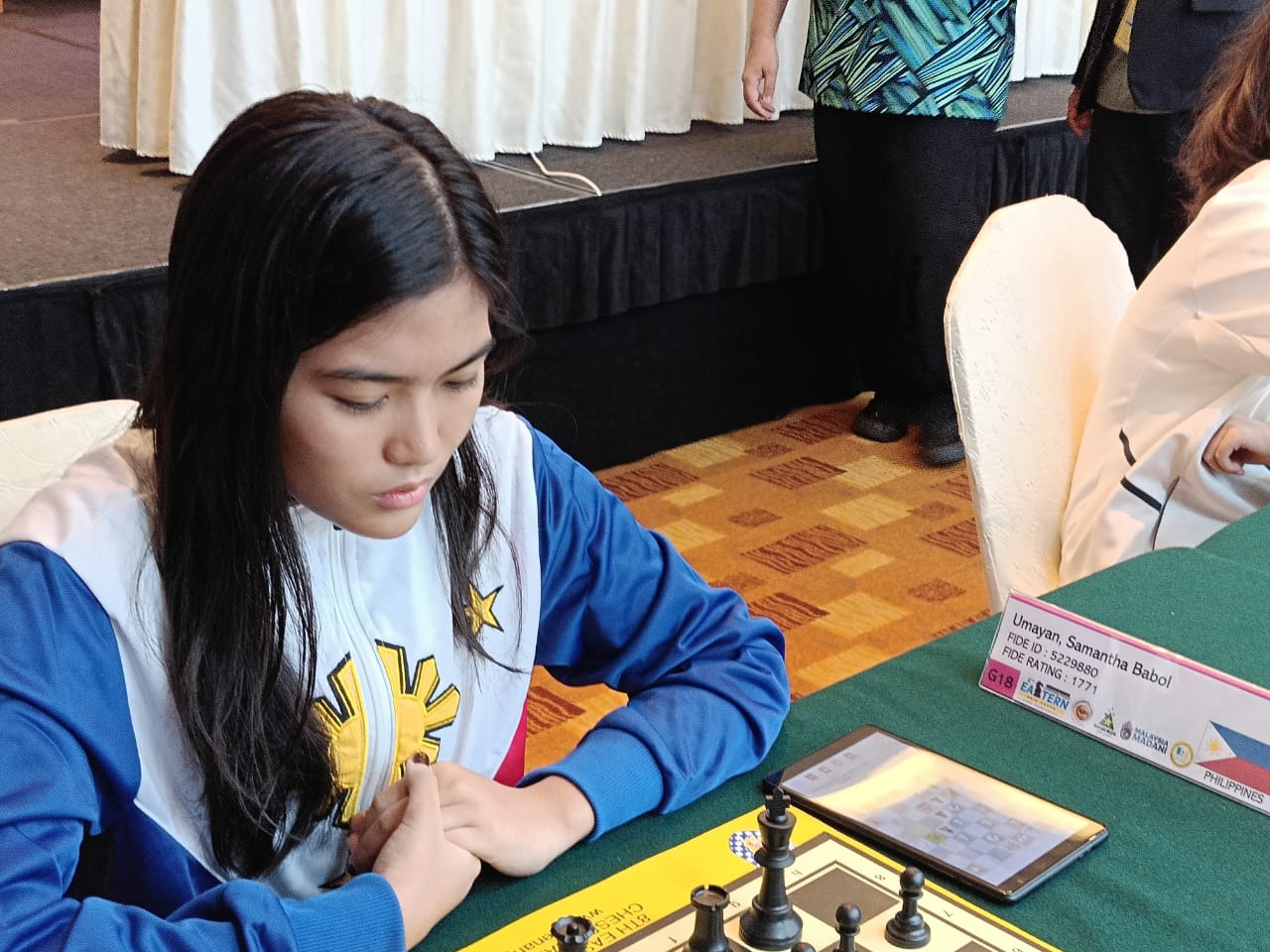
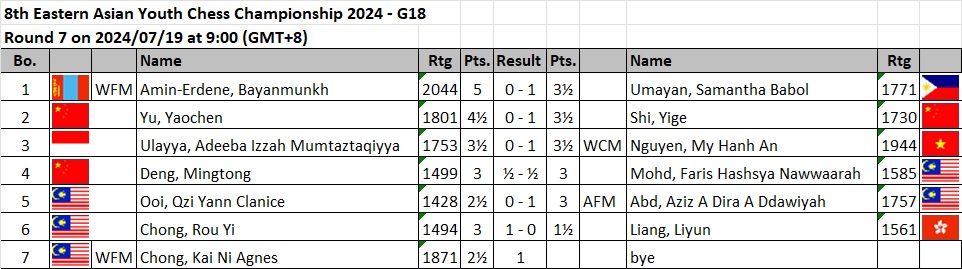
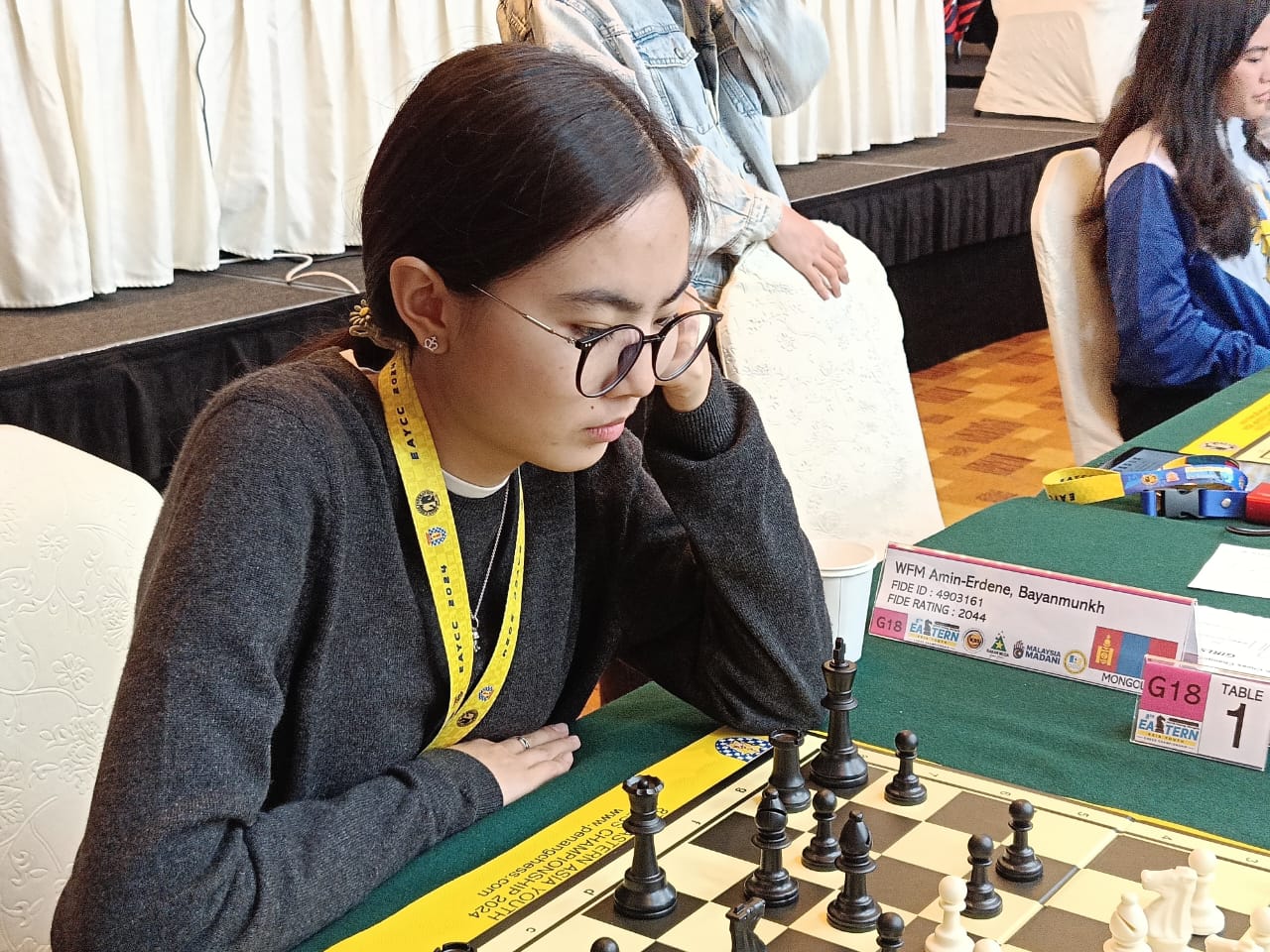
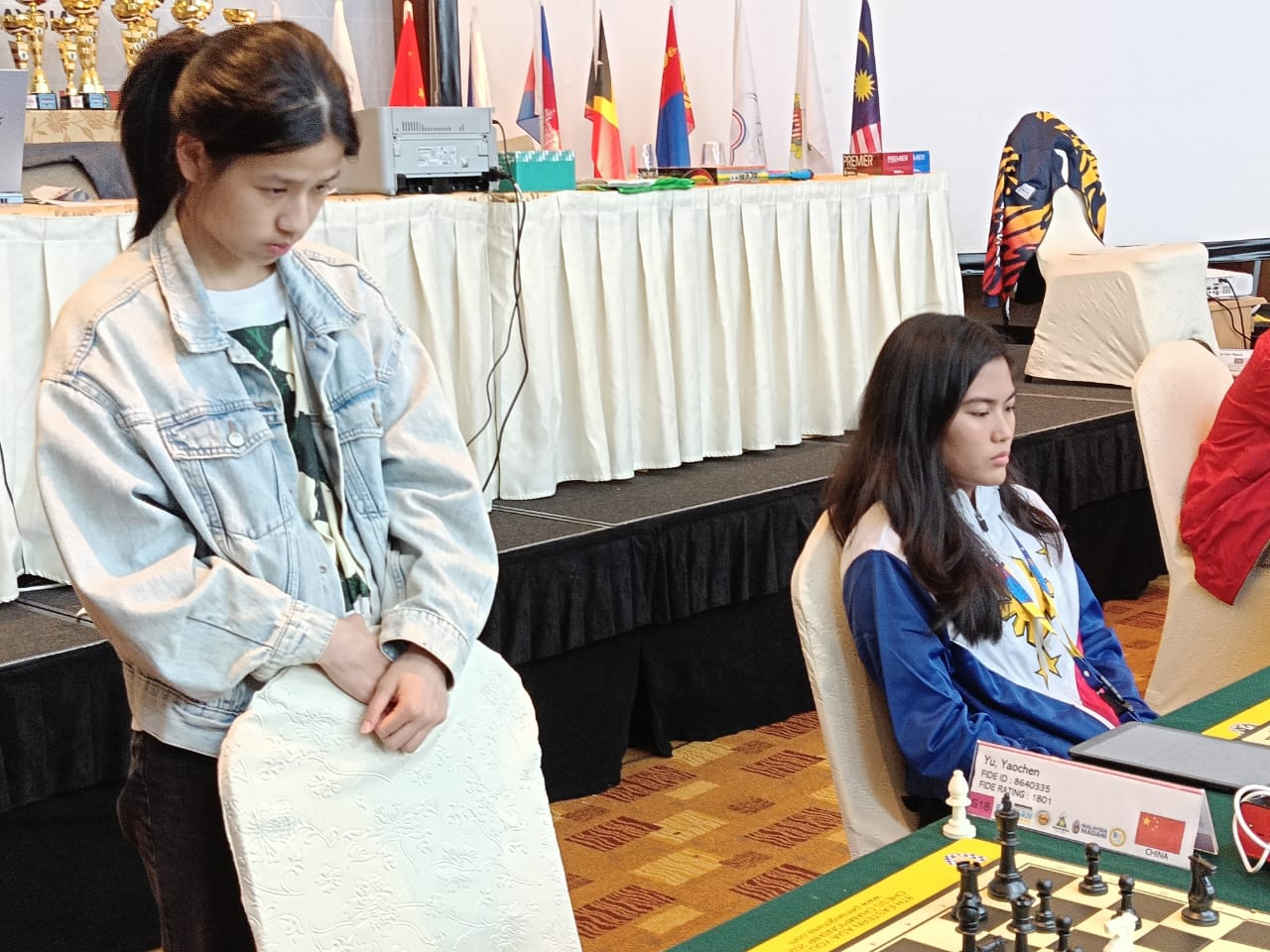
WFM Bayanmunkh Amin Erdene of Mongolia (above left) maintained solo lead with 5 points despite losing in the 7th round to Samantha Babol Umayan of the Philippines (above center).  Shi Yige of China (below left) beat compatriot Yu Yaochen (above right) as both landed in second slot with 4.5 points each. Nguyen My Hang An of Vietnam (below right) beat Adeeba Ulaya of Indonesia to share the lead with 4.5 points.

From Wheelchair to Winner: Sehba Shah, Redefining Limits in Chess

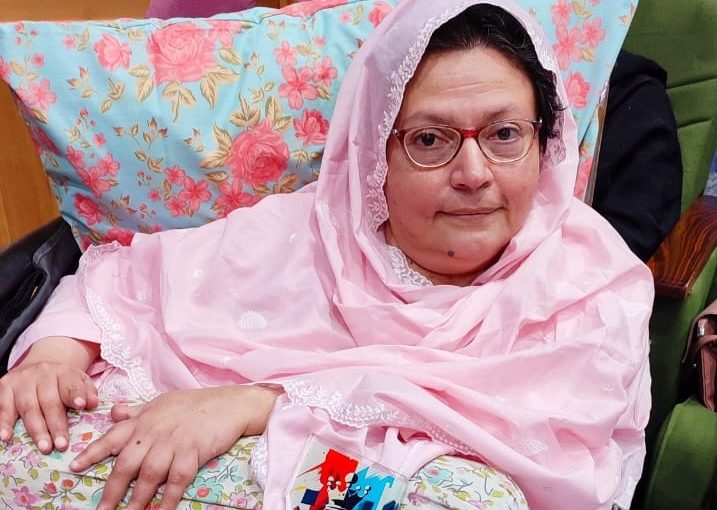
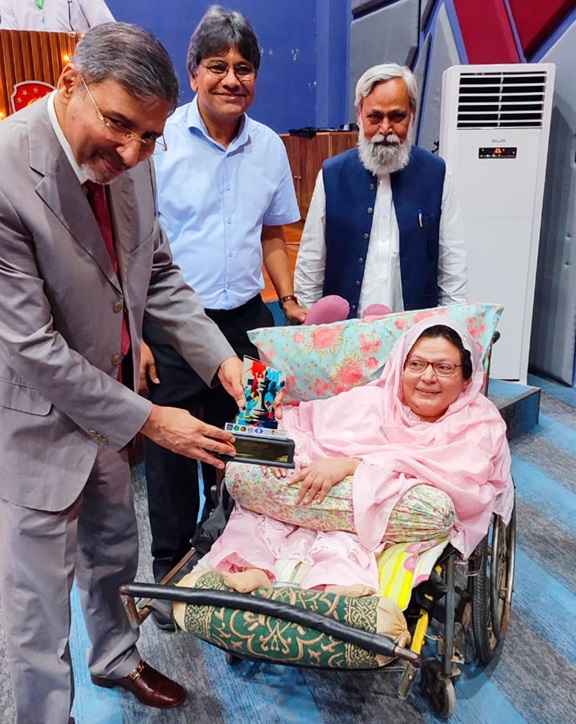
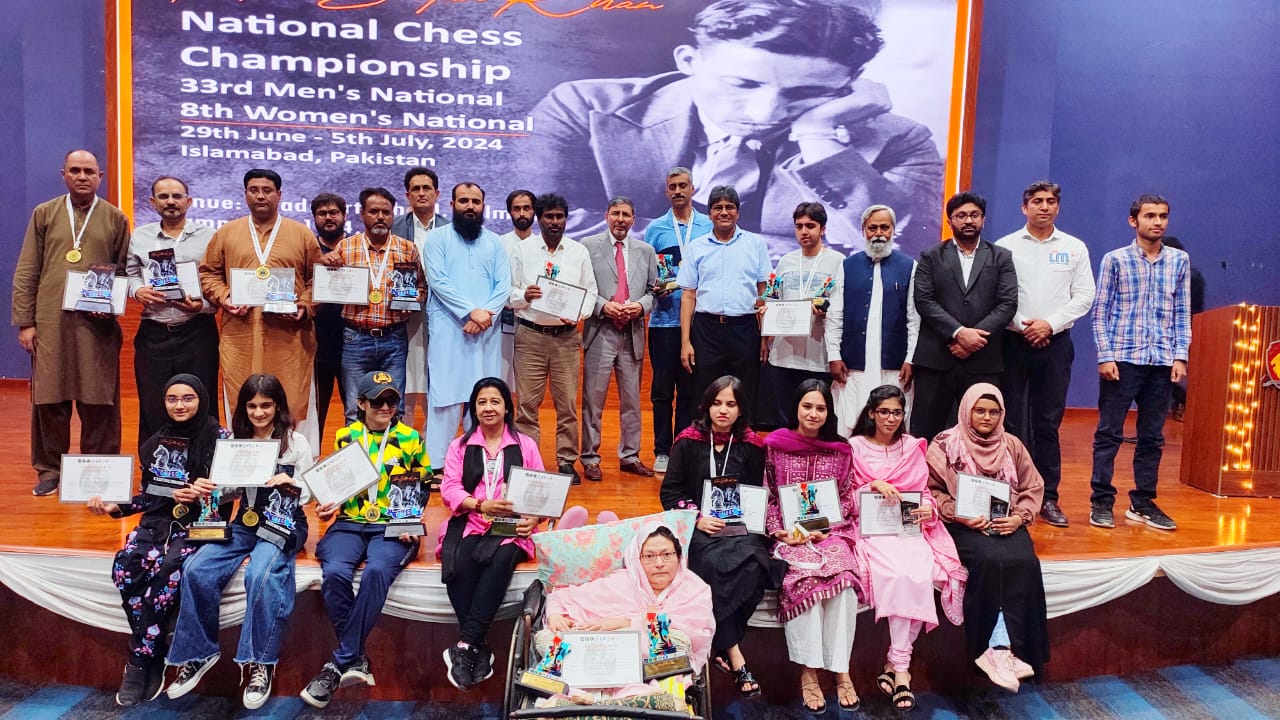
Sehba Shah of Pakistan receives the champion’s trophy in the Mian Sultan Khan 8th Women National Chess Championship held 29 June to 5 July 2024 in Islamabad, Pakistan. Standing at center is Chess Federation of Pakistan president Hanif Qureshi. Seeded 23rd, Sehba Shah finished with 6.5 points in the 7 round Swiss System. Visit chess-results.com for round by round results and standings.

By WNMNoorFatima Rashid
Sehba Shah’s remarkable journey from overcoming physical limitations to becoming Pakistan’s Women’s National Chess Champion inspires a new generation. Her victory exemplifies resilience, talent, and the power of inclusivity in sports. Sehba Shah defied all odds to become Pakistan’s National Women’s Champion in the Mir Sultan 8th Women’s National Chess Championship, making her the first specially-abled person to win the title. She triumphed in the championship as one of the eldest competitors of her cohorts, setting numerous exemplary standards.

In her debut at the national level, she defeated both emerging talents and seasoned players, remaining undefeated throughout the tournament. Rightfully earning a spot on the national team, she will represent Pakistan in the 45th International Chess Olympiad, scheduled for September in Hungary. If all goes as planned, she will play on Board 1 for the Pakistan Women’s team.

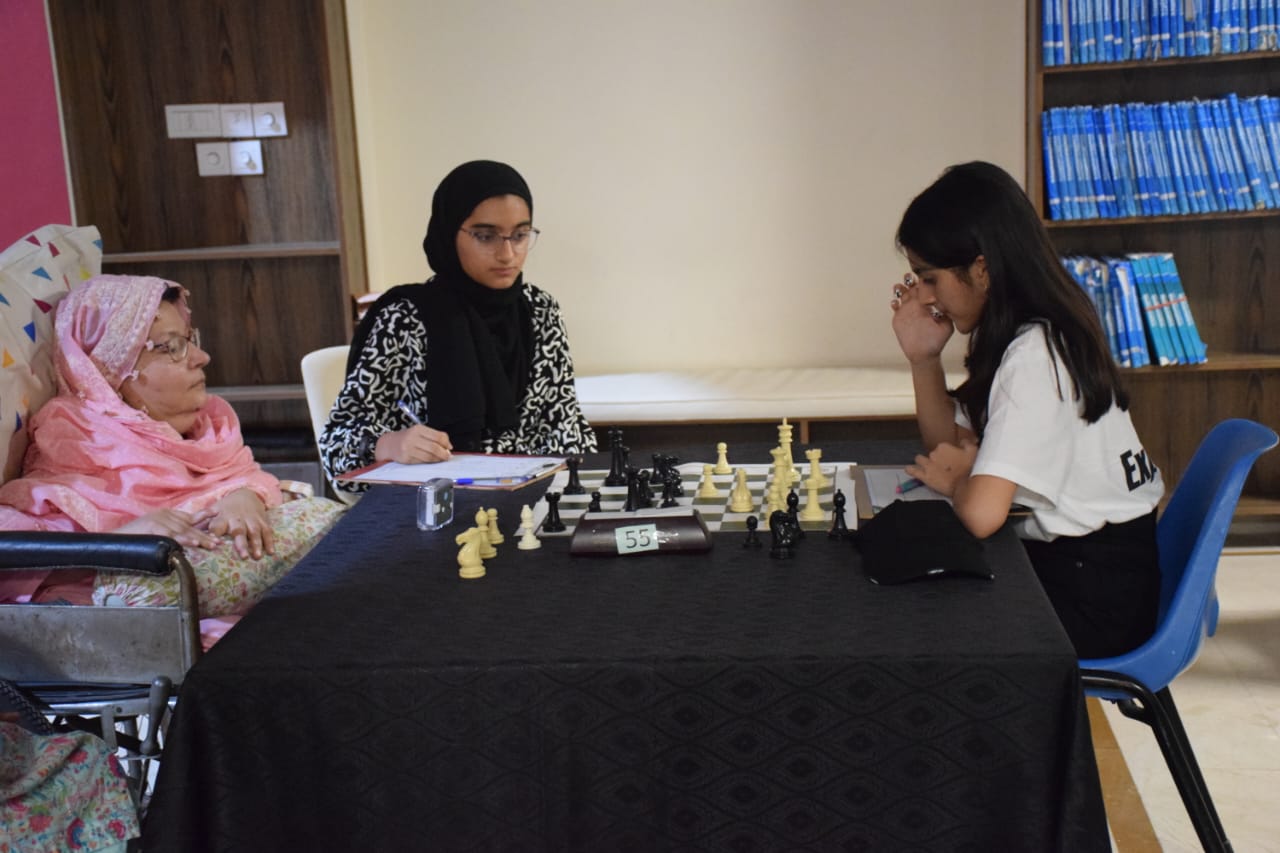
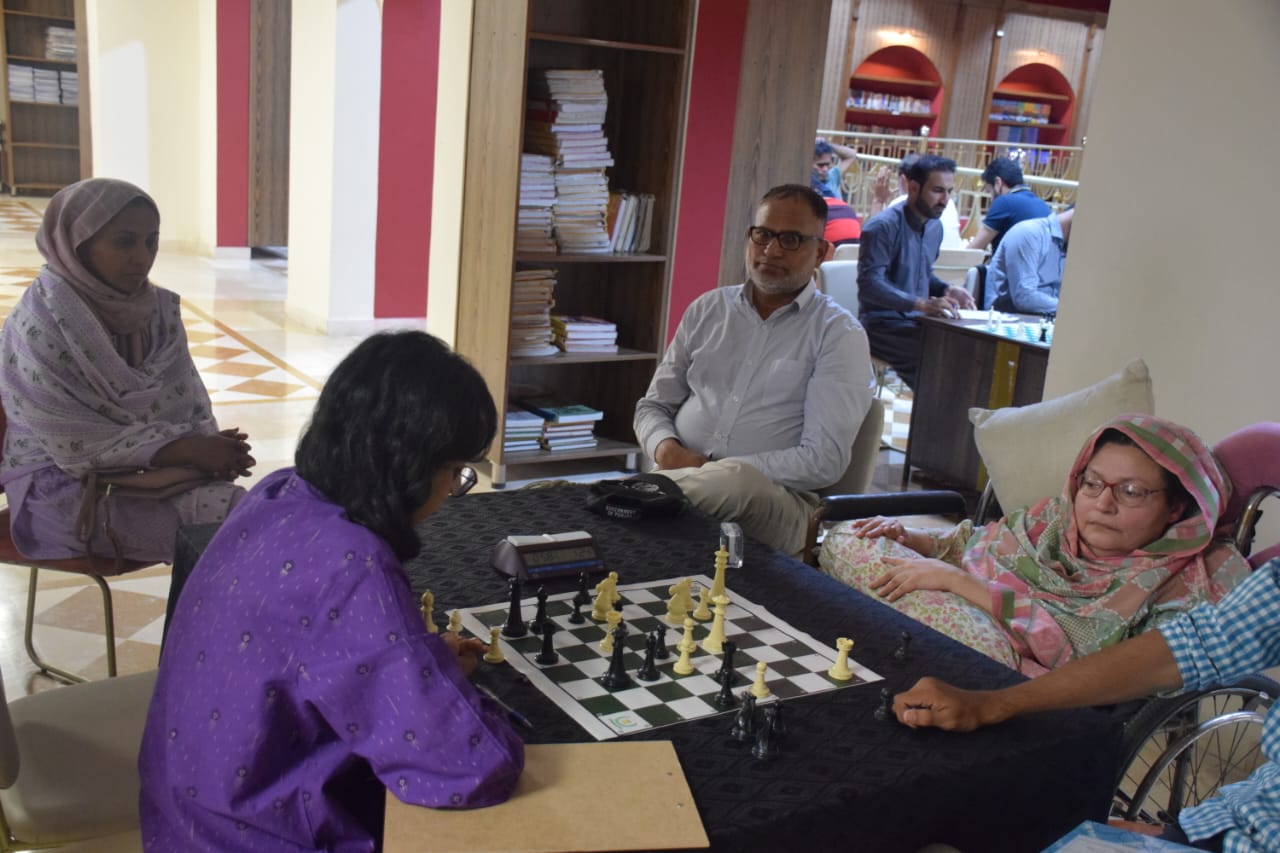
Unable to move her hands, she calmly instructed her assistant, who then made the moves on her board and pressed her clock. While her pieces, guided by her strategic brilliance, created chaos on board for her opponents, she sat serenely in her wheelchair, cool as a cucumber. Her opponents struggled to find responses to equalize the game, clearly challenged by her formidable play.

One of her opponents, Fareeha Siddique, remarked, “She has the most accurate and solid playing style out of all the women I have played with.” In the first round, Sehba faced the chess prodigy Ayat Asmi, a symbolic clash between the youngest and the oldest participants. Despite Ayat’s valiant efforts, she couldn’t sustain her position and was eventually checkmated.

Sehba Shah’s success didn’t end there; she went on to defeat the five-time national champion Zenobia Wasif and held the defending champion Mehak Gul to a draw in her final round.

Sehba’s journey to this unprecedented achievement was anything but easy. Born with a congenital condition that left her paralyzed from the neck down, she never allowed her disability to define her or limit her aspirations. She was introduced to chess in 1975 by her cousin, who taught her and her brother the basic movements of the pieces.

The 1972 Fischer-Spassky match increased her fascination for the game leading her to connect with a coach in India, Mr Vidya Bhushan Sharma, during the 1980s. He refined her game and helped build her strategic capacity
without charging her any fee. Chess, with its universal language and borderless appeal, became Sehba’s sanctuary and battlefield.

Her story is a testament to the power of resilience and the importance of inclusivity in sports. Despite her skills, Sehba was never invited to Nationals before the current federation took over. Previous championship of 2022 was held in Gilgit, a location she couldn’t access due to travel restrictions. However, with the full support of her family and the federation, Sehba seized her opportunity this year, crediting them for her unstoppable performance and ultimate victory.

“I did not come with the mind to win the Nationals,” she said. “I initially decided to play my natural game and enjoy the tournament to the fullest, treating it as a once-in-a-lifetime opportunity. However, as the tournament progressed, I began to realize that I could make a significant impact. When I defeated the five-time national champion Zenobia, I knew there was no turning back and that I had a real shot at becoming the national champion. Ultimately, I clinched the title with one round to spare.”

During the closing ceremony, she was welcomed with thunderous applause as everyone rose to their feet to give her a standing ovation when she received her medal. Sehba utilized advanced computer software throughout her training to study and practice chess. She developed her unique style of play, characterized by aggressive tactics and deep strategic understanding. Her ability to visualize complex positions and anticipate her opponent’s moves
has earned her a reputation as a dominant competitor on the national chess scene.

The President of the Chess Federation of Pakistan, Hanif Qureshi, expressed his pride, stating “We are committed to promoting an inclusive chess environment. Earlier this year, we organized a tournament for visually impaired chess players, reflecting our dedication to inclusivity. Sehba Shah’s victory is a significant milestone for us and a testament to our efforts. She is an extraordinary player, and it is an absolute delight to have her lead our women’s team in the upcoming Olympiad. She has the full support of the federation.”

Sehba’s victory has not only elevated her status in the chess community but also inspired many others. Her achievement challenges stereotypes and proves that talent and hard work can overcome physical limitations.
She has become a role model for aspiring chess players, especially younger players or those with special abilities, demonstrating that with the right mindset and support, anything is possible.

Sehba Shah herself shared a powerful message: “Pakistan has immense potential in chess, with a wealth of young talent emerging. Ayat Asmi exemplifies this, playing a remarkably mature game despite her young age. I especially encourage parents of children with special abilities to help them discover and nurture their talents, enabling them to excel in their chosen fields. Disability should never be a barrier to achievement.”

In the days leading up to the Chess Olympiad, Sehba remains focused and disciplined. Her training regimen includes daily practice sessions, strategic planning with her coach, and mental preparation to handle the pressure of representing her country internationally. She has submitted her passport for renewal, along with those of her helpers, determined to perform her best and bring a title home for Pakistan.

Sehba Shah’s story is not just about winning a championship but about breaking barriers, redefining possibilities, and inspiring a generation. The supportive women’s chess community has always accommodated her unique needs and encouraged her to bring her best. Her journey continues to unfold, promising more achievements and setting new standards for excellence in the world of chess.

De Silva, Akhmedinov Lead Western Asia Juniors. Shubhi, Mikheeva Lead Girls

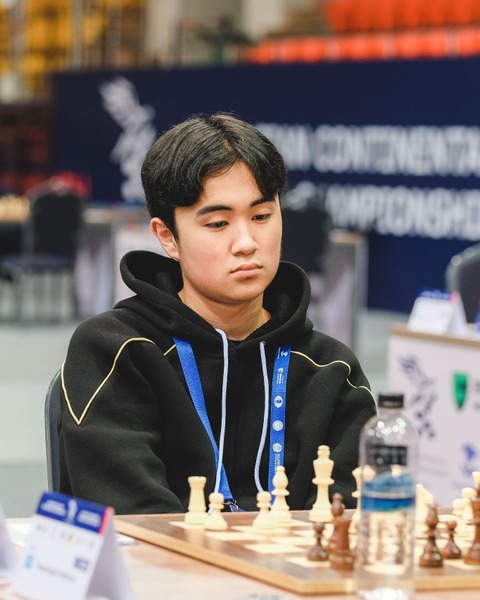
International Master LMST De Silva of Sri Lakna (left) and FM Satbek Akhmedinov of Kazakhstan (right) are tied for the lead with 4.5 points after 5 rounds of the Western Asia Juniors Chess Championship in Colombo, Sri Lanka. A total of 24 boys and 31 girls are participating from six countries, namely Bangladesh, India, Kazakhstan, Kyrgyzstan, Kuwait and host Sri Lanka.

The tournament is a 9-round Swiss System scheduled from 15th to 23rd July 2024 and organized by the Chess Federation of Sri Lanka under the auspices of the Asian Chess Federation and FIDE. Visit chess-results.com for round by round results and standings and to download games.

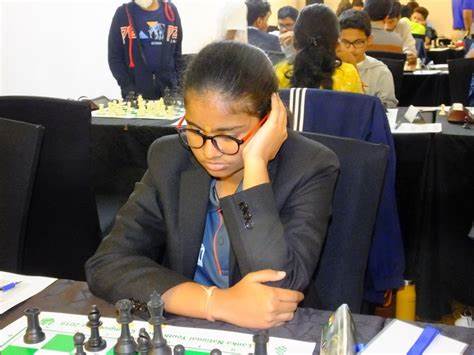
In the girls under-20 division, WFM Gupta Shubhi of India (photo above) leads with 4.5 points, in a tie with WFM Galina Mikheeva of Russia playing under the FIDE flag.

New Leaders Emerge After 6th Round of Eastern Asia Youth Chess Championship


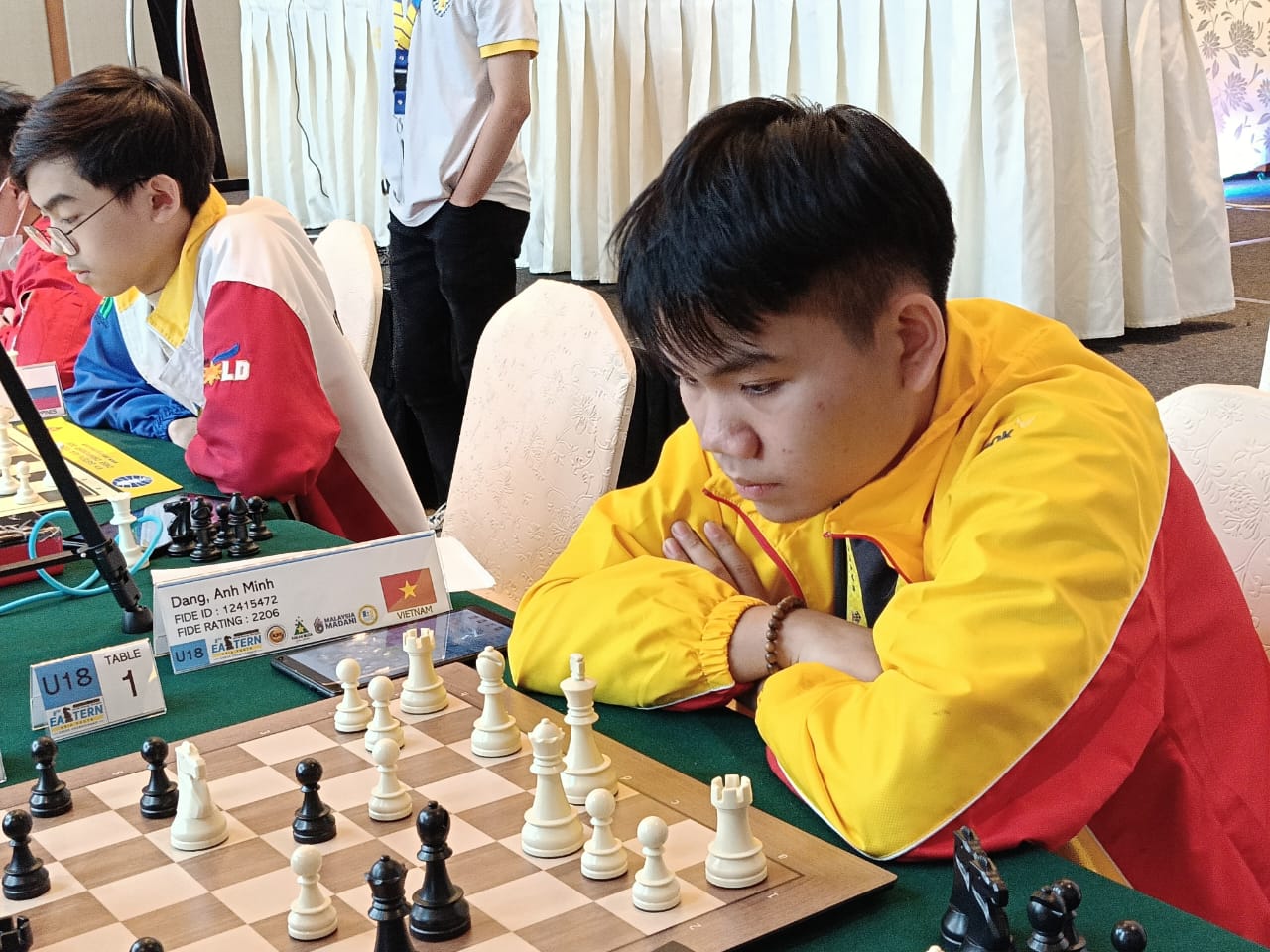
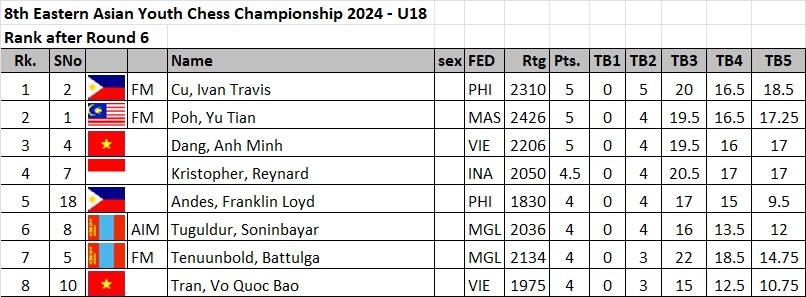
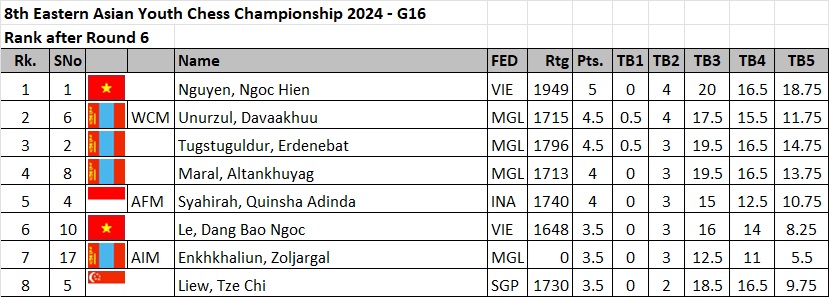
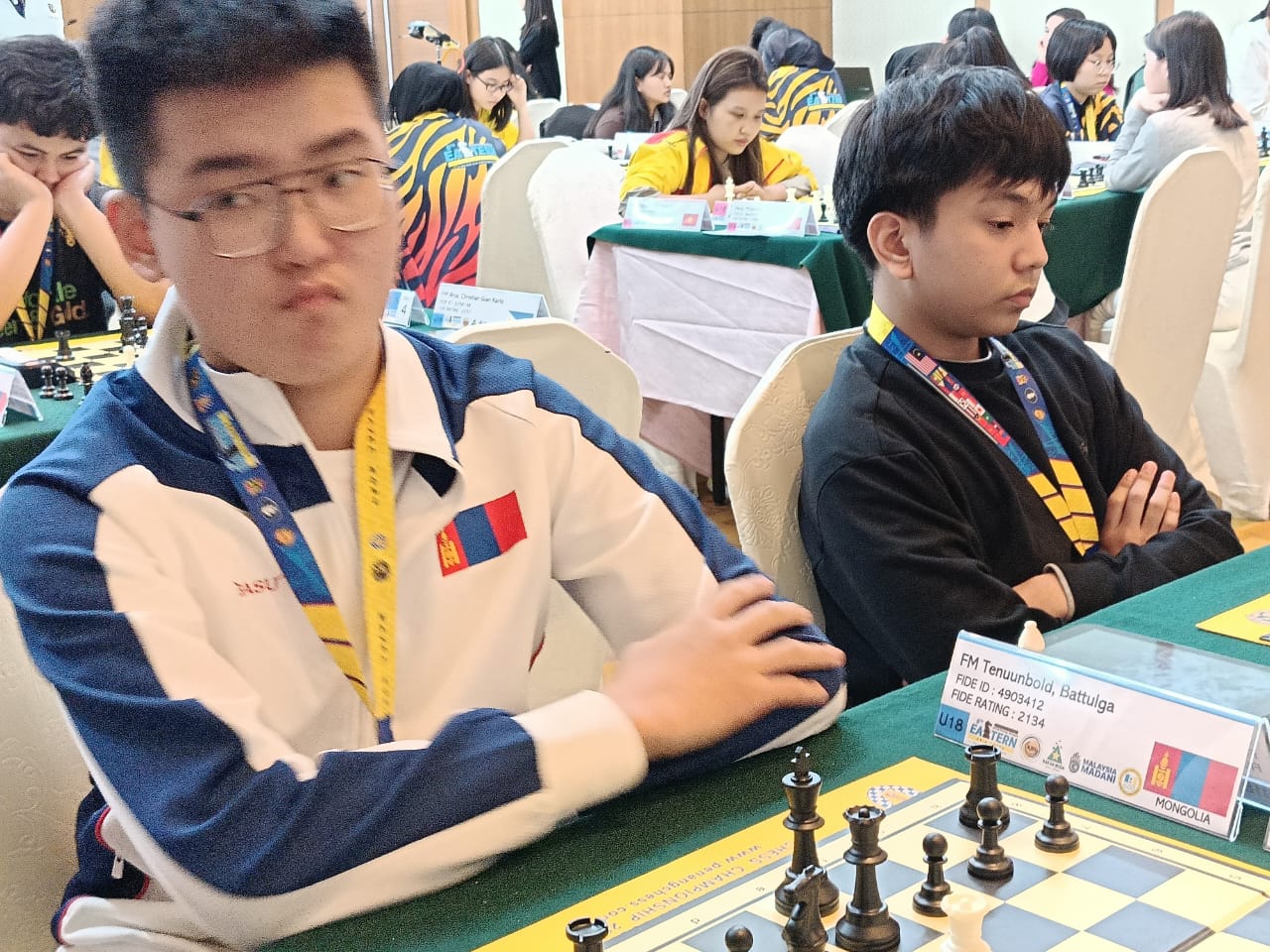
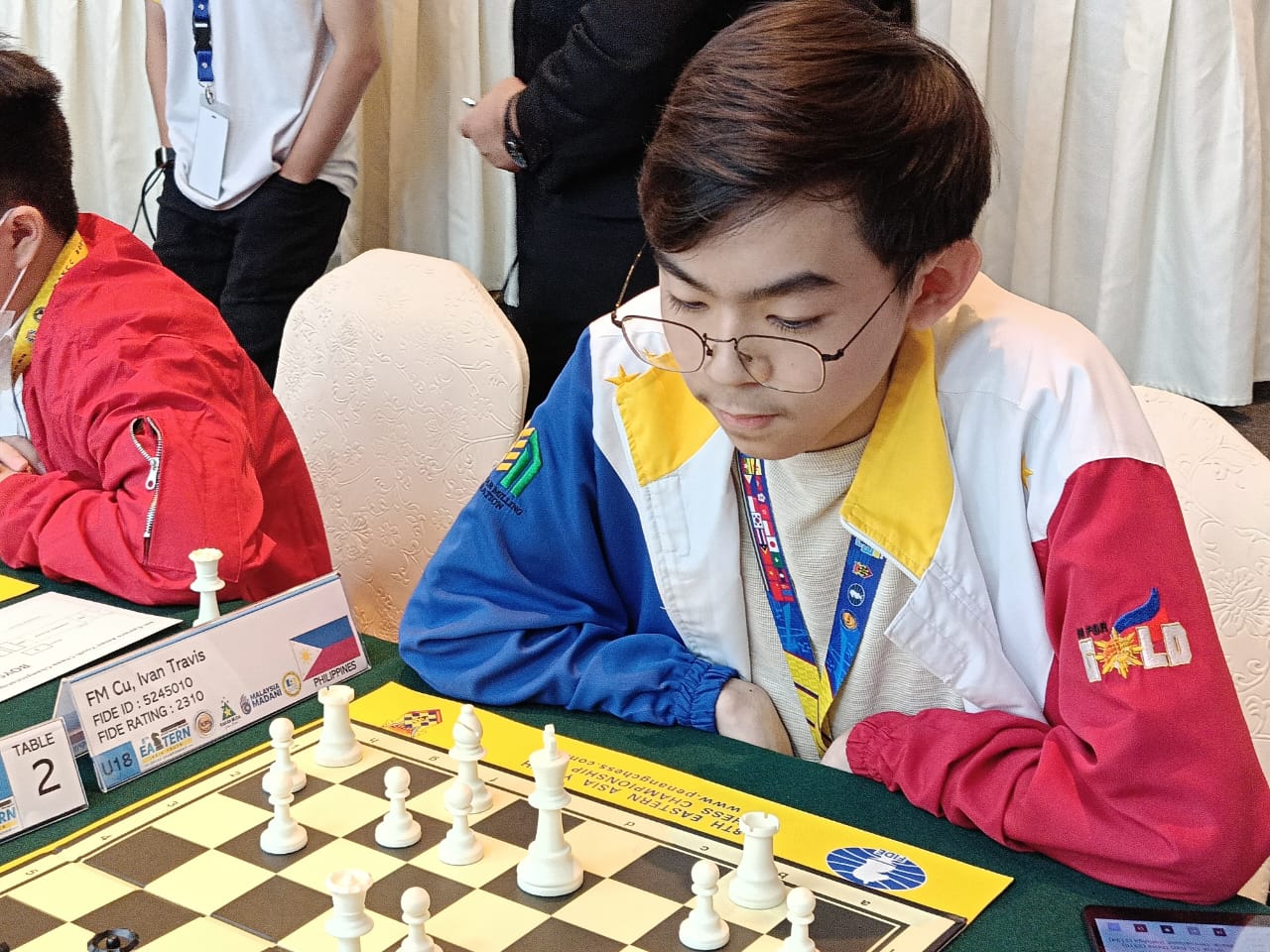
Leaders jockeyed for position after six rounds of the Eastern Asia Youth Chess Championship on 17th July in Penang, Malaysia. FM Ivan Travis Cu of the Philippines (left) beat FM Battulga Temiimbold of Mongolia in the sixth round of the 8th Eastern Asia Youth Chess Championship boys under-18 division to grab a share of the lead with 5 points together with FM Poh Yu Tian of Malaysia (center) and Dang Anh Minh of Vietnam (right) who drew with each other.

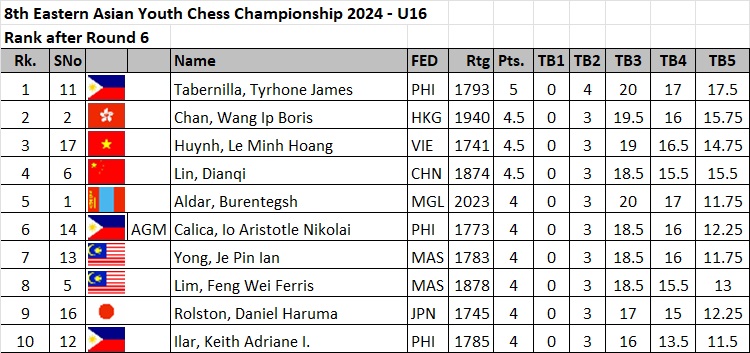
Tyrhone James Tabernilla of the Philippines beat compatriot Io Aristotle Nikolai Calica in the 6th round to grab solo lead with 5 points followed by three players with 4.5 points each in the boys under-16 category.

Mohan Kavin of Malaysia drew with compatriot Abd, Aziz A Qil A Lauddin to maintain 1-2 position in the boys under-14 with 5.5 and 5 points, respectively, followed by four players with 4.5 points each.

Haoxuan Zi Zhang of China drew with compatriot and namesake Haoxuan Zhang while Suyog Bagul Aaradhya of Singapore beat Munkhzul Batmanlai of Mongolia to share the lead with 5 points each in the boys under-12 division. Three players follow a half point close behind with 4.5 points each.

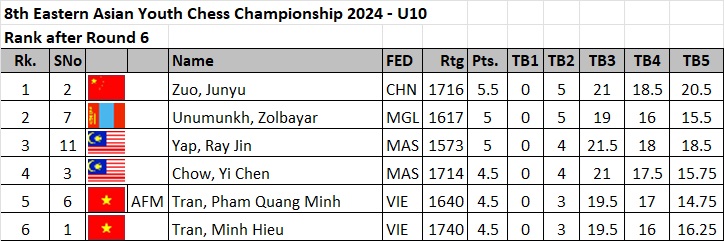
Zuo Junyu of China bet Wu Haoyang of Hong Kong to grab solo lead with 5.5 points in the boys under-10 division.

Zolbayar Unumunkh of Mongolia beat Wu Chenyu of Singapore while Yap Ray Jin of Malaysia beat Kim Echae of Korea to follow in second slot with 5 points each in tge boys under-10 division.

Yu Zixiao of China beat Tsengel, Ganbat of Mongolia to maintain his perfect score of six points in as many rounds of the boys under-8 division. Enkhbat Enkhtushig of Mongolia beat compatrios Khabul, Chinzorig while Zhang Beichen of China beat compatriot Guo Tailai to share second slot in a tie with 5 points each.

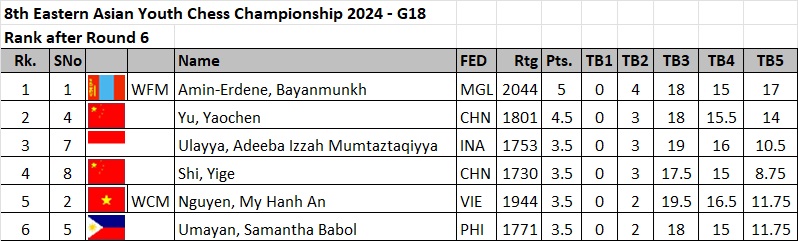
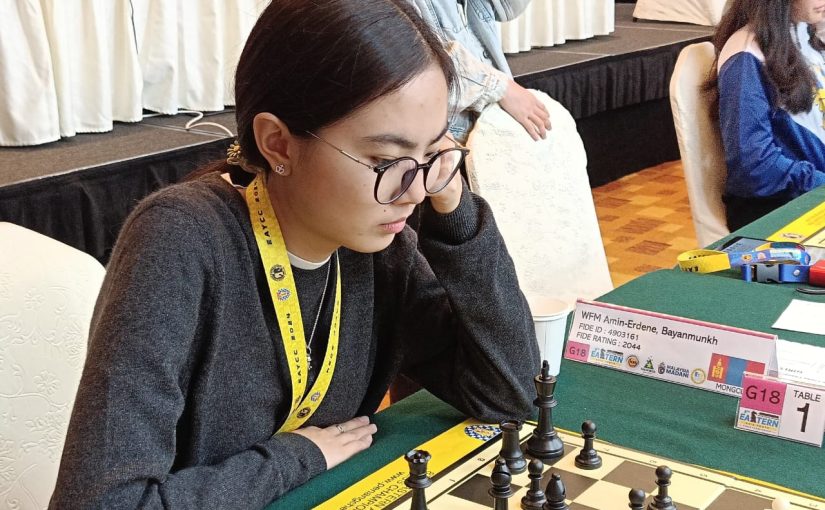
WFM Amin-Erdene, Bayanmunkh of Mongolia (above left) beat Faris Hashya Nawwaarah Mohd of Malaysia to maintain solo lead with 5 points in the girls under-18 division. Yu Yaochen of China (above right) beat Ulayya, Adeeba Izzah Mumtaztaqiyya of Indonesia to stay close behind in second slot with 4.5 points.

Nguyen Ngoc Hien of Vietnam beat Suyamin, Bonjoure Fille of the Philippines to grab solo lead with 5 points in the girls under-16 division. Erstwhile leaders Davaakhuu Unurzul and Edenebat Tugstuguldur, both of Mongolia, drew with each other and are tied for second slot with 4.5 points each.

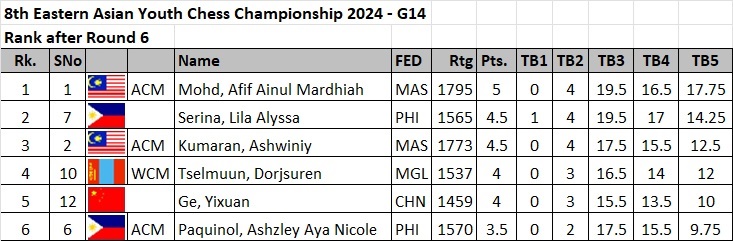
Afif Ainul Mardhiah Mohd of Malaysia drew with compatriot Kumaran, Ashwiniy to maintain solo lead with 5 points in the girls under-14 division. Kumaran and Lila Alyssa Serina of the Philippines follow a half point behind with 4.5 points each.

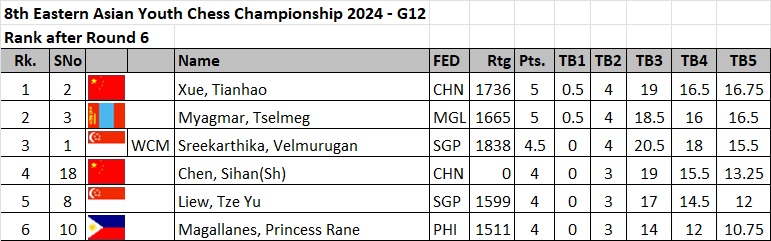
Xue Tianhao of China beat compatriot Xia, Miaoyan while Tselmeg Myagmar of Mongolia beat Sreekarthika, Velmurugan of Singapore to tie for the lead with 5 points each in the girls under-12 division. Sreekarthika is in third slot with 4.5 points followed by three players with 4 points each.

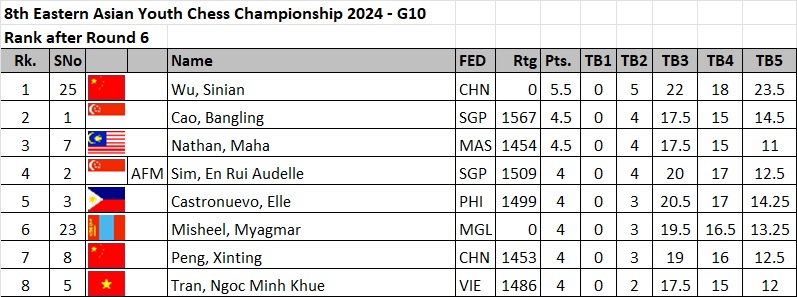
Wu Sinian of China beat Myagmar Misheel of Myanmar in the 6th round to maintain solo lead of the girls under-10 division. Banglish Cao of Singapore beat compatriot En Rui Audelle Sim while Maha Nathan of Malaysia beat Monali, Roy of Singapore to follow a half point behind with 4.5 points each.

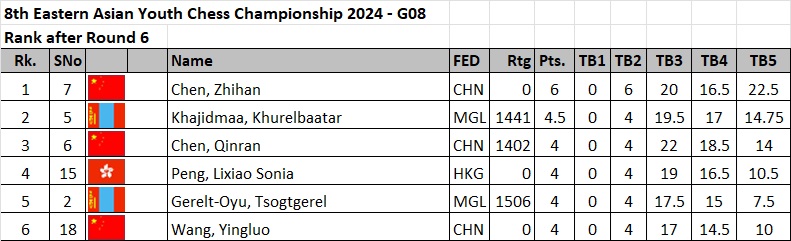
Chen Zhiha of China beat Peng, Lixiao Sonia of Hong Kong to maintain a perfect score of six points in as many rounds of the girls under 8 division. Khurelbaatar Kajidmaa of Mongolia beat Chen, Qinran of China to hug second slot with 4.5 points.

Chinese Children Lead At Halfway Mark of Eastern Asia Youth Chess Championship

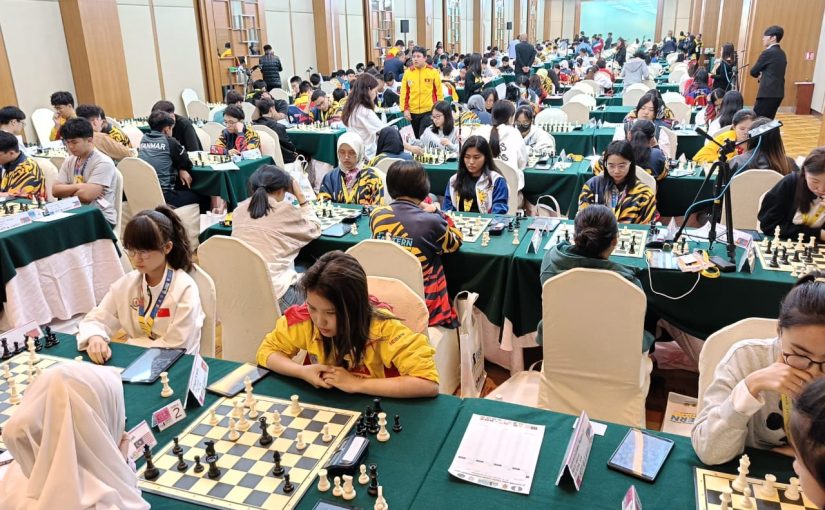
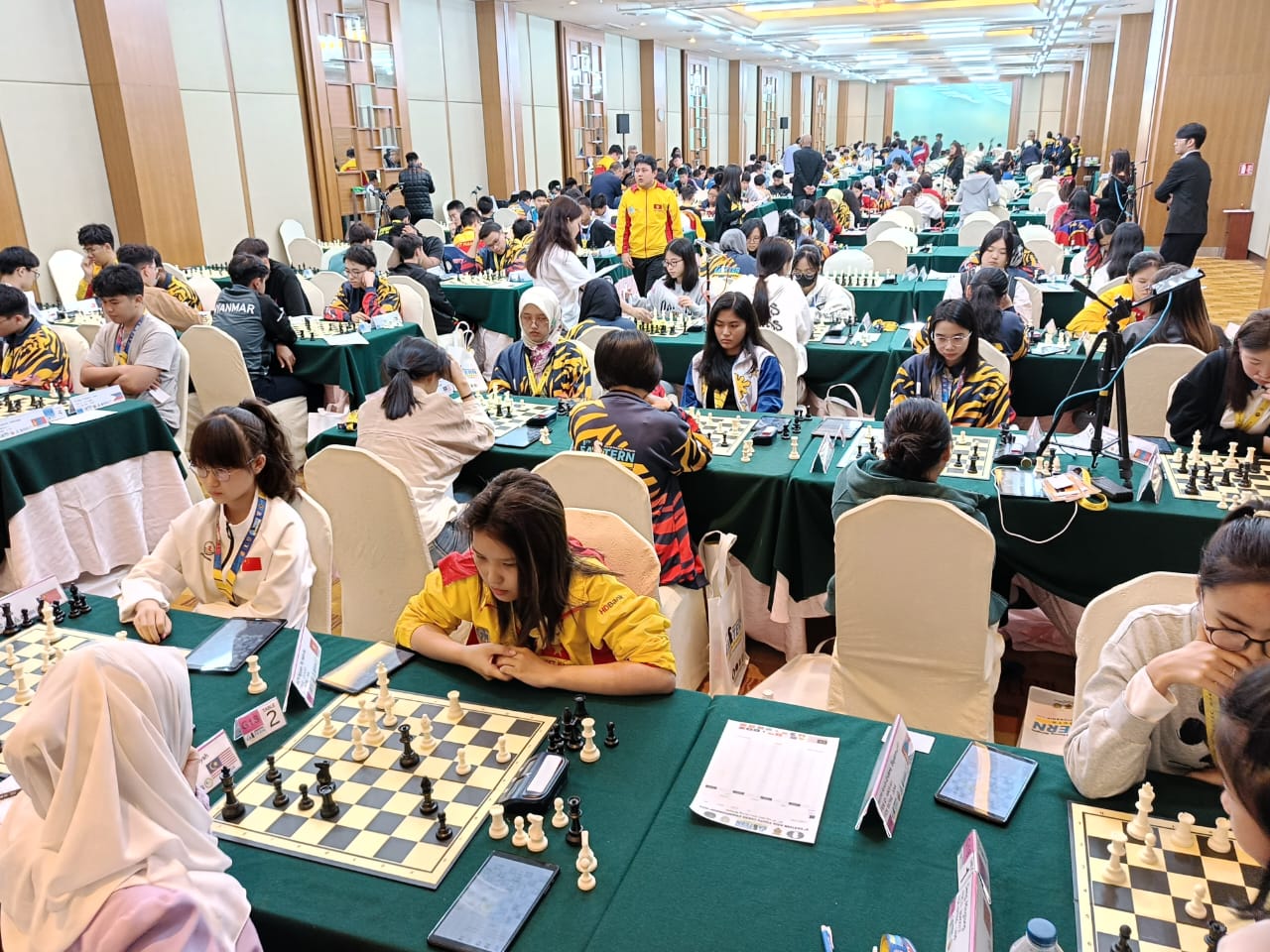
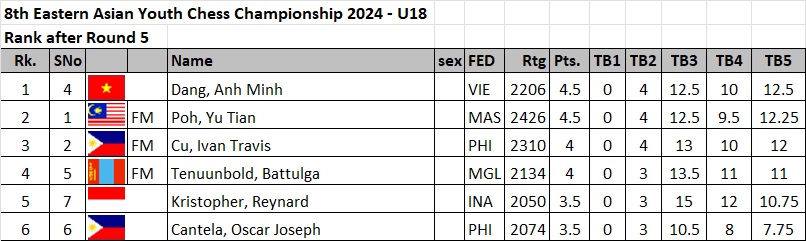
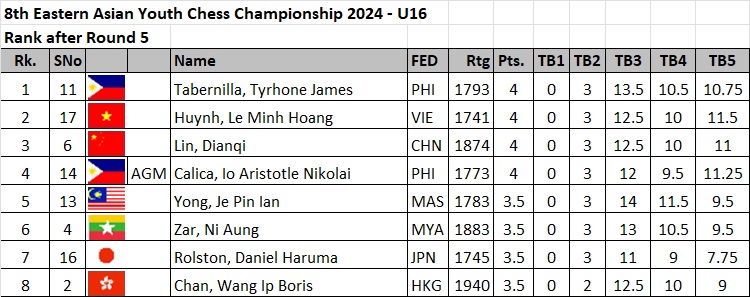
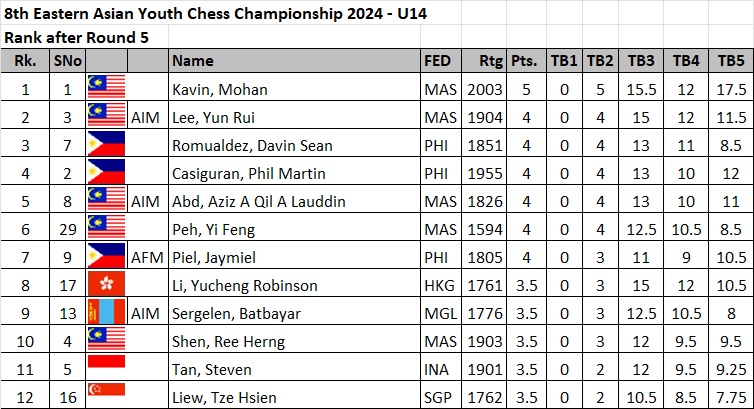
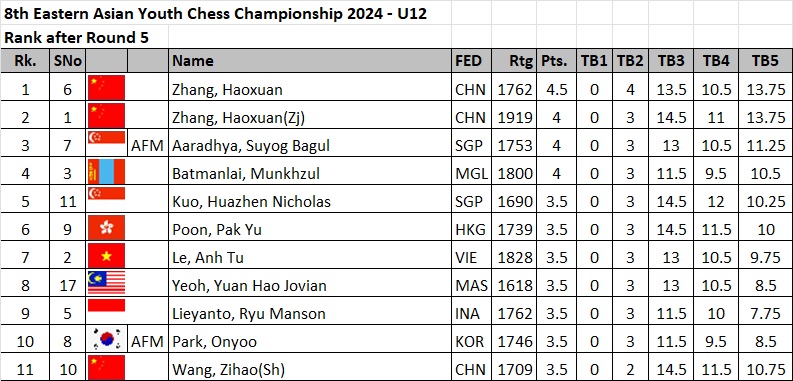
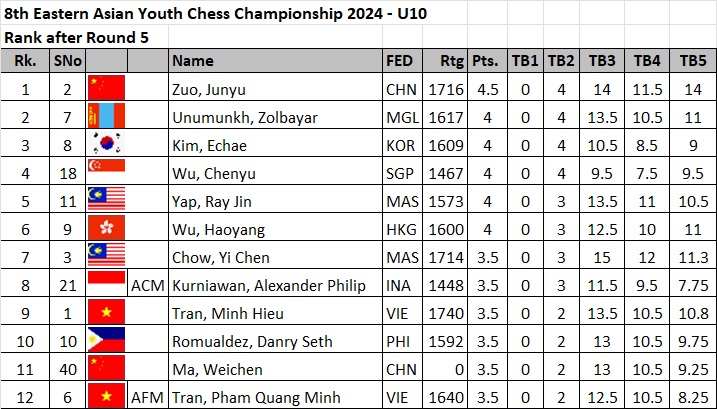
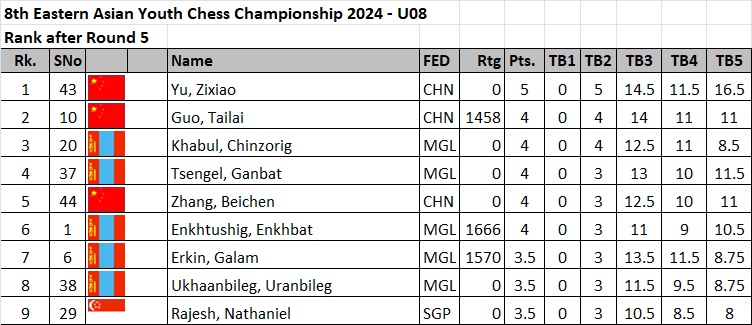
It is a close fight at the halfway mark of the Eastern Asia Youth Chess Championship in Penang, Malaysia. Chinese children are leading in many age groups, namely boys under-16, 12, 10 and 8 and girls under-10 and 8, together with children from Vietnam, Philippines, Malaysia, Mongolia and Singapore in various age groups. Chinese youth are obviously inspired by Chinese World Champion Ding Liren and Women’s World Champion Ju Wenjun.

Visit chess-results.com for round by round results and standings. Visit the Penang Chess Association facebook page. The tournament is hosted by the Penang Chess Association under the auspices of the Malaysian Chess Federation, Asian Chess Federation and FIDE. Photos by Quah Seng Sun.

Untitled Dang Anh Minh of Vietnam (above right) and FM Poh Yu Tian of Malaysia (above left) are tied for the lead in the boys under-18 at 4.5 points each followed by FM Ivan Travis Cu of Philippines (below right) and FM Battulga Tenuunbold of Mongolia (beow left).


Four players are tied with 4 points each in the hotly contested boys under-16 division.

Mohan Kavin of Malaysia is alone with 5 points for the lead in the boys under-14 followed by six players with 4 points each.

China’s Zhang Haoxuan grabbed solo lead with 4.5 points in the boys under-12 followed a half point behind by three players with 4 points each.

Chinese Zuo Junyu is alone with 4.5 points in the boys under-10 followed a half point behind by five players with 4 points each.

Leading with a perfect score is Yu Zixiao of China with 5 points in the boys under-8 followed by five players with 4 points each.

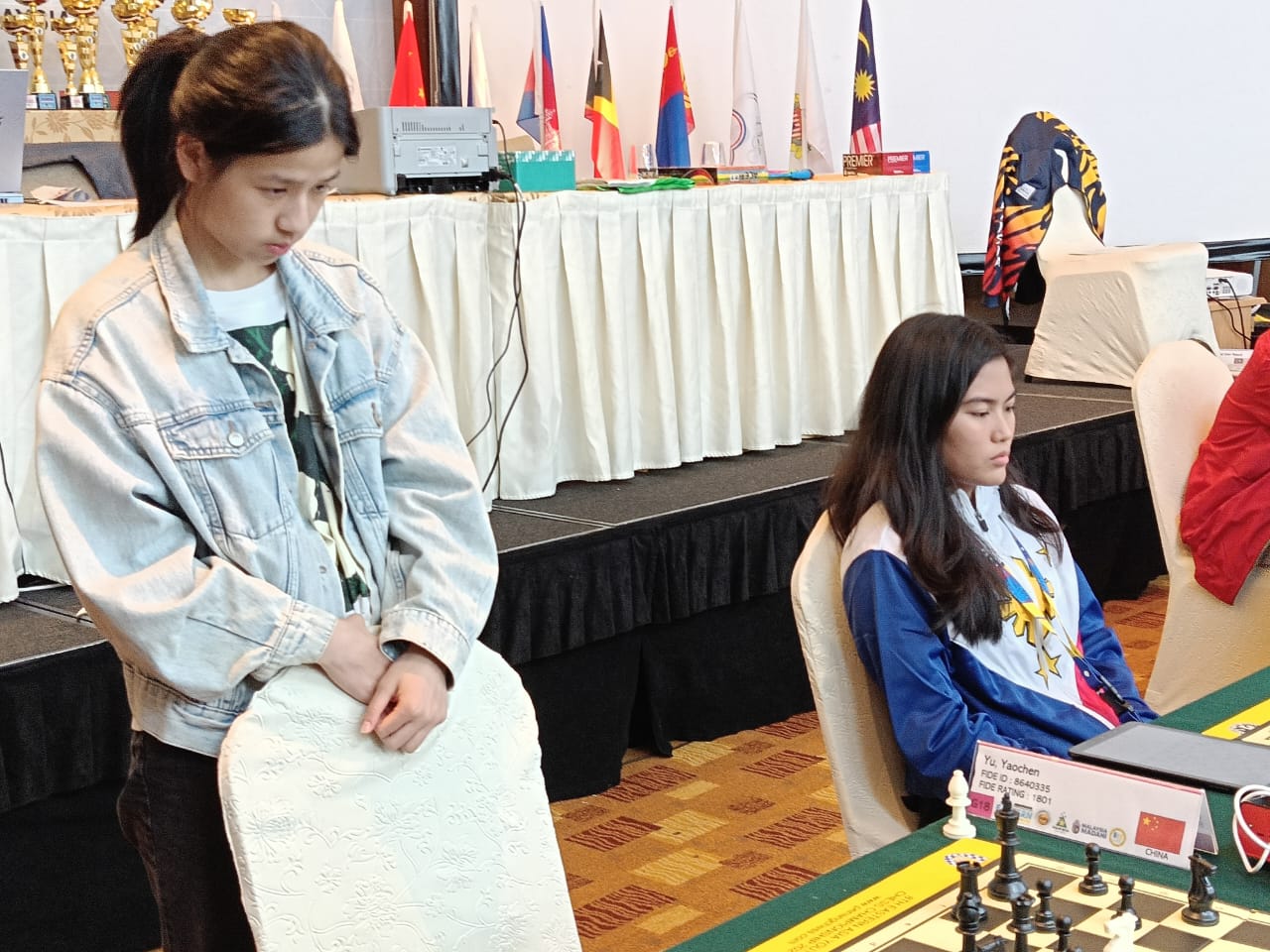
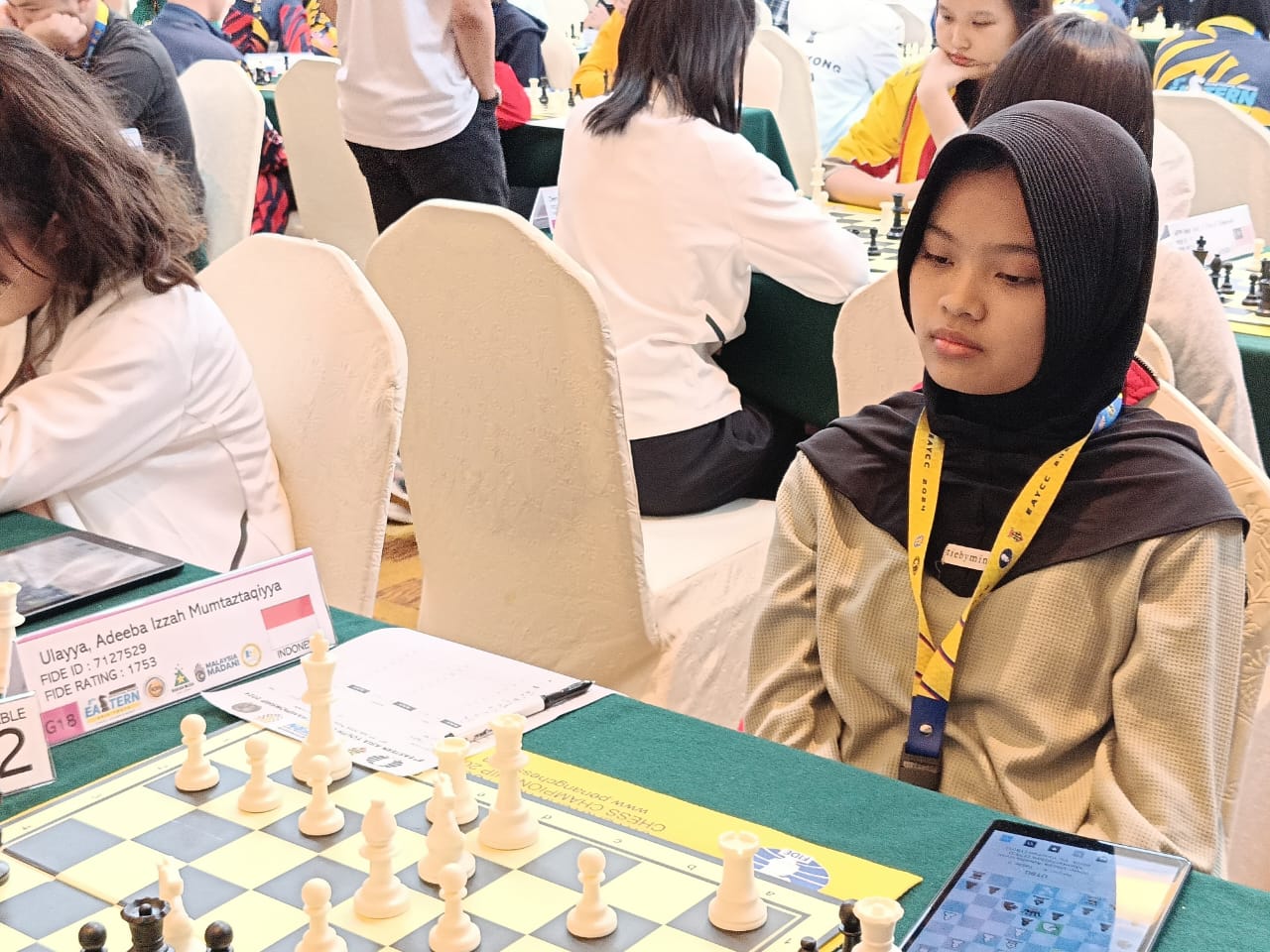
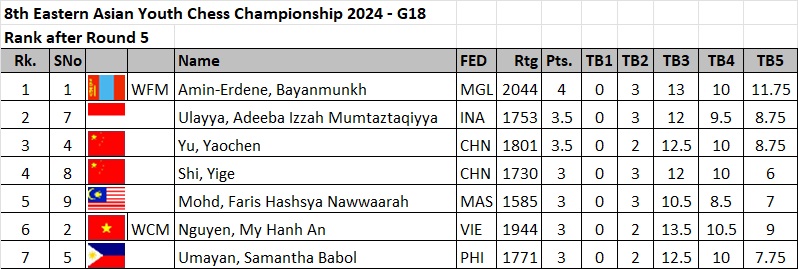
WFM Bayanmunkh Amin-Erdene of Mongolia leads alone with 4 points in the girls under-18 followed by two players with 3.5 points each, namely Adeeba Ulayya of Indonesia (below right) and Yu Yaochen of China (below left).


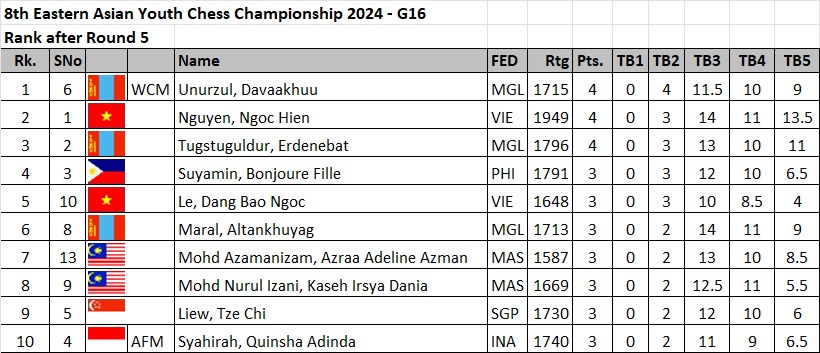
Three players are tied for the lead in the girls under-16, namely WCM Davaakhuu Unurzul and Erdenebat Tugstuguldur, both of Mongolia, and Nguyen Ngoc Hien of Vietnam.

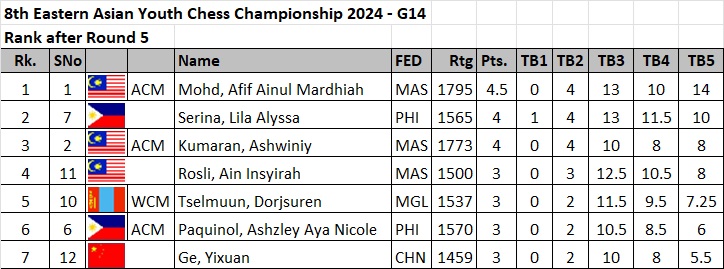
Afif Ainul Mardhiah of Malaysia leads the girls under-14 alone with 4.5 points followed close behind by two other players.

WCM Velmurugan Sreekarthika of Singapore is in solo lead with 4.5 points in the girls under-12 followed by two players with 4 points each.

Support of parents encourages children interested in chess.

Wu Sinian of China grabbed solo lead with 4.5 points in the girls under-10 followed by two players with 4 points each.

Chinese Chen Zhihan leads alone with 5 points in the girls under-8 followed a full point behind by two other players.