Registration for the $100,000 Aktobe Open extended until May 10th

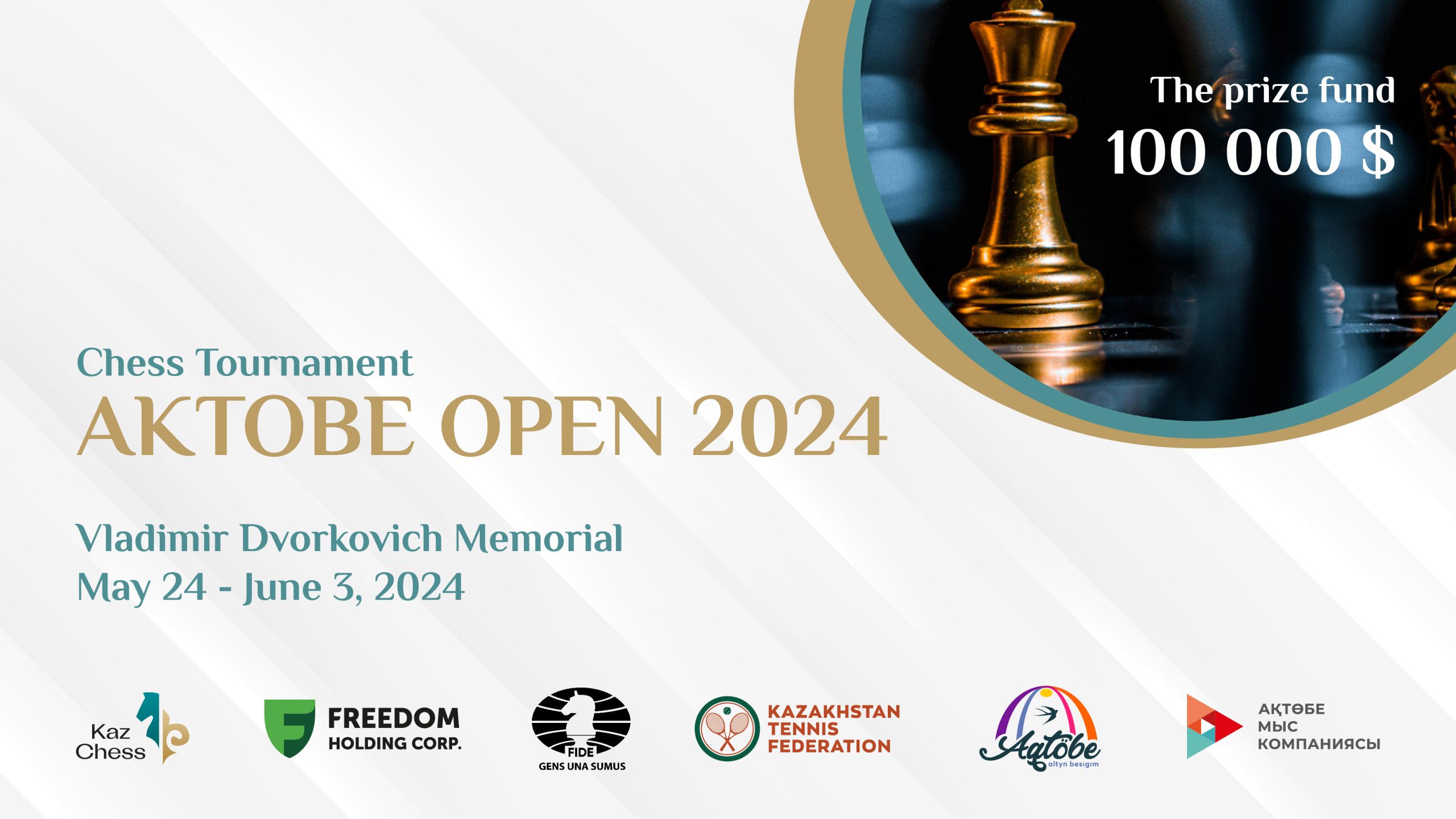
Registration for the International Chess Tournament “Aktobe Open – Vladimir Dvorkovich Memorial” with a prize fund of $100,000 has been extended until May 10th.
The tournament will take place in Aktobe, Kazakhstan, from May 24th to June 3rd.

Over 15 countries 
have already registered, including strong players like Grandmasters Alexey Sarana with a rating of 2706, Sanan Sjugirov (2692), Bu Xiangzhi (2689), Alexander Predke (2667), Nodirbek Yakuboev (2665) and more.The Kazakhstan Chess Federation invites all federations to participate. Grandmasters can apply under special conditions.
 
MOREOVER, the organizing committee is  ready to consider applications to provide conditions for one player from a country that has not yet registered.

The starting lis
t is available at the following link: https://chess-results.com/tnr933360.aspx?lan=11
For any inquiries feel free to reach out to Assem
WhatsApp: https://wa.me/7781016043

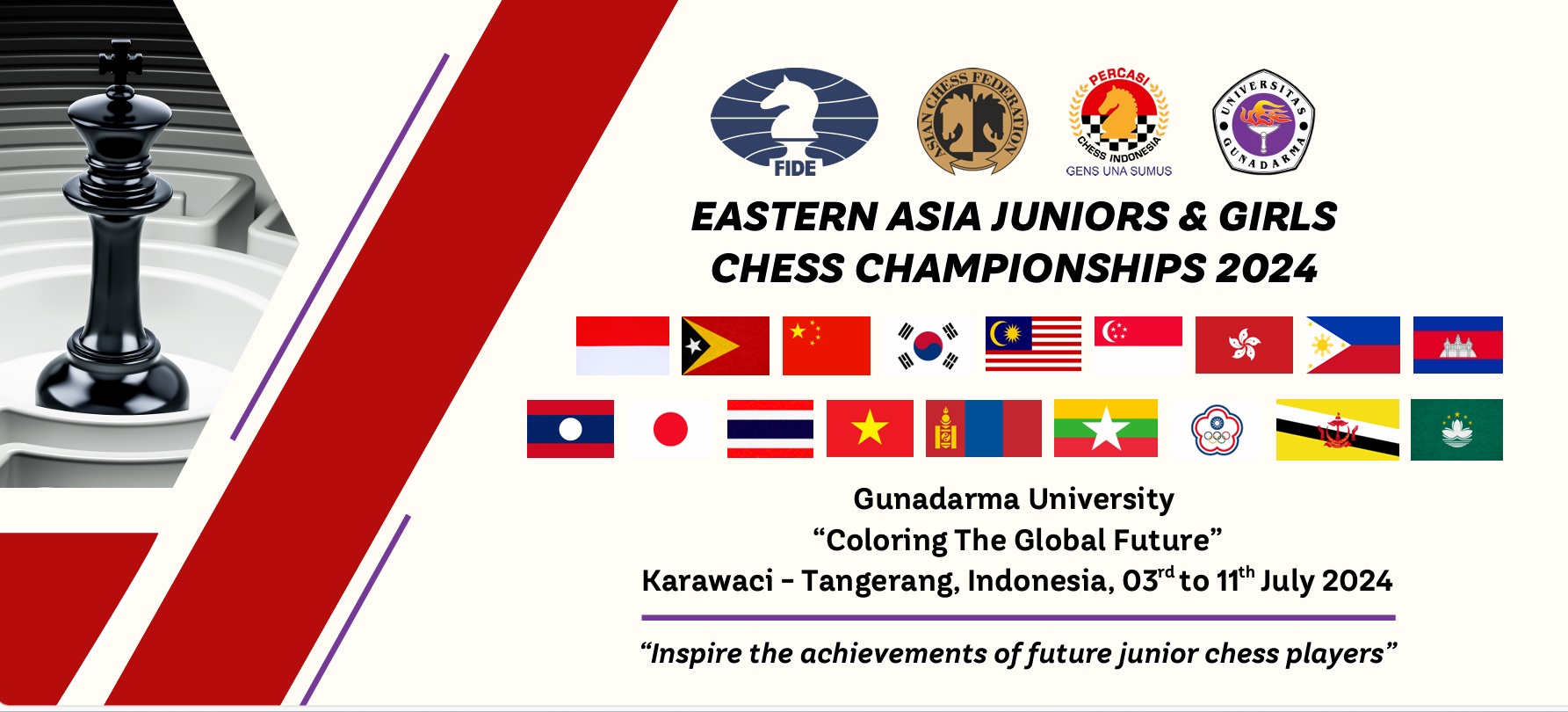
Eastern Asia Youth Chess Championship Slated 12 July in Penang, Malaysia

The Malaysian Chess Federation (MCF), under the auspices of the Asian Chess Federation (ACF) and World Chess Federation (FIDE), is inviting all National and Regional Chess Federations in Eastern Asia to participate in the 8th Eastern Asia Youth Chess Championship.
The championship will take place from 12th to 21st July 2024, at CitiTel Hotel, located on the island of Pulau Pinang, Malaysia.

Download Eastern_Asia_Youth_Regulations_2024

Download Registration Form (EAYCC24) – Revised

Imus Open Rapid Chess Championship Set May 11

The 1st Herbert Tabernilla Surveying and Engineering Services Open Rapid chess championship is scheduled May 11, 2024 at the Imus Youth Center (inside Imus Pilot Elementary School) in Imus, Cavite, Philippines.

The event, hosted by the Herbert Tabernilla Surveying and Engineering Services in cooperation with the City of Imus Sports Development Unit, offers a top purse of P10,000.

The second to fifth placers will receive P7,000, P5,000, P3,000 and P1,000, respectively.
Special prizes P1,000 each will be given to the Top Senior, Top Junior, Top Coach, Top PWD and Top Lady.
Also on tap is the kiddies division with the winner pocketing P5,000.

For details, contact, Ms. Dhayanna Anacio at 0928-9901-816.

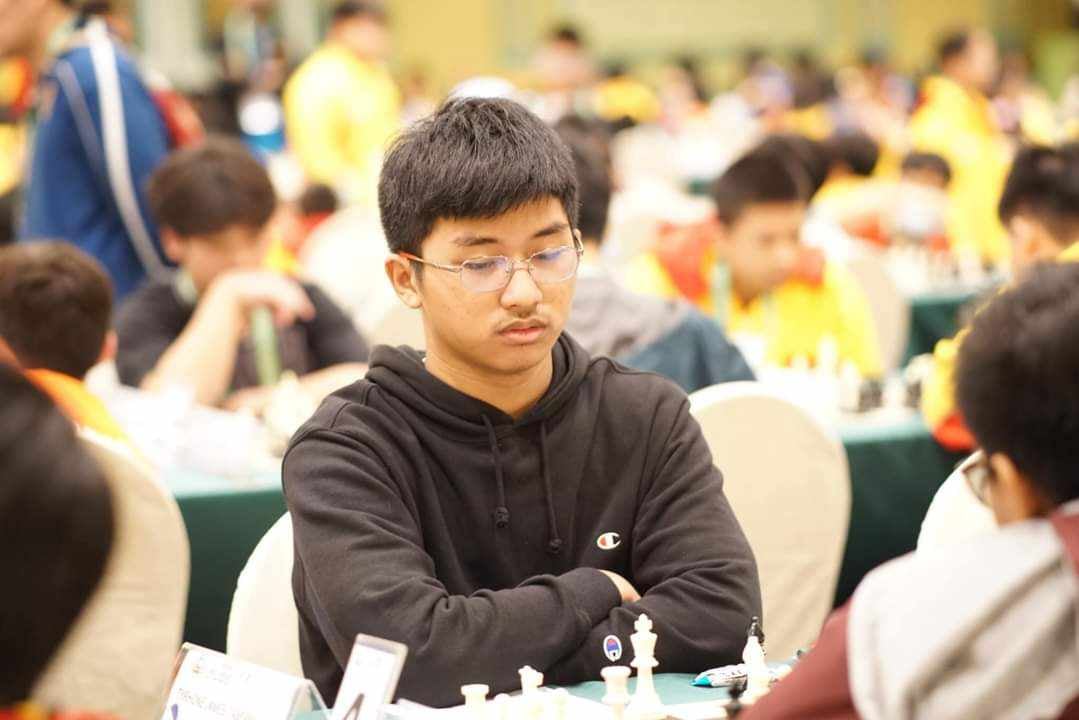
Vying in the Open event are GM Darwin Laylo, IMs Daniel Quizon, Michael Concio Jr., Ronald Dableo, Paulo Bersamina and Barlo Nadera, FMs Roel Abegas and Christian Gian Karlo Arca, AIMs Chester Caminong and Remark Bartolome, NM Lloyd Rubio, WNM Bonjoure Fille Suyamin, Sherwin Tiu, Lourecel Hernandez Ecot, Jireh  Dan Cutiyog, Charly Jhon Yamson, Erwin Calar, Angelo Gabriel Benipayo, Carl Yamson, Jirah Floravie Cutiyog, Maryss Caldoza, Geraldine Camarines, Maureen Lepaopao and Tyrhone James Tabernilla (photo above).

The 15 years old Tabernilla, a grade 10 student of De La Salle Santiago Zobel, earned the title of National Master (NM) after winning the under-16 boys division of the Mayor Darel Dexter T. Uy National Age Group Chess Championships Grand Finals last April 9, 2023 in Dipolog City, Zamboanga del Norte.
” I hope to perform well in the 1st Herbert Tabernilla Surveying and Engineering Services Open Rapid chess championship on May 11,” said the pride of Imus City, Cavite Tabernilla, who is in rigid  training under his coaches International Master Paulo Bersamina, Woman International Master Jan Jodilyn Fronda,  Arena FIDE Master Ederwin Estavillo and Candidate Master Jayson San Jose Visca.


Asian Cities Chess Team Championship 2024 officially closed in Khanty-Mansiysk

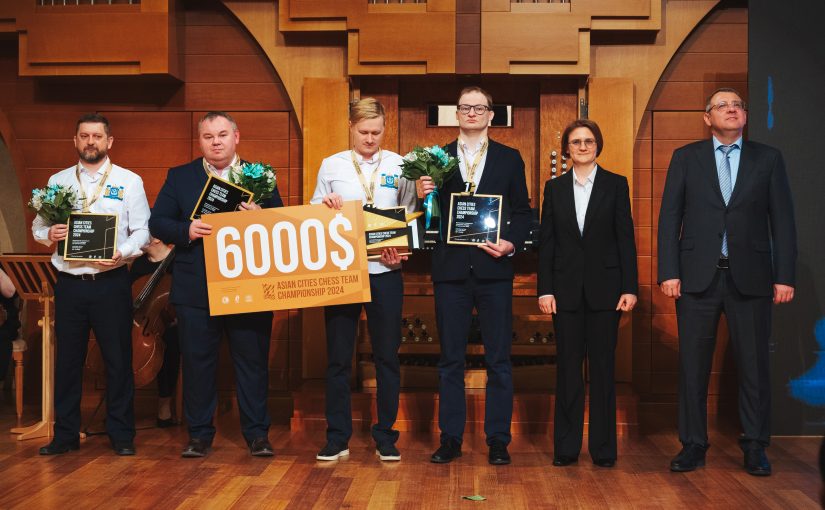
The closing ceremony of the team championship of Asian cities, as well as its grand opening, took place at the Ugra-Classic CTC.

Before the start of the official part, Elena Kozemirenko, Honored Worker of Culture of the Khanty-Mansiysk Autonomous Okrug – Ugra, performed the canonical work of Johann Sebastian Bach “Toccata and Fugue in D Minor”.

Next, participants and guests saw a dynamic video that showed all the most interesting moments of the competition.

The chief judge of the tournament, international arbiter Merdad Pakhlevanzade , was invited to reward the best participants on the boards. He thanked the organizers for holding the competition at a high level, noting that Khanty-Mansiysk has set new standards for holding such championships.

Deputy Governor of the Khanty-Mansiysk Autonomous Okrug – Ugra Elena Shumakova and Duma deputy of the Khanty-Mansiysk Autonomous Okrug – Ugra, President of the Ugra Chess Federation Vasily Filipenko presented awards to the winners and runners-up of the championship.

Elena Shumakova congratulated everyone on the completion of the competition. “Each of you became the author of this large, new page in the history of the Asian Chess Federation and reaffirmed the unifying mission of chess. We are grateful to the Asian Chess Federation and the Russian Chess Federation for the trust placed in our district to host this tournament, the first in the history of our country. Of particular value is the fact that a third of its participants are young chess players under 18 years of age. I am confident that competing in this historic event will become a springboard for them to new sporting victories,” she said.

Vasily Filipenko: “Thank you to all the chess players and guests of the tournament – for their participation, for all the kind words addressed to us, for the high assessment of our work. The government of the Khanty-Mansiysk Autonomous Okrug – Ugra and the Ugra Chess Federation are always ready to host competitions of the highest rank and try to hold them at the proper level. Therefore, we are ready and will be happy to welcome you and many other chess players from different countries of Asia and the world to our land.”

When the bronze awards were presented, both the Tula team and the Colombo team took the stage, sharing third place, since, according to the Regulations, medals and cups can only be awarded to one city per country. Therefore, chess players from Sri Shanki will take the trophies with them.

The creative part of the closing also featured classical works performed by Larisa Matsur and the Konsone chamber music ensemble.

The closing was broadcast live . Before and after the ceremony, participants and officials were interviewed in a specially equipped studio.

Drama at the Finish

Rounds 7–9 of the Asian Cities Team Championship reviewed by IM Vladimir Barsky

Every sporting competition has some sort of intrigue – and that’s why we love sport. Of course, sometimes it happens that the recognized favourites easily go the full distance and win without as much as breaking a sweat. But the final result of the Khanty-Mansiysk competition only became known at the last hour. Surgut led, winning all their matches, but after losing the head-to head match Tehran gave a chase and caught up to them in individual points after round 7. In the penultimate round, both teams scored big wins, and everything was decided in the final round. The Iranians routed their opponents 4–0, while Surgut barely managed to save a difficult match against Pavlodar and won the first place. Tehran took the second place, Tula came third.

Congratulations to the winners and prizewinners, thanks to the organizers for an interesting tournament, and now let’s look at the fragments of interesting games from the last rounds.

Iljiushenok Ilia (Surgut, 2536) – Perchinsky Bogdan (Khanty-Mansiysk, 1807)
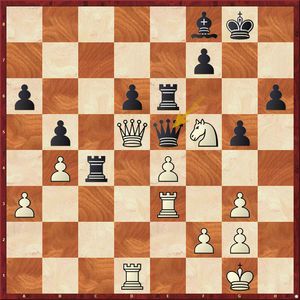
In this game, the formidable Surgut team faced the Khanty-Mansiysk junior team. Grandmaster Ilia Iljiushenok achieved a positional advantage (the brilliant knight is clearly stronger than the sad bishop on f8) and then placed a pretty trap for his opponent.

31.Qa8 Rxe4 32.Nxh6+

Deflection: 32…Rxh6 is now met with 33.Rxe4.

32…Kg7 33.Nxf7!

The knight is on a rampage!

33…Qf5

33…Kxf7 would have been met with 34.Rf3+ Rf6 35.Rxf6+, and this is, so to say, a double deflection: either the queen is distracted from defending the e4 rook, or the king from defending the f8 bishop.

34.Rxe4 Rxe4 35.Nxg5! (a final touch) 35…Re2 36.Nf3

The knight reaped a good pawn harvest and then came back to defend its king in time. Black resigned.

And now let’s look at the position after 32.Nxh6+ more closely. Turns out that Black could go straight into the trap: 32…Rxh6 33.Rxe4 (33.Qxe4 is met in the same way)

33…Qh8! Suddenly threatening a checkmate on h1. The only defence is 34.Kf1, but it’s met with 34…Qb2!, renewing the threat. After 35.Kg1 Qh8, the game ends in a repetition draw!

Turns out that the tactical blow 32.Nxh6 was not too good. White could include the trade 32.Rxe4 Qxe4 and only then play 33.Nxh6+, but after 33…Kg7 34.Qxe4 Rxe4 35.Nf5+ Kg6 36.Nxd6 Re7, Black, despite being a pawn down, has good chances for a draw: he will put his bishop onto the long diagonal and threaten the a3 and b4 pawns.

Did White really have an advantage in the position on diagram 1? Of course he did, but it seems that he should have gone for an endgame: 31.Qxe5 Rxe5 (not 31…dxe5? 32.Rd8 f6 33.Nxh6+) 32.Nxd6 Bxd6 33.Rxd6. White wins a pawn, even though Black can still resist well after 33…g4! (threatening 34…Rc1+ 35.Kh2 Rh5#). For instance: 34.f3 Rc1+ 35.Kf2 Re6 36.Rdd3 or 34.Rxh6 Kg7 35.Rh4 Rexe4 36.Rxe4 Rxe4 37.f3 Re3 38.Rxg4+ Kf6.


Palamar Stefan (Khanty-Mansiysk, 1813) – Bocharov Ivan (Surgut, 2559)

Another game from the same important 7th round match. In a very sharp line of Najdorf Sicilian White seemed to try to test his experienced opponent: if he remembers all the variations, there’s a draw, and if he forgets something, he loses by force. However, Stefan himself mixed things up in the crucial moment.

1.e4 c5 2.Nf3 d6 3.d4 cxd4 4.Nxd4 Nf6 5.Nc3 a6 6.Bg5 e6 7.f4 Be7 8.Qf3 Qc7 9.0-0-0 Nbd7 10.g4 b5 11.Bxf6 Nxf6 12.g5 Nd7 13.f5 0-0 14.Qh5 b4

15.Rd3

It’s too late to go back now: after 15.Nce2 e5 16.Nf3 Bb7, Black has a serious initiative.

15…bxc3 16.Rxc3

16.Rh3 Bxg5+! 17.Qxg5 cxb2+ 18.Kb1 Qd8 is better for White.

16…Qb6 17.Nc6 Bf6! 18.e5 g6 19.Qh6??

The wrong way! Black correctly answered all the “test questions”, and after 19.Qh4! Bxe5 20.Ne7+ Kh8 21.fxg6 fxg6 22.Nxg6+ Kg8 (22…Kg7 23.Qh6+ Kg8 24.Ne7+) 23.Ne7+ Kh8 (23…Kf7? 24.Qxh7+ Ke8 25.Nxc8) 24.Ng6+ Kg8, the game should have ended in a perpetual check.

19…Qf2!

A powerful Zwischenzug: Black threatens a mate on e1, and Bocharov’s queen returns in time to defend his king. After 19…Bg7??, however, White delivered a beautiful checkmate: 20.Ne7+ Kh8 21.Qxh7+! Kxh7 22.Rh3+ Bh6 23.Rxh6+ Kg7 24.f6+ Nxf6 25.exf6#.

20.Kd1 Bg7 21.Ne7+ Kh8

White resigned: after 22.Qxh7+ Kxh7 23.Rh3+ Bh6 24.Rxh6+ Kg7 25.f6+ Nxf6 26.exf6+ Qxf6! (спасибо промежуточному ходу!) 27.gxf6+ Kxh6, he is an exchange down in a completely broken position.


Pridorozhni Aleksei (Surgut, 2509) – Sattarov Dinis (Khanty-Mansiysk, 1760)

The youth could upset the experience in this game, but showed unexpected mercy.
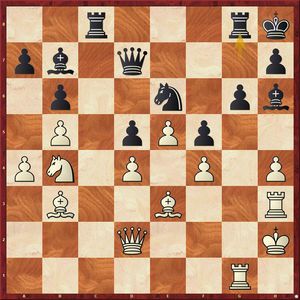
Aleksei Pridorozhni slowly increased the pressure, and it seemed a good time for a final breakthrough. You can’t envy Black after 45.h5 gxh5 46.Rxh5 Rxg1 47.Kxg1 Rg8+ 48.Kf1 Bf8 49.Nc6. But the grandmaster decided to wait a bit more.

45.Rhg3 Qe7

We’ll note in parentheses that the h4 pawn is not hanging: 46…Qxh4+? is met with 47.Rh3, and the h6 bishop is lost.

46.Bxd5??

In the worst moment possible! White’s better position immediately becomes lost.

46…Nxf4! 47.Bg2

And now it turns out that the h4 pawn is hanging after all: 47.Bxf4 Qxh4+ 48.Rh3 Bxf4+, crushing.

47…Bxg2 48.R1xg2 Qxh4+ 49.Kg1 Nxg2 50.Rxg2 Bxe3+ 51.Qxe3 f4 52.Qd2 f3 53.Rf2

White is an exchange and a pawn down, his king is completely exposed… The only hope is that his young opponent, who’s not yet used to defeating grandmasters, would get nervous.

53…Qg3+

The shortest way to win: 53…Rgd8 54.Nc6 (54.d5 Rc4) 54…Rxc6 55.bxc6 Rxd4 56.c7 Rxd2 57.c8Q+ Rd8 58.Qc2 Qg3+ etc.

54.Kf1 Qh3+ 55.Kg1 Qg3+ 56.Kf1 Qh3+ 57.Kg1 Qg4+ 58.Kf1 Rgf8 59.Nc6 Rf4 60.Qd3 Rcf8 61.Ke1 Re4+ 62.Kd2 Rff4 63.Kc3 Re2 64.Rf1 Qg2 65.Qd1 Re3+ 66.Kc4 Qa2+ 67.Kb4
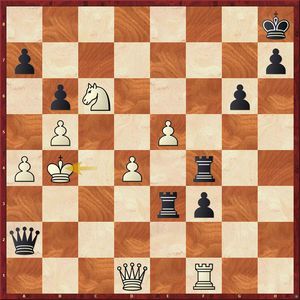
67…Qb2+

And here, Black missed a pretty mate in two: 67…Qa3+ 68.Kc4 Qc5#!

Afterwards, the grandmaster tried to make his opponent’s task as difficult as possible. Don’t forget that they were both already playing on increment.

68.Kc4 Qa2+ 69.Kb4 Qb2+ 70.Kc4 Qe2+ 71.Qxe2 fxe2 72.Rxf4 e1Q 73.Kd5 Qh1+ 74.Kd6 Rf3 75.Rg4 Qh3 76.Rg1 Rf1 77.Rxf1 Qxf1 78.e6 Kg7 79.d5 Qf5 80.Nxa7 Kf8 81.Nc6 Ke8 82.Kc7 Qxd5 83.Kxb6 Qxe6 84.a5 Qc8 85.a6 h5 86.a7 h4 87.Nb8 Qe6+ 88.Nc6 Qc8 89.Nb8 Qe6+ 90.Nc6 Qa2 91.Na5 Qf2+ Draw agreed. The computer shows that Black’s position is still won, but it’s computer… After so much excitement, it’s hard to keep your cool and calculate lines clearly.


Tuvshintulga Tumurchudur (Sukhabaatr, 1743) – Iljiushenok Ilia (Surgut, 2536)

1.d4 d5 2.Bf4 c5 3.e3 Nc6 4.c3 Qb6 5.Qb3 c4 6.Qc2

After 6.Qxb6 axb6 7.Nf3 Bf5, Black equalizes.
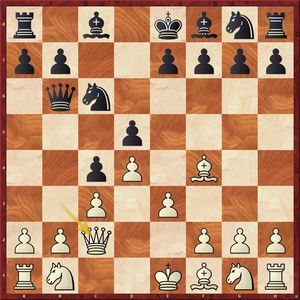
This opening tabiya occurred two times in the central match of the 8th round.

6…e5!?

A tough move, attempting to seize the initiative. We should point out that the immediate 6…Bf5 is bad due to 7.Qxf5! Qxb2 8.Qxd5 Qxa1 9.Qb5 0-0-0 (9…a6 10.Qxb7 is no better) 10.Bxc4. Therefore, Black first sacrifices a pawn to close off the fifth rank.

7.dxe5 Bf5 8.Qc1

And now White cannot capture the bishop, for instance: 8.Qxf5 Qxb2 9.e6 fxe6 10.Qxe6+ Be7 11.Qxd5 Rd8 12.Qxc4 Qc1+ 13.Ke2 Qd1#.

8…g5 9.Bg3

An alternative was 9.Bxg5 Nxe5 10.Nd2 f6 (10…Nd3+?! 11.Bxd3 Bxd3 12.Ne2) 11.Bf4 Ne7 with mutual chances.

9…h5 10.h3 Bg7 11.Nf3 0-0-0 12.Nxg5 Bxe5! 13.f4

A suspect move, but what else can we recommend for White? After 13.Nxf7 Bxg3 14.fxg3 Nf6 15.Nxd8 Rxd8 16.Be2 Ne4, Black’s initiative is quite dangerous.

It seems that the strongest move is 13.Bxe5 Nxe5 14.Nd2 Nf6 (Black can force a perpetual check here if he feels like it: 14…Nd3+ 15.Bxd3 Bxd3 16.Nxf7 Re8 17.Nxh8 Rxe3+! 18.Kd1 Be2+ 19.Kc2 Bd3+) 15.Ndf3 Nfd7 with double-edged play.

13…Bd6 14.Nxf7 Bc5

Despite material gains, White’s position becomes more and more dangerous with every move…

15.Bf2 Nf6 16.Nxd8 Rxd8 17.Be2 Re8 18.Qd2

18.Rf1 Bxe3 19.Bxe3 Rxe3 20.Rf3 Re6 is also joyless.

18…Bxe3 19.Bxe3 Rxe3 20.Kd1
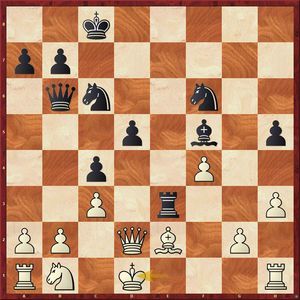
20…Bd3!

After this stab, White is defenceless.

21.Re1 Bxe2+ 22.Kc1 Ne4 23.Qxd5 Nf2 24.Qf5+ Kc7 25.Kd2 Re7 26.Na3 Qe3+ 27.Kc2 Bd3+ White resigned.


Chuluunbaatar Gerelmaa (Sukhabaatr, 1731) – Pridorozhni Aleksei (Surgut, 2509)

1.d4 d5 2.Bf4 c5 3.e3 Nc6 4.c3 Qb6 5.Qb3 c4 6.Qc2 e5 7.dxe5 Bf5 8.Qc1 g5 9.Bg3 Bg7

Iljiushenok, as we remember, chose 9…h5.

10.Nf3 h5 11.Nxg5 h4 12.Bf4 Nxe5 13.Bxe5 Bxe5 14.Nd2 Nf6

Black’s initiative compensates (or almost compensates) the lack of pawn. White should play very carefully: any inaccuracy can spell doom.
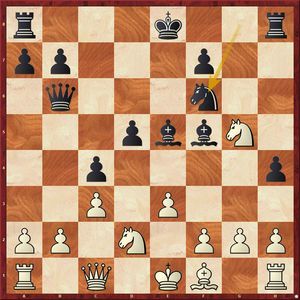
15.Ndf3 Bc7 16.Be2 Ne4 17.Nd4 Qg6 18.Nxe4 Bxe4 19.Bf3 0-0-0 20.Qd2 h3 21.g3 Bxf3 22.Nxf3 Qe4 23.Qe2 d4!?

Black is inventive in his attempts to maintain the tension.

24.exd4 Qd5

25.0-0-0?!

The Mongolian chess player didn’t risk castling short, because it seems that he might get mated there in short order! However, analysis shows that it’s not that simple: 25.0-0 Rde8 26.Qd1 f5 27.b3 f4 28.Re1 fxg3 29.fxg3 Rxe1+ 30.Nxe1 Re8 31.Qg4+ Kb8 32.Qxh3, and White repels all the immediate threats and still has winning chances.

25…Rhe8 26.Ne5 f6 27.Qg4+ Kb8 28.f4 fxe5 29.fxe5

Three pawns for a knight – the material is roughly equal.

29…Rh8 30.Rhg1 Rdf8 31.Qe2 b5 32.Rdf1 Bd8 33.Kc2 Bg5 34.b3 Rc8 35.Qf3? [

A blunder. The stronger move was 35.b4, closing off the position.
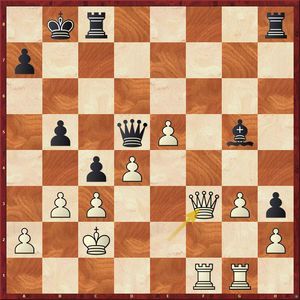
35…cxb3+ 36.axb3 Qxd4! 37.Rd1 Qe3

Stronger was 37…Rhf8! with an overwhelming advantage.

After the game move, Aleksei needed 60 more moves to break down the opponent’s resistance.


Kabanov Nikolai (Surgut, 2434) – Tsolmon Battur (Sukhabaatr, 1581)

The c-file breakthrough quickly decided the game in White’s favour.
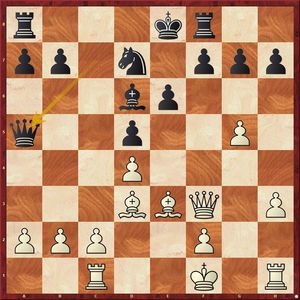
18.c4 f5

More resilient was 18…dxc4 19.Bxc4 Nb6 20.Bb3 Nd5; however, even here White’s chances are better after 21.Kg2.

19.c5 Bc7

Joyless is 19…Be7 20.c6 bxc6 21.Rxc6 Kf7 22.Qe2, targeting the e6 pawn. Objectively, retreating to b8 with the bishop was better, but such a move is too counterintuitive…

20.c6 bxc6 21.Rxc6 Ke7
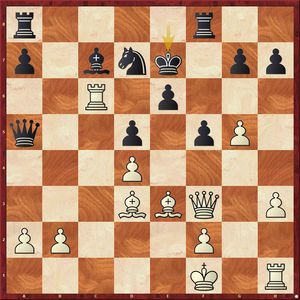
22.b4!

Another example of the deflection theme.

22…Qa3 23.Bc1 Qxa2 24.Rxc7, and White converted the extra piece.


Sattarov Dinis (Khanty-Mansiysk, 1760) – Mosadeghpour Masoud (Tehran, 2436)
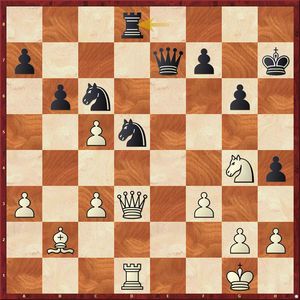
24.c4?

Seemingly a blunder. After 24.Qe4 Qxc5+ 25.Nf2 Qe7 26.c4, the position remained roughly equal.

24…Nc3!

A brilliant discovered attack! The “dual” 24…Ne3? actually didn’t work because of 25.Nf6+ Kh6 26.Qxd8! Nxd8 27.Ng8+, and White wins.

25.Qxc3

25.Qxd8 is met with 25…Qxc5+ 26.Kf1 Nxd8 27.Rxd8 Qxc4+.

25…Rxd1+ 26.Kf2 Nd4 27.Ne3 bxc5!

Black managed to close off the long diagonal with tactical tricks.

28.h3

28.Nxd1 Qe2+ 29.Kg1 Qxd1+ 30.Kf2 Qe2+ 31.Kg1 h3 loses.

28…Rb1 29.Qd2 Qg5 30.Bxd4 cxd4 31.Qxd4 Qg3+ 32.Ke2 Qe1+ 33.Kd3 Rb3+ 34.Ke4 f5+ 35.Kd5 Qxe3 36.Qxe3 Rxe3 White resigned.


Bayantas Asman (Pavlodar, 2127) – Bocharov Ivan (Surgut, 2559)

We’ll finish with fragments of two games of the last round, where permanent leaders almost faltered. However, they managed to save the difficult match and keep their top place.
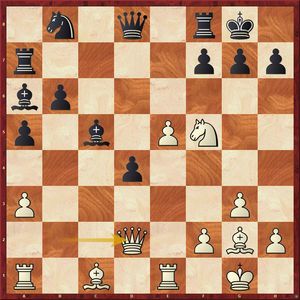
21…f6?!

Black equalized in the opening, but now he played too rashly. After the careful 21…Nd7 22.Bb2 Re8 23.Qf4 Nf8, he should not have too many problems.

22.e6 Bc4 23.Bb2 Re8 24.e7! Bxe7

This seems to be the decisive mistake. After 24…Qd7 25.Bh3 Qd5 26.Rac1, White exerts an unpleasant pressure, but there’s still a lot of struggle ahead.

25.Qxd4!

The endgame is very difficult for Black: the bishop is pinned, the knight can’t enter the play at all…

25…Qxd4 26.Bxd4 Rd7 27.Bxb6 Kf7 28.Rxe7+ Rexe7 29.Nxe7 Rxe7 30.Bxa5

White has a passed pawn and a bishop pair. Even though I. Bocharov resisted fiercely, he couldn’t save the game.


Pridorozhni Aleksei (Surgut, 2509) – Tkachyov Adil (Pavlodar, 2073)

The grandmaster outwitted his opponent: he lured Black’s pieces to queenside, and then suddenly opened a “second front” on the kingside.
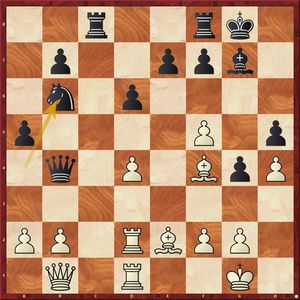
26.f6!

In the style of Tal, who once, when asked why he sacrificed a pawn, answered, “It simply hindered me!”

26…Bxf6 27.Qf5

Here, however, the question of “why the sacrifice” is unnecessary: White wins two pawns in exchange for one of his.

27…Kg7 28.Qxh5 Rh8 29.Qxg4+ Kf8 30.h5 Rg8 31.Qf3 Nc4

31…d5 32.h6 Rc6 was somewhat more resilient.

32.Rc2 Rc6

33.a3!

To add insult to injury, Black also loses a piece (either through a pin or a fork), so he resigned.

Two other games of the match were drawn (with huuuuuge adventures on board 4!), and the mighty Surgut team won the gold medal of the Asian Cities Team Championship.
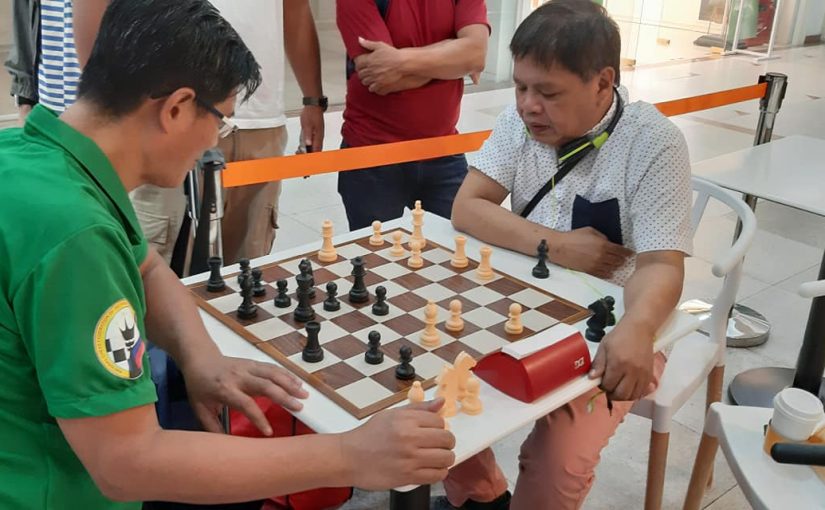
Surgut team wins the Asian Cities Chess Team Championship

The Asian Cities Chess Team Championship finished in Khanty-Mansiysk.

The final 9th round was dramatic. In the match between the teams of Surgut and Pavlodar (Kazakhstan), Aleksei Pridorozhni confidently defeated Adil Tkachyov on the third table, but the positions of his teammates Ivan Bocharov and Nikolai Kabanov looked dangerous, and on the first board the game Iljiushenok – Malygin was relatively equal. Visit chess-results.com for round by round results and ranking.

In the meanwhile, the men’s team of Tehran (Iran) defeated Sukhbaatar (Mongolia) with a clean score and would have taken first place – if the Surgut team lost.

Eventually, Ilia Iljiushenok drew with Vladislav Malygin, Nikolai Kabanov achieved a draw in his game with Arystan Dosmukhambetov, so Ivan Bocharov’s loss to Asman Bayantas could no longer affect the outcome of the tournament.

A draw in the match with Pavlodar allowed Surgut to take clear first place in the tournament, with 17 match points. Tehran came second with 16 points.

The teams of Tula and Colombo scored 12 points each. In the final round, the Russians defeated Al Quds (Palestine) with a score of 4:0, and the Sri Lanka chess players beat the Tehran women’s team with a minimal score.

A greater number of board points (23 versus 18) secured the third place for the Tula team.

Other results of the final round:

Moscow – Muscat (Oman) 3.5:0.5

Charikot (Nepal) – Penang (Malaysia) 0.5:3.5

Al Mahra (Yemen) – Khanty-Mansiysk 0.5:3.5

The team from Baghdad (Iraq) had a ‘bye’.


Final ranking of the teams:

  1. Surgut – 17 match points (29.5 board points)
  2. Tehran (men) – 16 (31)
  3. Tula – 12 (23),
  4. Colombo – 12 (18)
  5. Moscow – 11 (21.5)
  6. Tehran (women) – 9 (18.5)
  7. Khanty-Mansiysk – 9 (18)
  8. Penang – 9 (16)
  9. Pavlodar – 8 (19)
  10. Baghdad – 8 (16.5)
  11. Sukhbaatar – 8 (16)
  12. Al Quds – 5 (12.5)
  13. Muscat – 4 (10.5)
  14. Charikot – 4 (10.5)
  15. Al Mahra – 3 (9.5)

The best results on the boards were shown by:

1st board – Ilia Iljiushenok (Surgut)

2nd board – Ivan Bocharov (Surgut)

3rd board – Masoud Mosadeghpour (Tehran, men)

4th board – Abtin Atakhan (Tehran, men)

Surgut wins 8th Match at Asian Cities Chess Team Championship

The penultimate eighth round of the Asian Cities Chess Team Championship is completed in Khanty-Mansiysk.

The Surgut team defeated Sukhbaatar with a score of 4:0 thus winning an eighth match in a row.

Surgut captain Ilia Iljiushenok shared his impressions of his performance in the rounds played: “In terms of points, everything is excellent, but there are mistakes in games, so there is room for improvement. We had a key match in the third round with the team of Tehran (Iran), and after that the opponents are clearly weaker, so we are all gaining points. But despite this, fatigue growing, and matches are becoming more and more difficult.”

The Tehran men’s team defeated Khanty-Mansiysk with a score of 3.5:0.5. Bogdan Perchinsky managed to draw with tournament rating favorite Bardiya Daneshvar.

With the same score, the Tula squad beat Colombo (Sri Lanka) and has promoted to the third place.

The women’s team of Tehran crushed Baghdad (Iraq) with a score of 3:1, Moscow smashed Charikot (Nepal) with a clean score, Pavlodar (Kazakhstan) was stronger than Muscat (Oman) 4:0, and chess players from Al Quds (Palestine) defeated the athletes from Al Mahra (Yemen) 3:1.

The team of Penang (Malaysia) had a ‘bye’.

Before the last round, the Surgut team retains the lead with 16 match points scored. Tehran is 2 points behind. The teams of Tula (19 board points) and Colombo (15.5 board points) have 10 points each.

Round 9 pairings:
Surgut – Pavlodar
Tehran (men) – Sukhbaatar
Colombo – Tehran (women)
Tula – Al Quds
Moscow – Muscat
Charikot – Penang
Al Mahra – Khanty-Mansiysk
Baghdad – ‘bye’

The final 9th round will begin at 11:00 a.m. local time (09:00 Moscow time).

Surgut team wins seventh match in Asian Cities Team Championship

The games of the seventh round of the Asian Cities Chess Team Championship were played at the Ugra Chess Academy.

The Surgut team continues to gain points: this time the experienced team won against the junior team of Khanty-Mansiysk with a score of 3.5:0.5. Dinis Sattarov was close to defeating Aleksei Pridorozhni, but in time trouble, he was unable to break the grandmaster’s tough resistance.

In the Iranian derby, the Tehran men’s team defeated the women’s team with a clean score.

The Moscow team lost to chess players from Colombo (Sri Lanka) with a minimal score. Stanislav Khudyakov won on the first board, but G. Thilakarathne and R. Liyanage distinguished themselves on the second and third boards.

Tula chess players beat Penang (Malaysia) 3.5:0.5, the team of Sukhbaatar (Mongolia) beat Muscat (Oman) with a score of 3:1, and the team of Baghdad (Iraq) defeated Al Mahra with the same score (Yemen).

Charikot (Nepal) beat Al Quds (Palestine) with a score of 2.5:1.5. Quite quickly on the first board, Purushottam Chaulagain finished the game, defeating Ahmad Allazah with the black pieces, and spoke about his game:

– I knew that he would play 1. e4, and decided to go for the Sicilian Defense. But he preferred to play 2. d3, which was not the best opening. Nevertheless, White began an attack on the kingside, pushing f4 and g4, but I was ready for this. I think he made a mistake by playing f5 too early. This allowed me to take e5 with the queen. I was a pawn up and gradually managed to convert it I.

The Pavlodar (Kazakhstan) team had a ‘bye’.

The Surgut team retains its sole leadership two rounds before the finish: the “home team” has scored 14 match points. The Tehran men’s team is 2 points behind. The chess players from Colombo have 10 match points.

Round 8 pairings:

Sukhbaatar – Surgut
Khanty-Mansiysk – Tehran (men)
Tula – Colombo
Tehran (women) – Baghdad
Moscow – Charikot
Muscat – Pavlodar
Al Quds – Al Mahra
Penang – ‘bye’

Surgut Striding Ahead

IM Vladimir Barsky reviews Rounds 4–6 of the Asian Cities Team Championship

Surgut continues their winning stride in the Ugra Chess Academy. All members of the team have played many times within these walls, the academy surely feels like a home for them! However, in round 7, Surgut will face the real “home team,” young talents (born 2008–2011) from Khanty-Mansiysk. Youth or experience – what will prevail?

The leaders are closely chased by the Iranian men’s team. Tehran lost the face-to-face encounter and are 2 team points behind Surgut, but their sum of individual points is just 0.5 points less. These two strong teams will likely end up as winners and runners-up; meanwhile, at least four teams are competing for the bronze medal.

Another thing worth pointing out is the number of decisive games. Everyone plays boldly and enterprisingly, nobody shies away. Well, judge for yourselves.

Maxim Novikov (Tula, 2435) – Ivan Bocharov (Surgut, 2559)


White didn’t play too well after the opening and gradually got a very unpleasant position. Black’s advantage is clear, but how can he achieve any progress?

31…Bb7! 32.Qc2 Bc8 33.g4 h5

Bocharov is starting to undermine the opponent’s kingside.

34.N1h2 Kf7 35.b3?!

It’s psychologically very hard to keep in your place and do nothing, waiting for the uninvited guests to arrive from some direction… But this exactly what White needed (for instance, 35.Kg1), because now white’s b3 pawn and the whole third rank is weak. Black immediately capitalizes on that.

35…Qd3! 36.Qb2

Even sadder is 36.Qxd3 Rxd3 37.Rb1 (37.bxa4 Ra3) 37…Bb7, and pawns start falling.

36…Qc3!

Bocharov insists on the queen trade, and absolutely correctly: it would be much easier for him to convert his advantage in the endgame.


37.Qxc3

Meekly going along with the opponent’s wishes. More resilient was 37.Qb1, and it’s hard for Black to find a correct plan afterwards: 37…Bb7 (the trade 37…axb3 helps White to get rid of his weak а2 pawn) 38.g5 Bg7 39.Re2 Qd3! (but not 39…Rd3? 40.Rc2) 40.Qxd3 Rxd3 41.bxa4 (or immediately 41.Nd2 Rc3) 41…Rc3 42.Nd2 Rc2 – and the aforementioned weakness of the а2 pawn shows itself.

37…bxc3 38.Rc1 axb3 39.axb3 Bb7 40.Rxc3 Bxe4 41.Kf1 Bd3+ 42.Rxd3

Material losses are unavoidable (if 42.Kg2, then 42…e4); the rest is simple.

42…Rxd3 43.g5 Bg7 44.h4 e4 45.Ke2 Bc3 White resigned.


Aleksei Pridorozhni (Surgut, 2509) – Dmitrii Rodin (Tula)


23.Re2

White has a small space advantage and prepares to clamp Black down. But he couldn’t push the pawn immediately: 23.g4? hxg4 24.hxg4 Rxe1 25.Rxe1 Nxg4+! 26.Bxg4 Qh4+ 27.Bh3 Rxe1 28.Qxe1 Bxh3 – black pieces break free and go on a rampage.

23…Rxe2 24.Bxe2 Ne7 25.g4 hxg4 26.hxg4 Ng6 27.g5 Ng8 28.Bd3 N8e7 29.Kg3

White is slowly going towards his goal, but his opponent’s defensive resources are far from exhausted.

29…Qd7 30.Re1 Nf5+ 31.Bxf5 Qxf5 32.Nce4 Qd7?!

Unnecessarily getting the queen away from the blockade square. Better was 32…Rd8, even though after, for instance, 33.Qe3 Re8 34.Qf3 Rd8 35.Rh1, White is still piling on the pressure.

33.f5! Ne7

Not 33…Qxf5? 34.Nxd6, but an exchange sacrifice 33…Rxe4!? 34.Rxe4 Qxf5 35.Qe3 Bd7 was worth considering.

34.f6 Nf5+ 35.Kh2 Nd4 36.Qf4 Qf5 37.Kg3

A solid move, but White missed a brilliant win here: 37.Qxd6+ Kg8 38.fxg7!!


Black has a wide array of choices here, but they are all bleak:

1) 38…Kxg7 39.Qh6+ Kg8 40.Nf6+ Qxf6 41.Rxe8#;

2) 38…Nf3+ 39.Kg3 Nxe1 40.Nf6+ Kxg7 41.Nxe8+ Kg8 42.Nf6+ Kg7 43.Nh5+ Kg8 44.Qd8+ Kh7 45.Nf6+ Kg6 46.Qg8#;

3) 38…Qe5+ 39.Kg2! Qxd6 40.Nf6+! Perhaps the most beautiful move of the combination: instead of capturing the queen, the knight goes the other way. 40…Qxf6 (40…Kxg7 41.Nxe8+ Kg6 42.Nxd6) 41.Rxe8+ Kxg7 42.gxf6+ Kxf6 43.Rxc8, winning.

Of course, this is almost impossible to calculate, especially in time trouble.

37…gxf6?

Much more resilient was 37…Kg8!, for instance: 38.Re3 (or 38.fxg7 Kxg7 39.Re3 Rd8) 38…Qe5 39.Qxe5 Rxe5 40.Nd3 Re8 41.Kf4 Nf5, and the battle is still going on.

38.Qxd6+ Kg7 39.Qxf6+ Kg8

No better was 39…Qxf6 40.gxf6+ Kg6 41.Kf4.

40.Rh1 (40.Nd6!) 40…Ne2+ 41.Kg2 Nf4+ 42.Kf1 Ng6 43.Qxf5 Bxf5 44.Nf6+ Kf8 45.Nxe8 Kxe8 46.Ke2 Ke7 47.Ke3 Kd6 48.b3 Ne7 Black resigned.


Kosala Sandeepa Chamkara Amarathunga (Colombo, 1772) –
Bardiya Daneshvar (Tehran, 2584)


This game shows how great was the general progress of chess players. The Iranian grandmaster only managed to defeat his opponent, whose Elo rating was 800 (!) points lower, after a great struggle.

45.Nc1

Too passive. After 45.Nd4, White would have been all right.

45…b6 46.Kf4

And here, he should have used the unexpected tactical opportunity: 46.e5!? dxe5 47.a5, with good chances for a favourable result.

46…a5 47.Ke3

But now 47.e5 d5 48.Ke3 Ke7 achieves nothing.

47…h5 48.Kd4 Rg2 49.f4 Rg1!

Creating the threat 50…Rxc1 51.Rxc1 Nxb3+.

50.Ne2

50.Kd5 Kd7 51.Ne2 Rd1+ 52.Nd4 Ne6 53.Rc4 Nc7+ loses.

50…Rb1 51.Nc1?

Surprisingly, White, having just defended from a petite combination, again made it possible… After 51.Kd5 Nxb3 52.Kxd6 Nc5 53.Ra3, White could still fight for a draw.

51…Rxc1! White resigned.


Seyed Kian Poormousavi (Tehran) – K K Dinujaya Kodithuwakku (Colombo, 1707)


White has the initiative, and after the approximate 22…Nf6 23.axb6 Qxb6 (23…axb6 loses to 24.Qxa8 Rxa8 25.Rxa8+ Bf8 26.dxc5 bxc5 27.Rfa1) 24.f3, a difficult defence awaits Black. He tried to eliminate the opponent’s queenside pressure, and that’s what came out of that.

22…a6? 23.axb6 Qxb6 24.dxc5

Funny enough, the computer considers 24.Rfb1 to be even stronger. But how can you not just capture a knight?

24…Bxc5 25.Qxg4

“Hanging pieces fall,” Grandmaster John Nunn wrote completely correctly in his great book Secrets of Practical Chess. Black resigned 10 moves later.


Govinda Man Shrestha (Katmandu, 1738) –
Arystan Dosmukhambetov (Pavlodar, 1968)


White’s position might not be better, but it’s certainly not worse. However, he suddenly decided to play a little combination – and paid dearly for it.

11.Bxd6?

After, say, 11.c3 h6 12.a4 Qc7, everything is only beginning.

11…Bxd6 12.e5 Bxe5 13.Nxe5 Nxe5 14.Qxe5 c4!

The bishop gets trapped – literally out of nowhere.

15.Nxc4

Or 15.dxc4 Qxd2 – a knight is also a good piece.

15…bxc4 16.Bxc4 Qb6 17.h3 Qc6

Two pawns are not an adequate compensation for the knight; moreover, Black now firmly seizes the initiative.

18.f3 Rac8 19.a3 Qb6+ 20.Qe3 Qd6 21.Qe5 Qe7 22.c3 Rc5 23.Qe2 Rg5 24.d4 Nh5 25.Kf2 Nf4 26.Qf1 Rxg2+ 27.Ke3 Qg5 28.Rad1 Nxh3+ 29.Kd3 Nf2+ White resigned.


Ivan Bocharov (Surgut, 2559) – Pavra Behzad Nazif (Tehran, women, 2125)


The Iranian player played very well in the opening and got a good play, but then she fell for a small provocation.

25.h4!? h5?

By no means Black should have weakened the g5 square! After 25…b5 26.h5 gxh5 27.Bc2 Qc7 28.Qh7+ Kf8, there was a sharp struggle for three results.

26.Ng5 Nc7

26…Qf8 is also well met with 27.Nxe6! fxe6 28.Qxg6 Qf3 29.Rxe6.


27.Nxe6! Nxe6 28.Rxe6 Qc7

Or 28…fxe6 29.Qxg6! Re8 30.Rxe6 Rxe6 31.Bxe6+ Kh8 32.Qxh5+ with quite an economical mate.

With the game move, Black places a small trap, and White gladly “falls” for it.

29.Rxg6 Ne5 30.Rxe5! Qxe5 31.Bxf7+! Kxf7 32.Qf3+ Kxg6 33.dxe5 Bxe5 34.Qxb7

White has a queen and three pawns for two rooks, but, what’s even more important, the black king is completely exposed.

34…Rd1+ 35.Kg2 Rcd8 36.Qxa6+ R8d6 37.Qe2 Bf6 38.c4 Bxb2 39.Qxb2 R1d2 40.Qe5 Black resigned.


Baha Miswadah (Al Quds, 1986) – Yuan Hui Yeoh (Penang, 1894)


There’s likely no serious threats for Black. Of course, the king cannot go to f5 immediately (28…Kg6? 29.Rg1), but why not 28…Ra8 or 28…g5? However, the Malaysian player decided to play more “solidly”: force the opponent to put all his pawns on the dark squares and provide his bishop with an excellent central square. But there was one small detail…

28…Bd5? 29.cxd5!

This is the detail! Nobody cares about the exchange when the pawn is going to promote!

29…Rxc1 30.d6 Rc8 31.Bb6 Rc6 32.d7 Rxb6 33.d8Q Rxb4

An attempt to build a fortress, but White has enough resources to break through the opponent’s defence. The first part of the plan is to activate the king and capture the b7 pawn (to avoid possible future distractions).

34.Qd2 Rb6 35.Qc2+ g6 36.h4 h5 37.Qc7 Rb2+ 38.Kd3 Kg7 39.Qe7 Rg2

After 39…Rb1, the decisive move is 40.f5 gxf5 41.Qg5+.

40.Kc4 Rc2+ 41.Kd4 Rf2 42.Qf6+ Kg8 43.Kc5 Rd2 44.Qe7 Rf2 45.Qd8+ Kg7 46.Qf6+ Kf8 47.Kb6 Rb2+ 48.Kc7 Rc2+

Black has to give up the pawn due to 48…b5? 49.Qh8+ Ke7 50.Qd8#.

49.Kxb7 Rb2+ 50.Kc6 Rc2+ 51.Kb5 Rf2 52.Qd8+ Kg7 53.Qd4 Rc2 54.Qd3 Rc1 55.Qd2 Rc8 56.Qd4 Rc1 57.Kb6 Rc2

White is ready for the finishing onslaught…

58.f5! gxf5

Or 58…exf5 59.e6+ Kf8 60.Qf6.

59.Qg1+ Kf8 60.Qg5 Rc4 61.Qxh5 Rg4 62.Qh8+ Rg8 63.Qh6+ Rg7 64.h5 Kg8 65.Kc6 Rh7 66.Qg5+ Rg7 67.Qd8+ Kh7 68.Qf6 Kg8 69.Kd6 f4 70.Qxf4 Kh7 71.Qf6 Kg8 72.Ke7 Black resigned.


Daniil Manelyuk (Tula, 2267) – Sina Movahed (Tehran, 2463)


An impressive battle: not mistake-free, but very exciting!

23.Nxe6!?

Of course, 23.h4 was more cautious, but we wouldn’t have seen all the subsequent adventures otherwise.

23…Bxd2 24.cxb5 Bxe1

24…axb5 25.Nxd8 Nxd8 26.Bxb7 Qxb7 27.e6 fxe6 28.Rxe6 c4! refuted White’s idea, closing off the dangerous diagonal just in time.

25.bxc6 Bxf2+

Black could pose more problems for White with 25…Bxc6 26.Nxd8 c4, but even here, he should save the game: 27.Qf3 (but not 27.Qxc4? Qxf2+ 28.Kh1 Bxe4) 27…Qxf2+ 28.Qxf2 Bxf2+ 29.Kxf2 Bxe4 30.e6 Rxd8 31.exd7 Bd5 32.Re1! Kf8 (32…Rxd7?? 33.Re8#) 33.Re8+ Rxe8 34.dxe8Q+ Kxe8 with the drawn opposite-colored bishop endgame.

26.Kxf2 c4+ 27.Qe3 fxe6?

27…Bxc6 28.Nxd8 Bxe4 29.Bd4 Qxd8 30.Qxe4 Nf8 led to a quiet, roughly equal position.

28.Bd4 Qb5 29.cxb7 Rc7 30.Kg1 Rb8 31.Qf3?!

31.Qg3! maintained the advantage

31…a5 32.Rb1 c3 33.Bxc3 Qc4?

Black had a beautiful way to a perpetual-check draw: 33…Nc5! 34.bxc5 Qxc5+ 35.Qf2 Qxc3 36.Qa7 Kg7 37.Qxb8 (37.h3 Qc5+) 37…Qc5+ 38.Kf1 (38.Kh1? Qc1+) 38…Qc4+ 39.Kf2 Qd4+ 40.Kf1 Qc4+ etc.

34.Rd1? 

Both players were apparently in time trouble. 34.Rc1 solidified White’s advantage, but he could have lost after the game move.

34…Nf8?

Black missed a strong intermediate move that created mating threats. After 34…Rf8! 35.Qe3 Qxc3 36.Qxc3 Rxc3, White cannot capture the knight 37.Rxd7 due to 37…Rc1+, so he just loses a piece.

35.Bd4 Rf7 36.Qd3 Qc7 37.bxa5 Qxa5 38.Qb3 Rd7 39.Qb4 Qa6 40.Rf1 Qe2 41.Bc6 Rf7 42.Rxf7 Kxf7 43.h3 Rd8 44.Bf3 Qd3 45.Bb6 Re8 46.Bc7 Nd7 47.Bc6 Qe3+ 48.Kh2 Rd8 49.Bxd7 Black resigned.


Masoud Mosadeghpour (Tehran, 2436) – Maxim Novikov (Tula, 2435)

Black has an extra pawn, but his pieces are poorly coordinated: the rook is stuck on h7, the king is on e8. And all dark squares are hopelessly weak…

24.Qa6! Qh6

Both 24…bxa6 25.Rxb8+ Kd7 26.Rxf8 and 24…b6 25.Qxa7 loses. Black tries to create counterplay along the h-file, but the white king escapes the pursuit rather easily.

25.Rxb7 Qh3+ 26.Kf3 Qh5+ 27.Kf4

Another good move was 27.g4 Qh3+ 28.Ke2 Qxg4+ 29.f3 Qg2+ (29…Rh2+ 30.Kd3) 30.Rf2 Ng3+ 31.Kd3, winning.

27…g5+ 28.Ke4 Qg4+ 29.Kd3 Qf3+ 30.Kd2 Rd8 31.Qa5 Rc8 32.Qc5 Rh2 33.Re7+ Kf8 34.Rc7+ Black resigned.


Marat Gilfanov (Moscow, 2080) – Anahita Zahedifar (Tehran, women, 1991)

Today’s last example is somewhat similar to the previous one.


26…Ne3!

Another jump to a square that looks well-defended by the pawn! The lines are very simple, so White resigned immediately.


Two thirds of the Asian Cities Chess Team Championship played in Khanty-Mansiysk

Surgut retains its leadership

The sixth round of the Asian Cities Team Championship has been completed at the Ugra Chess Academy.

The leader of the race, the Surgut team, defeated Penang (Malaysia) with a clean score.

At the second table, the Tehran men’s team defeated Tula with a score of 3:1. Only Sina Movahed stumbled, losing to Daniil Manelyuk with black on the first table.

The match between Moscow and Tehran (women) ended in a draw. In the Russian team, Dmitry Kirillov and Mikhail Kuznetsov achieved victories; in the Iranian squad, Melika Mohammadi and Anahita Zahedifar distinguished themselves.

Dmitry Kirillov spoke a little about his game: “The game developed very easily. I did not expect 1…e5 and the Russian game as a whole. But it appeared on the board, I played according to old analyzes that I didn’t even fully remember. But nevertheless less very quickly got well and, one might say, won without effort.”

The Colombo team (Sri Lanka) won against Baghdad (Iraq) with a minimal score. The decisive victory was the victory of international master Ranindu Llanage on the third board. The athlete noted that the game was not easy.

“I got the advantage from the opening, but he defended very well. I only managed to win in the end. Then the score in the match was 1.5:1.5, so thanks to this we were able to win.”

The Khanty-Mansiysk team beat Pavlodar (Kazakhstan) with a score of 2.5:1.5. Bogdan Perchinsky and Dinis Sattarov brought success to the team.

Sukhbaatar (Mongolia) defeated Al-Quds (Palestine) 2.5:1.5, and Muscat (Oman) defeated Charikot (Nepal) with the same result.

The day off was the El Mahra team (Yemen).

Pairs of the 7th round:
Surgut – Khanty-Mansiysk
Tehran (men) – Tehran (women)
Colombo – Moscow
Penang – Tula
Muscat – Sukhbaatar
El Mahra – Baghdad
Al-Quds – Charikot
Day off – Pavlodar