Autism Talks and Chess Without Borders at FIDE Infinite Chess

On 6 April 2025, a special meeting took place in Almaty as part of the Asian Zonal Championship 3.4 – Autism Talks: Inspiring Stories from Parents of Special Children. The central focus of the event was the FIDE Infinite Chess project, implemented in Kazakhstan with support from the Kazakhstan Chess Federation (KazChess) and the International Chess Federation (FIDE).

Inspiring stories from parents, expert speeches and support from partners came together in one space to demonstrate that inclusion is not a trend but a necessity, and that chess can serve as an effective tool for integrating children with autism spectrum disorders (ASD) into society.

FIDE Infinite Chess: An International Platform of Opportunity

FIDE Infinite Chess ambassador Nadezhda Kravchuk spoke about the scale and philosophy of the project. She said that chess is becoming an increasingly universal tool for adaptation and development:

“The Infinite Chess project began in 2019 and has already brought together experts from different countries – from Armenia, where chess is part of the school curriculum, to Brazil, where a coach is raising a child with autism. The programme is simple and flexible: it contains recommendations on how to start classes – whether individual, group-based or inclusive – and how to explain 16 basic chess topics, taking into account the characteristics of children. We recommend starting with small groups of up to four children, with a coach and a tutor. This approach gives children the space to grow in a safe and supportive environment.”

KazChess: When Chess Talks about Important Things

Vice-President of the Kazakhstan Chess Federation, Darmen Sadvakasov

The topic of inclusion was further developed in the context of Kazakhstan. Vice-President of the Kazakhstan Chess Federation, Darmen Sadvakasov, noted that the Infinite Chess initiative forms part of a strategic approach to promoting social responsibility in sport:

“Together with FIDE and the Bolashak Foundation, we at the Kazakhstan Chess Federation have decided to systematically develop inclusive initiatives. We deeply believe that chess is a language that needs no words but has the power to unite. That is why we launched the Infinite Chess project, which opens new horizons for children with autism spectrum disorders and other developmental disabilities. Our aim is to make the Federation not only a sporting platform but also a contributor to a truly inclusive society.”

Parent Community: A Key Agent of Change

An active parent community and support from the non-profit sector play a vital role in the development of inclusive initiatives. The meeting was moderated by Dinara Gaplan, Chair of the Board of Trustees of the Bolashak Foundation. She emphasised the importance of open dialogue and experience-sharing:

“Since 2022, we have been holding this event annually, and each year its relevance continues to grow. We changed the format of the event, adding speeches by people with autism who talk about how they live and perceive the world. This year, for the first time, we are holding Autism Talks in Almaty with the support of the Kazakhstan Chess Federation. We thank our partners for helping to create opportunities for parents of special children.”

Support from Partners: The Social Vector of Chess

Among the partners of the event was the Freedom Shapagat Foundation. Its President, Baglana Mussina, emphasised that Autism Talks is important not only for raising awareness but also as a source of inspiration:

“I truly believe that initiatives like Autism Talks play a huge role in not only highlighting the challenges faced by special children and their families, but also in showcasing strength, resilience and inspiring victories. This is a journey we go through together – as parents, as specialists and as a society. It is important not only to talk about problems but also to show positive examples that change perceptions and open up new opportunities. We are proud to take part in projects where the efforts of different sectors – education, healthcare, sport – are united for a single purpose: creating a truly inclusive future for every child.”

From left: Аruzhan Sain, Dinara Gaplan, Baglana Mussina. Gulmira Dauletova and Nadezhda Kravchuk

From Almaty to Astana: Geography is Expanding

The FIDE Infinite Chess project in Kazakhstan already covers two cities. In Astana, classes began in November 2024 at Special Boarding School No.1. In Almaty, the programme was launched in 2025 – coach Vitaly Kozyak conducts classes with two inclusive groups at the Defeat Autism Centre. Both centres use the FIDE methodology, which was developed with consideration for children’s behavioural and cognitive characteristics.

Gulmira Dauletova, Executive Director of KazChess and the project lead in Kazakhstan, spoke about the systematic approach to implementation:

“The FIDE Infinite Chess project is more than just chess. It is a global initiative of the International Chess Federation, now spanning 28 countries. Its main goal is to demonstrate that chess can be a universal tool for developing cognitive skills, especially in children with special educational needs. At KazChess, we are proud that Kazakhstan has become part of this major international movement. Through adapted methods and the involvement of specialists, we create an environment in which every child can realise their potential. This is a contribution not only to inclusive education but also to a future where there are no boundaries to development and communication.”

Personal Stories and Inspiration

Many sincere and powerful stories were shared at the Almaty event. Parents, experts and public figures – including Aruzhan Sain, Aliya Arkharova, Zhanna Kaliyeva, Rustam Kairbekov and Madina Nurkenova – spoke of their journeys of acceptance, growth and triumph.
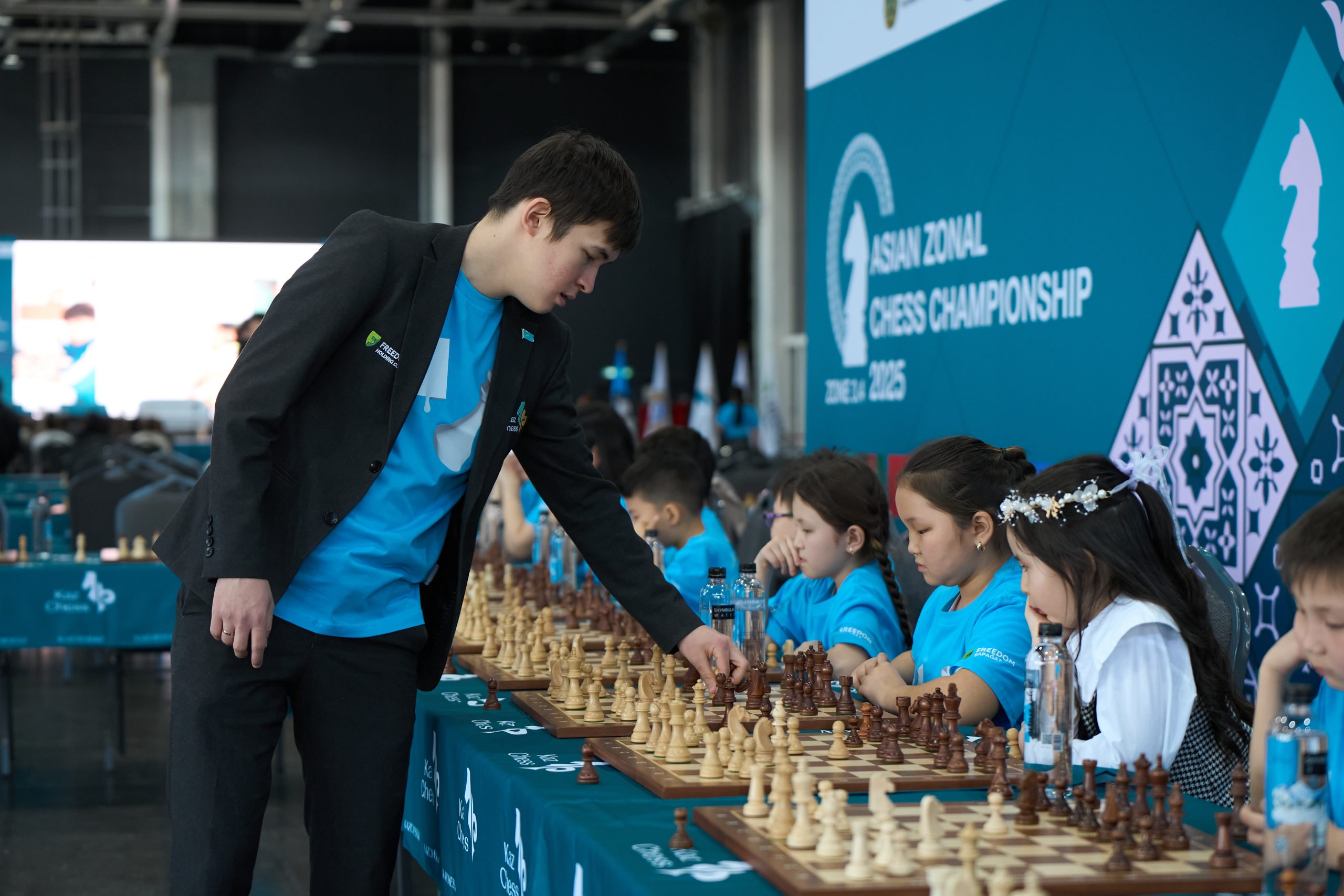
The event concluded with a simultaneous chess session featuring grandmaster and under-20 world champion Kazybek Nogerbek, along with a prize draw supported by partners, including chess sets, books and educational vouchers.

The Day Before: A Meeting in Astana

On 5 April, the day before the Almaty event, Autism Talks was held in Astana with the support of the Bolashak Foundation. Participants – parents, professionals and young people with ASD – spoke about life with the diagnosis, shared their projects and raised important issues around support, inclusive education and acceptance. This marked a further step in the broader movement towards a more open and inclusive society.


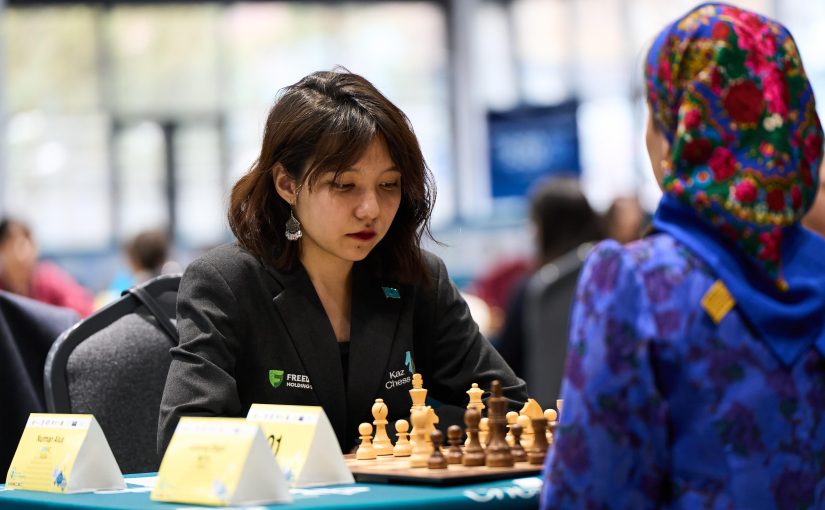
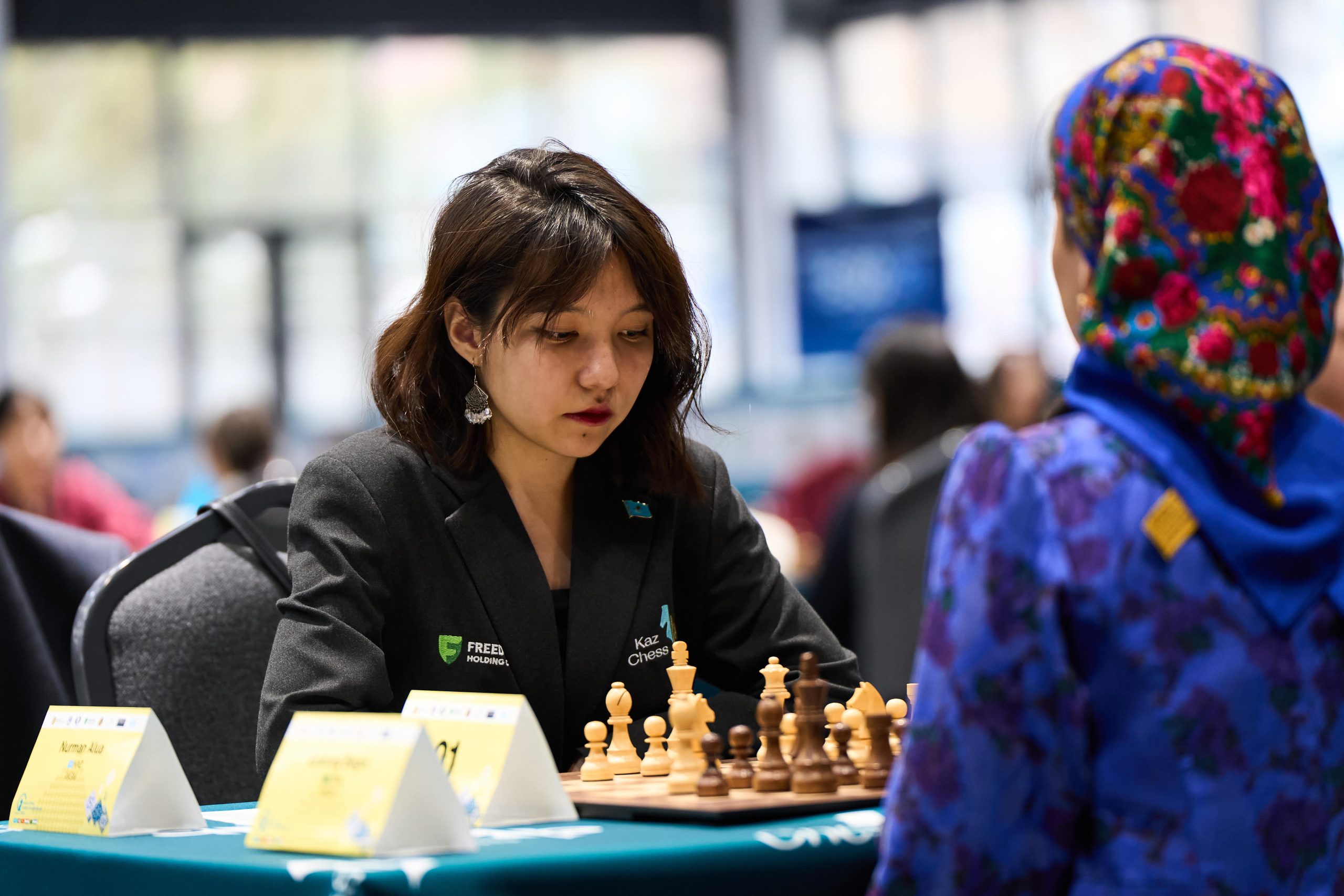
IM Aldiyar Ansat, WIM Afruza Khamdamova Lead Zone 3.4 Men’s & Women’s Zonals

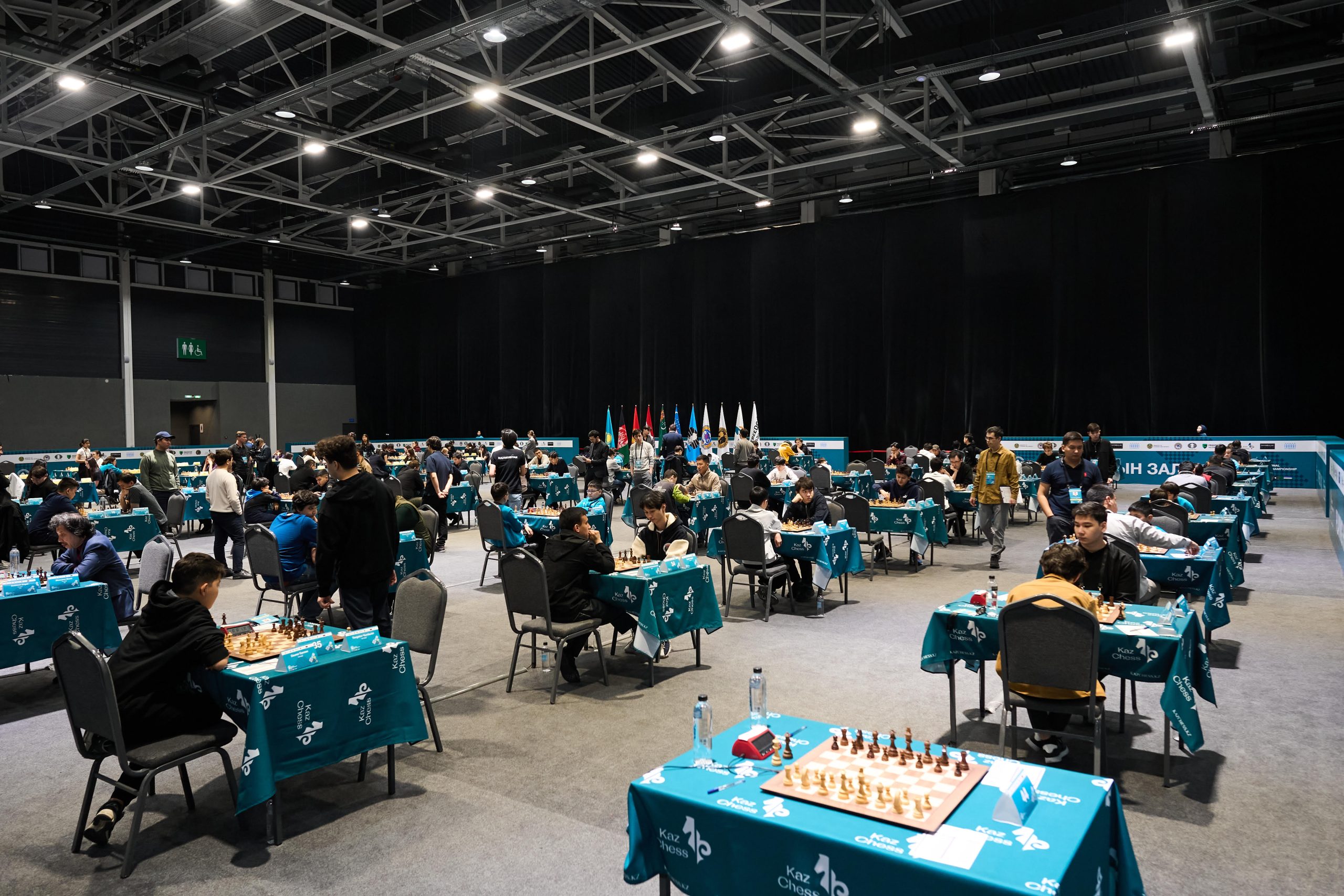
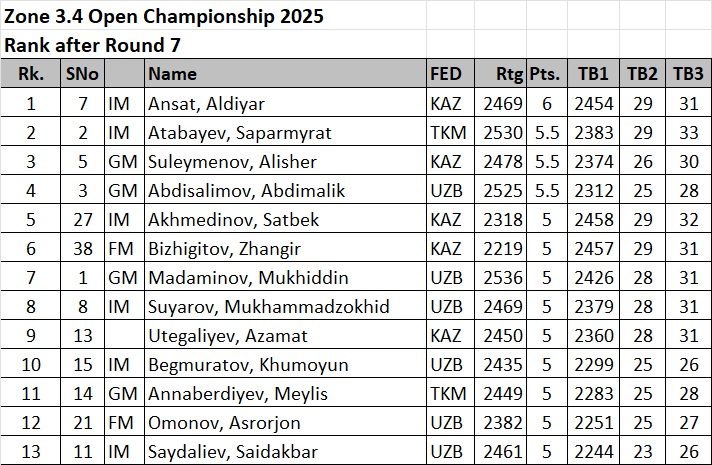
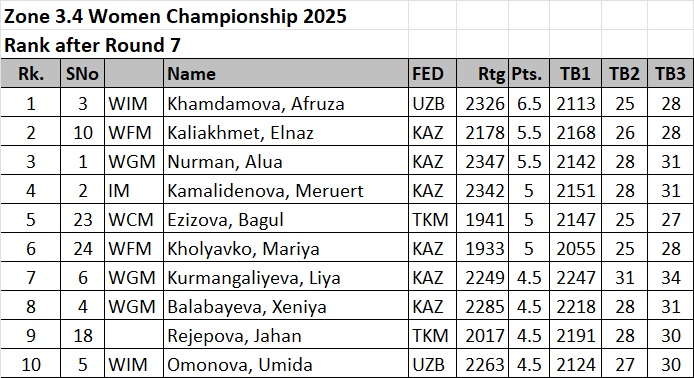
IM Aldiyar Ansat of Kazakhstan and WIM Afruza Khamdamova of Uzbekistan grabbed solo lead after seven rounds of the Men’s and Women’s Zone 3.4 Zonals, respectively, in Almaty, Kazakhstan.

Three men follow with 5.5 points each, namely IM Saparmyrat Atabayev of Turkmenistan, GM Alisher Suleymenov of Kazakhstan and GM Abdimalik Abdisalimov of Uzbekistan. The top four players shall qualify into the FIDE World Cup. Nine players are within striking distance at 5 points apiece.

Khamdanova beat Rejepova, Jahan of Turkmenistan in the seventh round to grab solo lead, a full point ahead of WFM Elnaz Kaliakhmet and WGM Alua Nurman, both of Kazakhstan. The top three shall qualify into the FIDE Women’s World Cup.

Three players are close behind at 5 points each, namely IM Meruert Kamalidenova and WFM Mariya Kholyavko, both of Kazakhstan, and WCM Bagul Ezizova of Turkmenistan.

Although tournament and match statistics show that White wins more often than Black, many chess analysts believe that the advantage of the first move is more psychological than real. That’s what makes the results of Round 7 at the Asian Zonal 3.4 Chess Championship in Almaty all the more surprising. It is not difficult to calculate that today, among the games played by tournament leaders (those with 50% or more of the possible points), one Black victory contrasted with five White wins. Pleasingly, among those winners were 14-year-old Elnaz Kaliakhmet and 13-year-old Maria Kholyavko.

Of course, both still have to endure the final two rounds, but the way they are playing is admirable. Elnaz has already faced four national team players from different years: she lost to Alua Nurman but defeated Assel Serikbay, Meruert Kamalidenova and Liya Kurmangaliyeva.

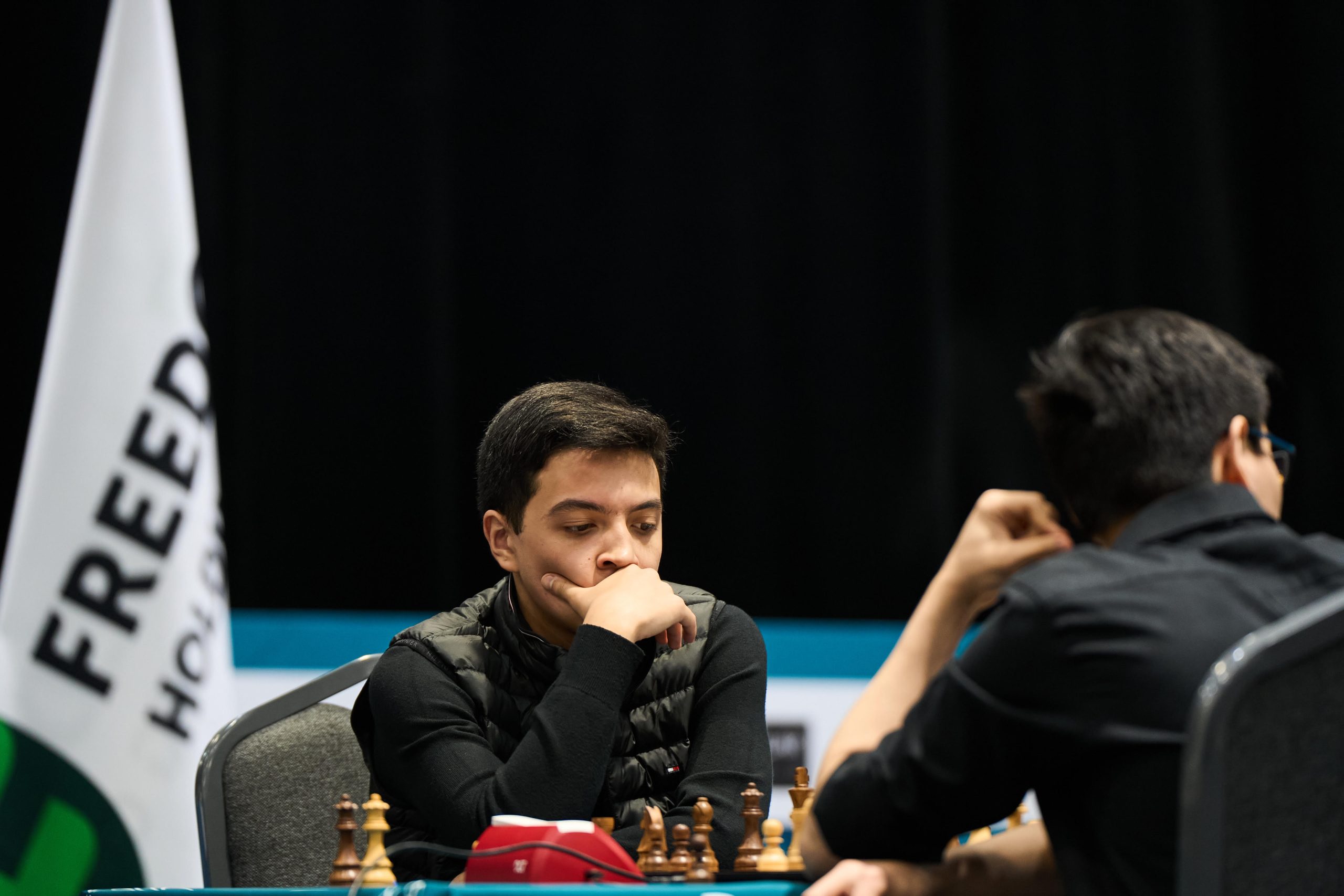
Special praise goes to 16-year-old Aldiyar Ansat, who defeated Mukhiddin Madaminov to become the tournament’s sole leader.

In February 2025, 18-year-old Madaminov sensationally won the Second Al-Beruniy International Chess Tournament in Tashkent in the “Masters” category. Despite ranking third from the bottom (2521) and starting with a loss in Round 1, he ended the event with 6½ points, defeating top-rated grandmasters such as Shant Sargsyan (2660) and Haik Martirosyan (2645) of Armenia, Vladislav Artemiev (2691) and Volodar Murzin (2657) of Russia, Ma Qun (2645) of China, and Sanan Sjugirov (2643) of Hungary.

Aldiyar has not yet secured his coveted World Cup ticket, but with 6½ points, he is likely to finish in the top four. A draw in Round 8 – and even more so a win – would greatly improve his chances. Alisher Suleymenov is also well positioned as the finish line approaches. However, the leading quartet is being closely pursued by nine ambitious challengers…

Visit https://chess-results.com/tnr1140967.aspx

IIEE-PSME Quezon City Wins in Professional Chess Association of the Philippines

The Institute of Electrical Engineers (IIEE) and Philippine Society of Mechanical Engineers team of Quezon City (QC) Simba’s Tribe emerged as winner in the Professional Chess Association of the Philippines (PCAP) season 5 All-Filipino Cup. The Simba’s team beat the Mindoro Tamaraws 16-5 and edged the Zamboanga Sultans 11.5-9.5.

In photo are: (seated from left) Atty. Rodolfo Enrique Rivera, NM Romeo Alcodia, Dennis Alain Lladoc, IIEE former National President Allan Anthony Alvarez, QC Mayor Joy Belmonte, NM Almario Marlon Bernardino Jr., team owner Danilo Ponay and Samivin delos Santos.  Standing at center is Rjhay E. Laurea II  (Rjhay Gwapito), Quezon Councilor Doray Delarmente and other QC LGU members with IM Jose Efren Bagamasbad (with hat) and Freddie Talaboc (in QC team uniform).

All North Division teams won over their South Division counterparts except for a loss by Cagayan to Bacolod.  San Juan Predator leads all teams with their clean slate of 9-0 going into the next round which will be played after the Holy week break on chess.com platform.
The Simba’s Trive team was led by NM Marc Christian Nazario and Norman Madriaga with their 4 victories on all games they played.  All other players contributed to the double victory last April 5, 2025 namely lady board Manilyn Cabungcag, AIM Francis Talaboc, Kristian Paulo Cristobal, CM Joseph Navarro and team owner-senior board Danilo Ponay.  Other members of the IIEE-PSME Simba’s tribe are Team captain and coach Michaela Concio, IIEE former National President Allan Anthony Alvarez, PSME former National President Roger Reyes, assistant managers Dennis Alain Lladoc and Samivin delos Santos.
Other players are IM Jose Efren Bagamasbad, NM Jojo Aquino, NM Gerald Ferriol, NM Almario Marlon Bernardino Jr., NM Robert Arellano,NM Romeo Alcodia, NM Nicomedes Alisangco, NM Alvin Alcala, CM Romy Fagon, Freddie Talaboc, Justine Corpin, Patrick Erle Florendo, CM Romy Fagon, Jellie Magro and Elizsa Gayle Cafirma.
The Simba’s Tribe is also currently pursuing GM Rogelio ‘Joey’ Antonio Jr.  to be part of the team as senior and home grown player. GM Antonio together with IM Bagamasbad are currently in Australia to play for three tournaments while NM Bernardino will be representing QC in a Thailand tournament. -Marlon Bernardino-


Ju Wenjun Wins Game 3, Ties Women’s World Championship Match

World Champion Ju Wenjun equalized the score in Game 3 of the FIDE Women’s World Championship, redeeming her endgame blunder in Game 2 with precise and elegant play today. In a battle that lasted over five hours and 87 moves, Tan Zhongyi blundered on move 60, allowing Ju to seize the advantage and play an instructive endgame with the principle of two weaknesses, ultimately claiming victory.

The playing hall today was graced by four Women’s World Champions; the reigning champion and challenger, along with Zhu Chen and Xu Yuhua, the second and third women’s world champions from China. Chen, the current FIDE Secretary, and Yuhua, Secretary General of the Chinese Chess Association, made the ceremonial first moves on the board.

Following the ceremony, the clock was started and the game commenced. It featured a repeat of the first game’s Sicilian, where the World Champion introduced 3.c4, the Kramnik Variation, a rare sideline occasionally seen at the highest level, including during the Carlsen-Caruana World Championship match. It was a curious choice, as statistics tend to favor Black in this line. Tan Zhongyi paused to consider her response, and soon the players entered a completely uncharted position. It was clear that both had exited home preparation, as they began using significant time on their moves.

The game transitioned into a position where both players had isolated pawns – White on c3 and Black on d5, with Ju once again at a time disadvantage. Understandably so, as the position remained balanced and called for subtle maneuvering. With the white pieces, Ju had to look for chances to create imbalances, prolong the game, and prevent Black from steering it toward a draw – without taking undue risks so early in the match. Black managed to simplify with a series of trades, and the game seemed to be heading toward a dry draw. However, the position was still rich in tactical possibilities and required precise play. This match has shown that even seemingly equal positions are far from over – as evidenced by Ju’s decisive blunder in Game 2.

Ju held the initiative, with active pieces and the bishop pair, while Tan’s position was more passive, putting her on the defensive and having to remain solid. It was far easier for White to find natural moves, while Black faced challenges. True to her style, Ju kept pressing, attempting to squeeze out chances, though her time management remained a concern, having cost her the previous game. Tan took advantage of this by playing confidently and quickly, blitzing out moves and putting the pressure on Ju.

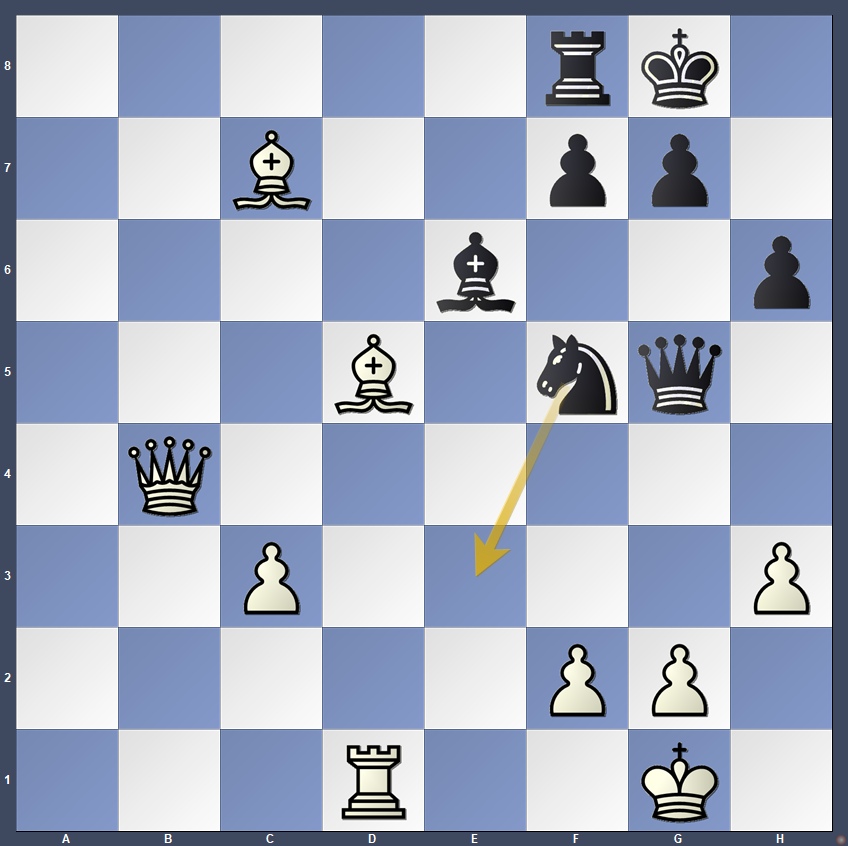
An important moment came on move 37:

White has just captured the d5 pawn, and the only move for Black was the tricky 37…Ne3, preparing to recapture the pawn. Anything else would leave White a pawn up with dominant pieces. After some thought, Tan found the only move, and Ju, having anticipated this, responded immediately with 38.h4, the best follow-up. After 38…Qg4, Black remained a pawn down and had to choose the least harmful version of the position. At this point, Ju’s body language shifted – she sat upright and focused, while Tan began to consume more time. This was Ju’s domain: technical positions. As FIDE commentator Evgenij Miroshnichenko noted, “A game of chess has a fantastic amount of resources for both sides.”

Following a series of forced trades, the game simplified into an endgame with opposite-colored bishops with a pair of rooks still on the board. White held an extra passed pawn on c3, and although the position remained theoretically equal, the players reached the additional time control at move 40 with a long endgame ahead. The c-pawn was difficult to advance, and Ju needed a weakness on the kingside to make progress. She continued pressing, and her opportunity arrived on move 60.

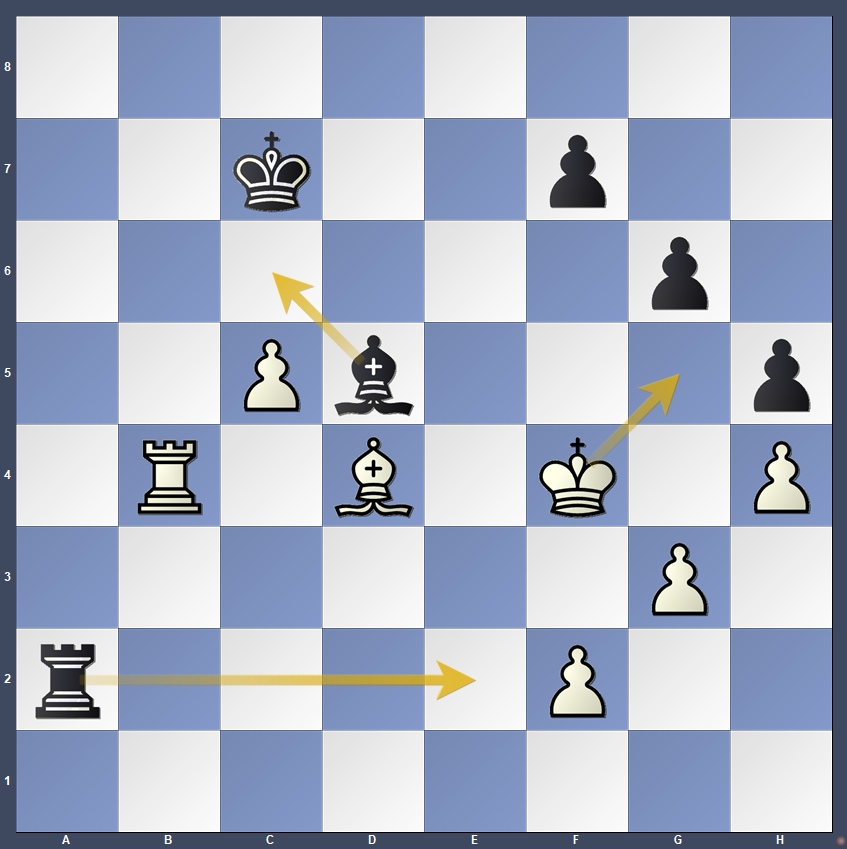
Black committed a critical error with 60…Bc6? The idea of trading the rooks was correct, but the execution was flawed. It was essential not to remove protection from f7-pawn and while keeping White’s king at bay with 60…Re2! The key is to meet 61.Kg5 with 61…Re4! As played, after 61.Kg5, trouble loomed. 61…Ra4 failed to the intermediate 62.Be5+, and after 62…Ke7 63.Rb2, White preserved the rooks – a crucial detail, as a pure opposite-colored bishop endgame would likely end in a draw. From there, Ju’s plan was clear: her king advanced to g7, the rook stayed active, and the c-pawn became a growing threat. Black, by contrast, had active counterplay. Her weak f7-pawn and the advancing c-pawn were too much to handle.

What kept viewers on edge was Ju’s time pressure. But this is the reigning Women’s World Blitz Champion, and even with only minutes on the clock, she navigated the complications masterfully. She confidently found the best moves and brought home a well-deserved win. In the post-game press conference, she said that the endgame was relatively straightforward, so her low time did not concern her and after 73.f3 she felt she was winning.

We have witnessed endgame magic from both players in the last two games, where their ability to keep pushing in equal positions, and ultimately yield decisive results, is highly admirable. It surely serves as a lesson to not give up, and beautifully shows the infinite possibilities in chess. Ironically, things are not always clear-cut black and white.

With the score once again leveled, and two decisive results in the first three games, the match is shaping up to be nothing short of exciting. The fourth game will be played on Monday, April 7, at 3 PM local time in Shanghai, with Tan Zhongyi playing White.

FACT SHEET, Game 3, FIDE Women’s World Championship 2025:

White: Tan Zhongyi
Black: Ju Wenjun
Result: 0–1
Opening: Sicilian Defense
Game length:  87 moves
Match score: 1.5–1.5

Follow FIDE’s social media channels for updates, tune into YouTube for live commentary and coverage, and visit the official match website for more information.

Written by Charlize van Zyl

Photos: Anna Shtourman

Official website: womenworldchampionship2025.fide.com/

About the Match

The 2025 FIDE Women’s World Chess Championship match between Ju Wenjun and Tan Zhongyi follows a 12-game format. The first player to score 6.5 points will be declared the winner.

The time control for each game is 90 minutes for the first 40 moves, followed by 30 minutes for the rest of the game, with an increment of 30 seconds per move starting from move 1.

If the match is tied at 6-6 after all 12 games, a tiebreak will determine the champion. The tiebreak procedure involves a series of rapid and, if necessary, blitz games to ensure a decisive outcome.

From Ju Wenjun strikes back: World Champion levels the score with endgame magic – International Chess Federation

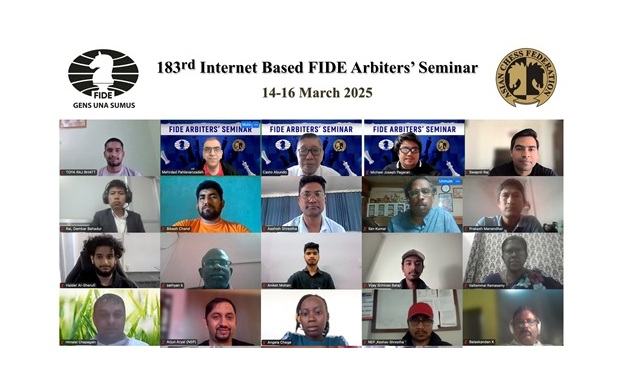
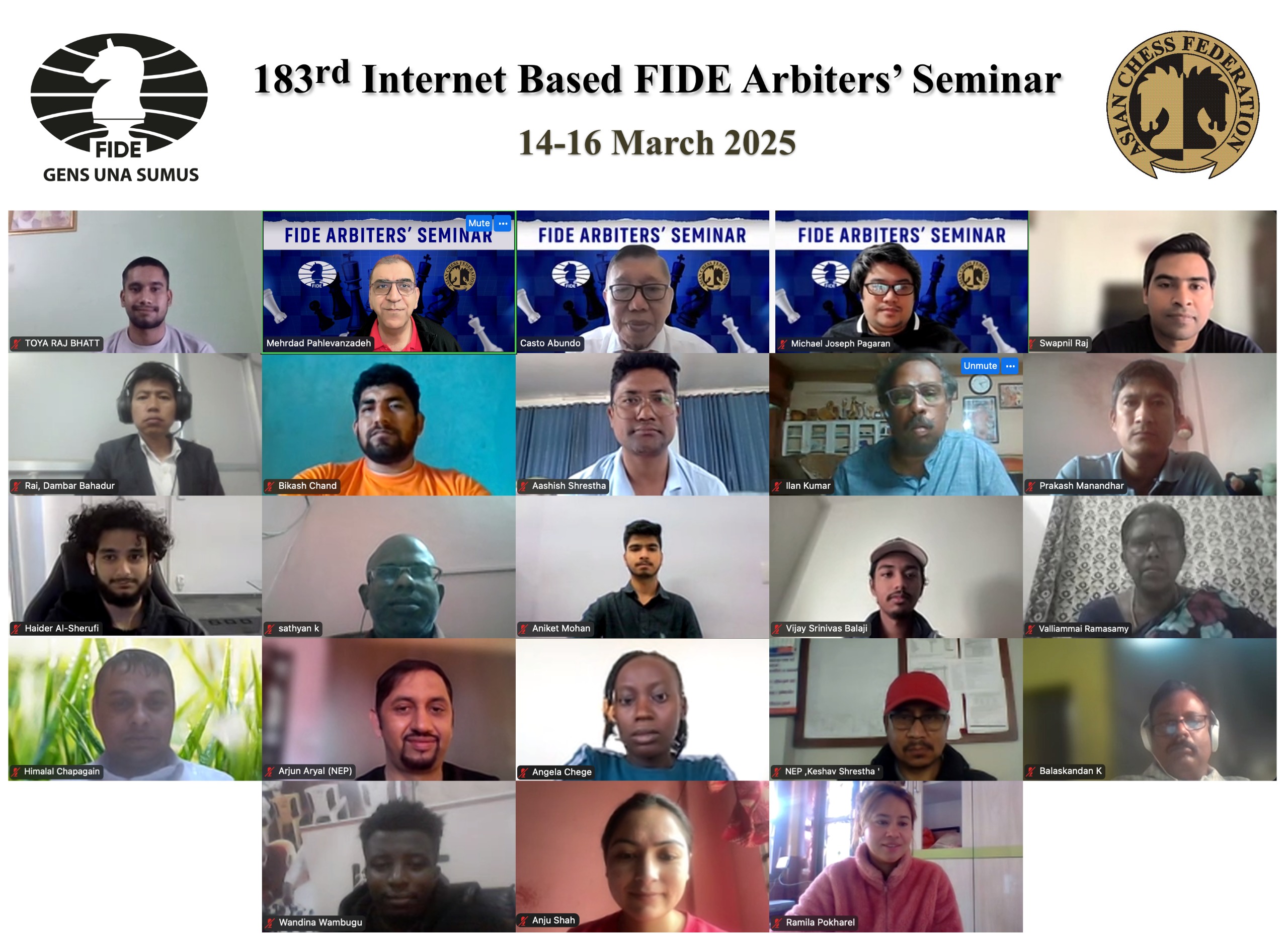
183rd Internet-based FIDE Arbiters’ Seminar

The 183rd Internet Based FIDE Arbiters’ Seminar (Asian Chess Federation) was held from 14th to 16th March 2025 under the auspices of FIDE and organized by the Asian Chess Federation supported by the Planning and Development Commission.

The Lecturer was IA/IO Abundo, Casto (UAE), FIDE Lecturer, and the Assistant Lecturer was IA Pahlevanzadeh, Mehrdad (IRI), FIDE Lecturer.

The Language of the Seminar was English.

Twenty (20) arbiters from four (4) national federations (IND, KEN, NEP, and SWE) participated in the Seminar, and all of them participated in the examination test, held after the end of the lectures.

The following succeeded in the test and they will be awarded a norm for the title of the FIDE Arbiter, after the approval of the next FIDE Council:

FIDE ID Name (as on FIDE Profile) FED
35005812 Illan Kumar IND
1763695 Balaji, Vijay SWE
12354376 Aryal, Arjun NEP
10822950 Wandina, Wambugu KEN
12333387 Bhatt, Toya Raj NEP
12345873 Chapagain, Himlal NEP
25638530 Valliammai RM IND
12346250 Rai, Dambar Bahadur NEP
12345083 Chand, Bikash NEP
1745212 Al-Sherufi, Haider SWE
12338710 Shrestha, Aashish NEP
5069904 Swapnil, Raj IND
25936930 Balaskandan K IND
12307882 Manandhar, Prakash NEP
12315427 Shah, Anju NEP
12317934 Pokharel, Ramila NEP

Victoria Sports Club open rapid chess tournament on April 27

Season 2 of the Victoria Sports Club open rapid chess tournament reels off on April 27 at the Victoria Sports (VS) Tower 2, 799 EDSA South Triangle, Quezon City, Philippines.

The champion will earn P10,000 plus trophy, accommodation at VS hotel and one month premiere membership.
The second placer will get P3,000 plus trophy, accommodation at VS hotel and one month premiere membership, while the third placer will receive P2,500 plus trophy, accommodation at VS hotel and one month premiere membership.
Fourth to 10th placers will go home P500 each plus medals and one month premiere membership.
Special awards will receive P500 each plus trophies medals for the top junior (13-18 years old), top kiddie (12 below), top senior (55 years old above), top victoria sports member, top victoria employee, top victoria sports affiliates, top PWD, top non-master and top lady.
Registration fee at P500 until April 24, while P700 if you sign up on April 25-26. All participants will receive a water spa gift certificate.
“Victoria Sports Club is extending the registration period for our Rapid Chess Tournament. The tournament will be moved to April 27, 2025, to accommodate more players to join this competition. Seize this opportunity to compete, sharpen your strategy, and demonstrate your skills.Sign up today and secure your spot in this exciting competition. We can’t wait to see you there,” said Chief Arbiter Ranier Pascual.
Call or text mobile numbers: +639544989778.-Marlon Bernardino-⁣⁣

University of Madras Wins All India Inter University Women 2025

by Shahid Ahmed – 05/04/2025

University of Madras scored an unbeaten 9/10 to win All India Inter Zonal Inter University Women Chess Tournament 2025. The defending champion, Adamas University scored 8/10 to secure second place. Their only loss of the event was against the eventual champion, University of Madras in the penultimate round by 2.5-1.5. Dr. Babasaheb Ambedkar Marathwada University scored 7/10 to be placed third. The winning team had two WGMs – Savitha Shri B and Rakshitta Ravi. They scored 2.5/3 and 4.5/5 each. WFM Rindhiya V also scored 4.5/5.

Top 3 (L to R): 2nd Adamas University 8/10, 1st University of Madras 9/10 and 3rd Dr. Babasaheb Ambedkar Marathwada Universty 7/10

WFM Rindhiya V and WGM Rakshitta Ravi were the top performers of University of Madras

The defending champion Adamas University secured a second place finish

Ju and Tan begin title rematch with draw

The FIDE Women’s World Championship Match 2025 began today at 15:00 local time in Shanghai, China. Ju Wenjun had the White pieces, while Tan Zhongyi, playing with black, steered the game into the Sicilian Defence. After 39 moves, with no major fireworks, the game concluded in a logical draw.

Yesterday was a packed media day featuring interviews, press conferences, and the opening ceremony – all pointing toward a fiercely competitive match ahead. The storyline is compelling: two world champions, current and former, battling for the coveted title. Adding further intrigue is the déjà vu element, as the two players faced off in 2018, when Ju was the challenger and Tan the reigning champion. Ju claimed the title in that match and has successfully defended it ever since. This time, the roles are reversed, with Tan returning as challenger for the first time against her compatriot.

The psychological backdrop is equally fascinating. In her exclusive interview with FIDE, Tan spoke with confidence, emphasizing that while she viewed herself as “lucky” to be playing the 2018 match (after winning the title in 2017 in a knockout tournament) this time she felt more assured, having earned her place by winning the Candidates. With only a six-point rating difference between them, the outcome may come down to confidence. At the start of today’s game, their body language told a subtle story. Tan appeared relaxed, sipping coffee and glancing around the room, while Ju was intensely focused, her eyes fixed solely on the board.

The ceremonial first move was made by He Fengxiang, Director of the Chess and Card Sports Management Center of the General Administration of Sport of China and President of China Qiyuan, along with Xu Bin, Director of the Shanghai Municipal Sports Bureau.

At exactly 15:00 local time, the chief arbiter started the clock, and the match was officially underway. Both players raced through the early stages of the Sicilian Defence, French Variation  – a calmer line compared to typical Sicilian battles. Ju deviated from the mainline with 5.Bd3 – a less common continuation than 5.Nc3, though not unusual at the elite level. Tan, seemingly still in preparation, continued to play quickly.

However, after 9.Bg5, the challenger paused for over five minutes, suggesting she was now out of preparation. In the post-game press conference, she acknowledged the psychological impact of that move and responded accurately with 9…h6. A few moves later, Ju took her time for the first time in the game, indicating that both players were now navigating unfamiliar territory – something rare and refreshing at this level in today’s computer-driven era. Ju appeared slightly more comfortable out of the opening thanks to her active pieces, while Tan’s bishop on c8 remained undeveloped. On move 14, Ju spent nearly 20 minutes before simplifying the position with a trade and breaking in the center, signaling that the game was drifting toward a draw – though not without its complexities.

An interesting moment arose on move 18. Ju opted not to play 18.cxd5, which would have gained an extra pawn but allowed Black’s pin with 18…Ba6. Instead, she targeted the weak h6-pawn with 18.Qe3, prompting Tan to find the precise 18…Qg5. After the queens were exchanged, White captured on d5, leaving Black with an isolated queen’s pawn, balanced by the open nature of the position and a bishop versus knight scenario. Neither side had a tangible advantage or clear path to push for more. With this in mind, neither player was willing to take significant risks.

With the engine bar showing complete equality, the game eventually ended in a draw. While we didn’t witness any fireworks today, the game suggested that we won’t be seeing quick, uneventful draws either. Will the players adopt a more aggressive approach as the match progresses? Or will caution prevail, potentially leading to tiebreaks? It’s too early to tell, and only time will reveal the course of this tightly contested match.

The second game of the match will take place on Friday, April 4t, at 3 PM local time in Shanghai, with Tan Zhongyi playing White.

FACT SHEET, Game 1, FIDE Women’s World Championship 2025:

White: Ju Wenjun
Black: Tan Zhongyi
Result: ½-½
Opening: Sicilian Defence, French variation
Game length: 39 moves
Match score: ½-½

Follow FIDE’s social media channels for updates, tune into YouTube for live commentary and coverage, and visit the official match website for more information.

Written by Charlize Van Zyl

Photos: Anna Shtourman

Official website: womenworldchampionship2025.fide.com/

About the Match

The 2025 FIDE Women’s World Chess Championship match between Ju Wenjun and Tan Zhongyi follows a 12-game format. The first player to score 6.5 points will be declared the winner.

The time control for each game is 90 minutes for the first 40 moves, followed by 30 minutes for the rest of the game, with an increment of 30 seconds per move starting from move 1.

If the match is tied at 6-6 after all 12 games, a tiebreak will determine the champion. The tiebreak procedure involves a series of rapid and, if necessary, blitz games to ensure a decisive outcome.

From Déjà vu in Shanghai: Ju and Tan begin title rematch with balanced battle – International Chess Federation